


Ziyarat Places in Makkah
Makkah al-Mukarramah is one of the holiest cities in Islam and also the heart of Islamic history. It is the blessed land where the Holy Qur’an was first revealed, the message of Islam began, and where our beloved Prophet Muhammad (pbuh) was born. For centuries, muslims from every corner of the world have travelled to Makkah to perform Hajj, Umrah, for Ziyarat, and also to reflect on the remarkable events that shaped our faith.
Ziyarat refers to visiting historically and spiritually significant locations connected to the life of the Prophet ﷺ, his companions (RA), and key moments in Islamic history. Ziyarat is not an act of ibadah in itself, but it offers pilgrims a spiritually profound opportunity to learn, reflect, and strengthen their connection with Allah SWT and the Prophet Muhammad (pbuh).
Below are some of the most important Ziyarat places in Makkah that pilgrims commonly visit during their Hajj or Umrah journey.
Kaaba
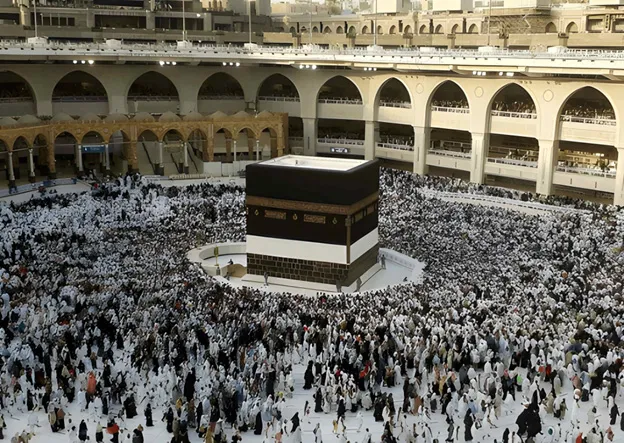
The Kaaba, the House of Allah (SWT), is the most sacred structure in Islam and is also the focal point (Qiblah) for Muslims across the world. Located within Masjid al-Haram, draped in the black silk cloth known as the Kiswah, which is embroidered with verses of the Qur’an in gold. The Kaaba stands as a powerful symbol of Tawheed (the Oneness of Allah).
During Hajj and Umrah, pilgrims need to perform Tawaf, circumambulating the Kaaba seven times. Embedded in one corner is the revered Hajr al-Aswad (Black Stone), which the Prophet ﷺ kissed and touched, making it a Sunnah for pilgrims where possible. Standing before the Ka‘abah is often described as a profoundly emotional and life-changing experience for believers.
Cave Of Hira
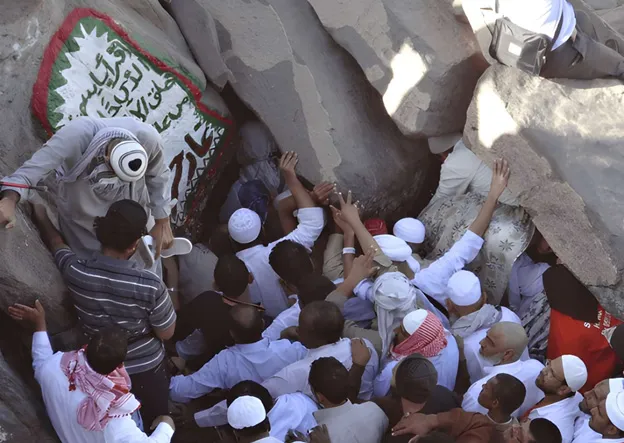
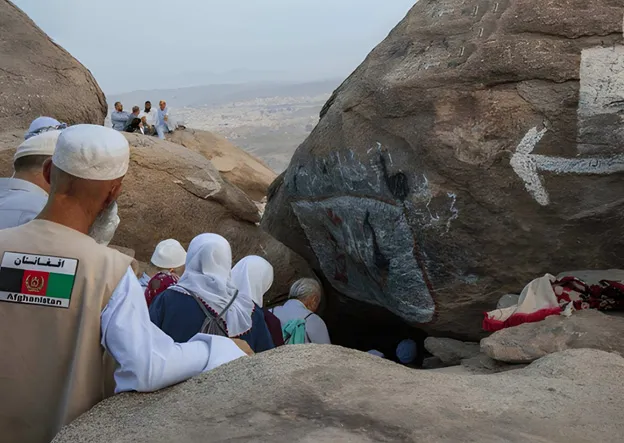
This is the sacred place where the Prophet Muhammad (PBUH) received the first revelation of the Holy Quran through Angel Jibreel (AS). The Cave of Hira, situated on Jabal al-Noor, is where the command “Iqra”, which means Read”, marked the beginning of Islam.
Located approximately 3-4 kilometres from Masjid al-Haram, the cave requires a physically demanding climb, often taking 45–60 minutes. Visiting the Cave is not obligatory, but pilgrims choose to visit it as a moment of reflection and to understand the patience of the Prophet ﷺ during his early years of Prophethood.
Cave of Thawr (Jabal Thawr)
Jabal Thawr is the mountain that houses the sacred Cave of Thawr, the place where Prophet Muhammad (PBUH) and his closest companion, Abu Bakr (RA), sought refuge during the Hijrah (migration) from Makkah to Madinah. They remained there for three days to evade Quraysh pursuers, relying on divine protection, including a spider's web and nesting birds, to conceal the cave entrance.
This site symbolises unwavering trust in Allah (Tawakkul). Despite the enemy standing at the mouth of the cave, Allah protected them in miraculous ways. Visiting this location reminds pilgrims of Allah’s divine help and the sacrifices made to preserve the message of Islam.
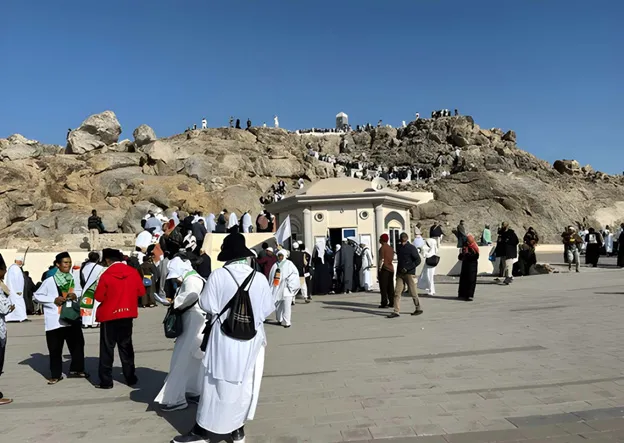
Jabal al-Rahmah (Mount of Mercy), Arafat
Jabal al-Rahmah is situated in the plains of Arafat and is among the most recognisable landmarks of Hajj. On the Day of Arafah, which is the most important day of Hajj, pilgrims gather here in humility, supplication and repentance.
The Mount of Mercy stands nearby to Masjid Namirah, where our beloved Prophet Muhammad (PBUH) gave his Farewell Sermon, a powerful message emphasising justice, equality and piety. Jabal al-Rahmah’s primary significance lies in its connection to the rites of Hajj and the profound spiritual atmosphere of Arafat.
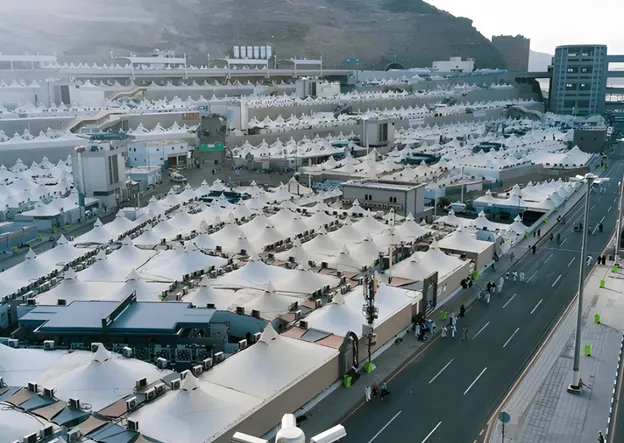
Mina and the Jamarat
Mina is located approximately 7 kilometres from Masjid al-Haram and plays a central role during Hajj. Pilgrims stay in Mina on the 8th, 11th, 12th, and sometimes the 13th of Dhul Hijjah, residing in its vast tent city.
Within Mina lies the Jamarat complex, where pilgrims perform Rami al-Jamarat; the symbolic stoning of the pillars representing Shaytan. This ritual commemorates the obedience of Prophet Ibrahim (AS) and serves as a powerful reminder of resisting temptation and remaining steadfast in faith.
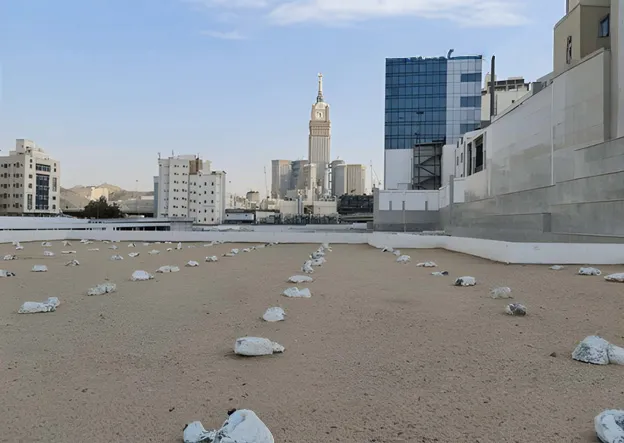
Jannat al-Mu‘alla
Jannat al-Mu‘alla is one of the oldest and most respected cemeteries in Islam. It is the resting place of many noble companions and family members of the Prophet ﷺ, including his beloved wife Khadijah bint Khuwaylid (RA).
Visiting this sacred site allows pilgrims to reflect on the sacrifices made by the early Muslims and to remember the transient nature of worldly life. While supplication for the deceased is encouraged, Islam teaches that all benefit comes solely from Allah (SWT)
Ziyarat Places in Madinah
Madinah al-Munawwarah, the blessed city, holds an unparalleled place in the hearts of Muslims. It is the second holiest city in Islam and the place chosen by our beloved Prophet Muhammad (PBUH). From a place of refuge, the sacred city soon became the spiritual and moral centre of the emerging Muslim Ummah.
It was in Madinah that Islam flourished as a complete way of life, guided by the leadership of the Prophet ﷺ and later the Rightly Guided Caliphs — Abu Bakr, Umar, Uthman, and Ali (رضي الله عنهم). The blessed city is home to some of the most significant mosques in Islam, including Masjid an-Nabawi, Masjid Quba- the first mosque of Islam and Masjid al-Qiblatayn.
Today, millions of pilgrims travelling for Hajj and Umrah visit Madinah to send salutations upon the Prophet ﷺ, offer prayers, and reflect upon the remarkable events that shaped Islamic history. Ziyarat in Madinah provides pilgrims with a deeply moving spiritual experience rooted in love, remembrance, and learning.
Below are the most important Ziyarat places in Madinah commonly visited by pilgrims.
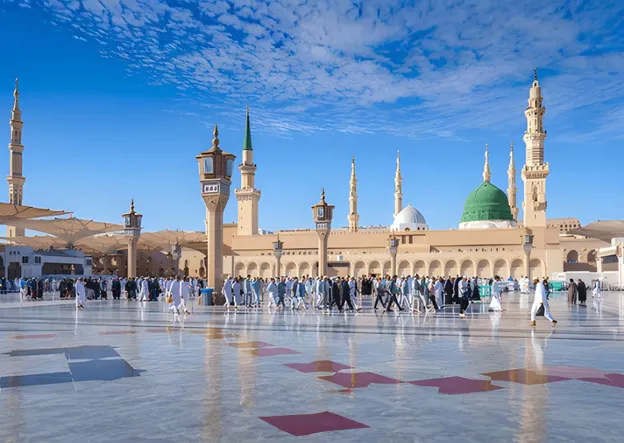
Madinah al-Munawwarah (The Enlightened City)
Madinah is honoured as the city that welcomed the Prophet Muhammad ﷺ and became the stronghold of Islam during its formative years. It is here that the first Islamic society was established, built upon brotherhood, justice, and faith.
The city is also blessed as the resting place of the Prophet ﷺ, whose noble grave lies within Al-Masjid an-Nabawi. Praying in Madinah carries immense virtue, and the city itself is regarded as a place of peace, mercy, and spiritual tranquillity. Many pilgrims describe their time in Madinah as calm, reflective, and deeply comforting.
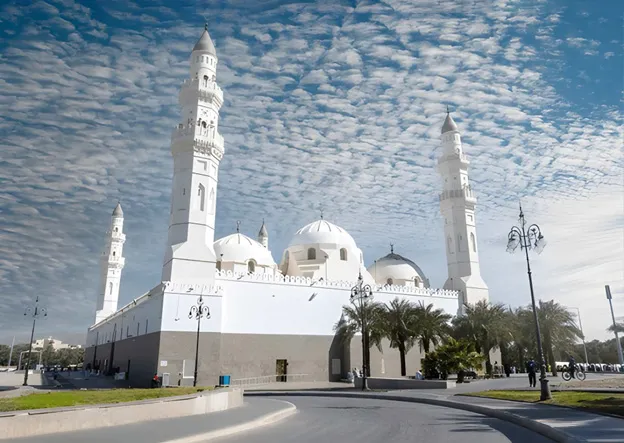
Masjid Quba
Masjid Quba is the first mosque built in Islam, and the Prophet Muhammad (pbuh) personally participated in its construction upon entering Madinah city after the Hijrah.
The Prophet ﷺ regularly visited Masjid Quba and encouraged praying there, stating that performing two rak‘ahs in this mosque carries the reward of an Umrah. Pilgrims frequently visit Masjid Quba as part of their Ziyarat, following the Sunnah and reflecting upon the beginnings of Islamic community life.
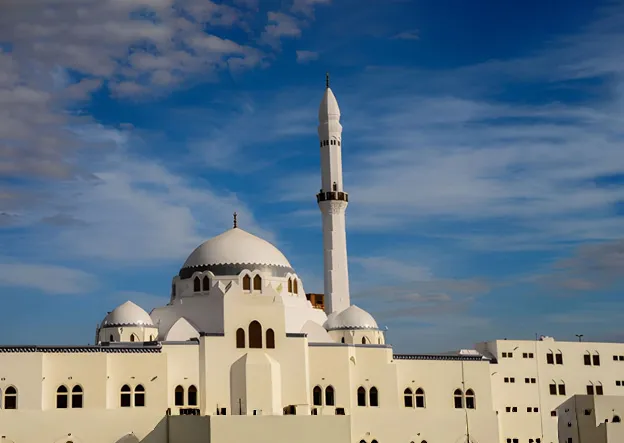
Masjid al-Jumu‘ah
Masjid al-Jumu’ah is located near Masjid an-Nabawi and is the site where the Prophet ﷺ led the first Friday (Jumu’ah) prayer after his migration from Makkah to Madinah.
This mosque stands as a reminder of the establishment of Islamic congregational worship and unity. Visiting Masjid al-Jumu‘ah allows pilgrims to connect with a defining moment in Islamic history and reflect on the importance of communal faith.
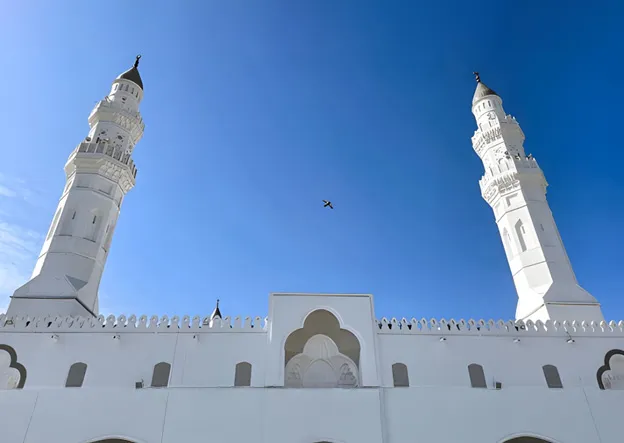
Masjid al-Qiblatayn (The Mosque of Two Qiblas)
Masjid al-Qiblatayn is the mosque where Allah SWT commanded the change of the Qiblah from Bayt al-Maqdis (Jerusalem) to the Ka‘abah in Makkah. This moment marked a significant turning point in Islamic identity and ibadah.
As one of the oldest mosques in Islam, Masjid al-Qiblatayn remains a powerful symbol of obedience to divine command and the centrality of Makkah in Islamic worship.
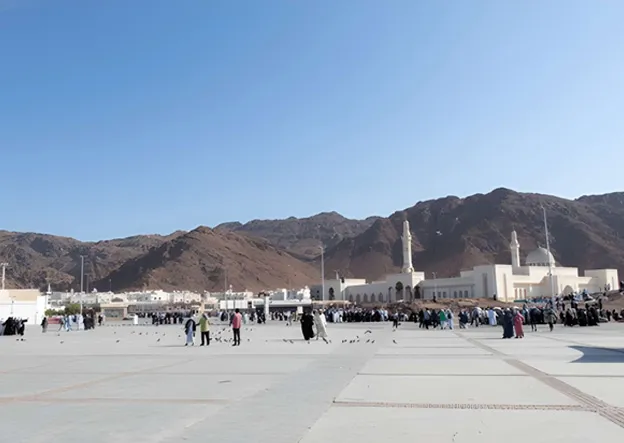
Mount Uhud
Mount Uhud is the site of the Battle of Uhud, one of the most significant events in Islamic history. Here, the companions of the Prophet ﷺ faced hardship and loss after some failed to follow the Prophet’s instructions during battle.
Nearby lie the graves of the martyrs of Uhud, including Hamzah ibn Abdul-Muttalib (RA), the beloved uncle of the Prophet ﷺ. Visiting this site reminds pilgrims of sacrifice, discipline, and the consequences of obedience and disobedience, offering timeless lessons for believers.
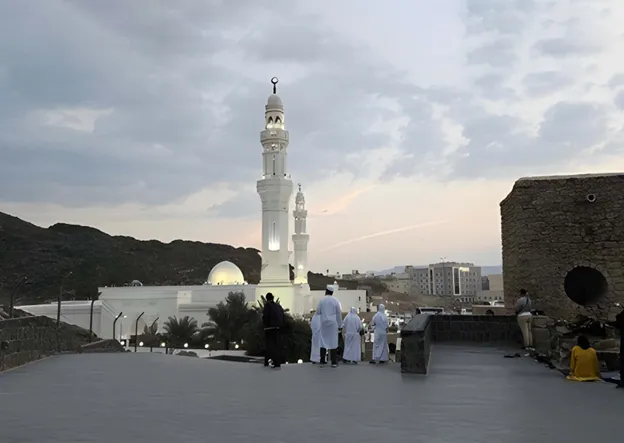
Masjid al-Fath and the Site of the Battle of the Trench
The Battle of the Trench (Ghazwat al-Khandaq) took place when the Muslims dug a defensive trench around Madinah to protect it from invading forces. Today, the area includes Masjid al-Fath (also known as Masjid al-Ahzab) and several smaller mosques named after prominent companions.
Although the exact location of the trench is no longer clearly visible, the site symbolises unity, strategy, patience, and divine help during times of immense trial.
