


10 Amazing Facts About the Al Masjid-e-Nabawi (Prophet’s Mosque)
What is Al Masjid-e-Nabawi & Why is it Called Prophet’s Mosque?
Al Masjid-e-Nabawi is the Prophet’s Mosque, located in Madinah, Saudi Arabia, also known as Masjid-e-Nabawi. Prophet Muhammad ﷺ established the mosque after the Hijrah with his early followers in the first year after the Hijrah, 622 CE, following his migration from Makkah to Madinah.
According to data from the General Authority for the Care of the Two holy Mosques (GATHM ), 281 million people visited the Prophet’s Mosque over a single Islamic calendar year from around the world.
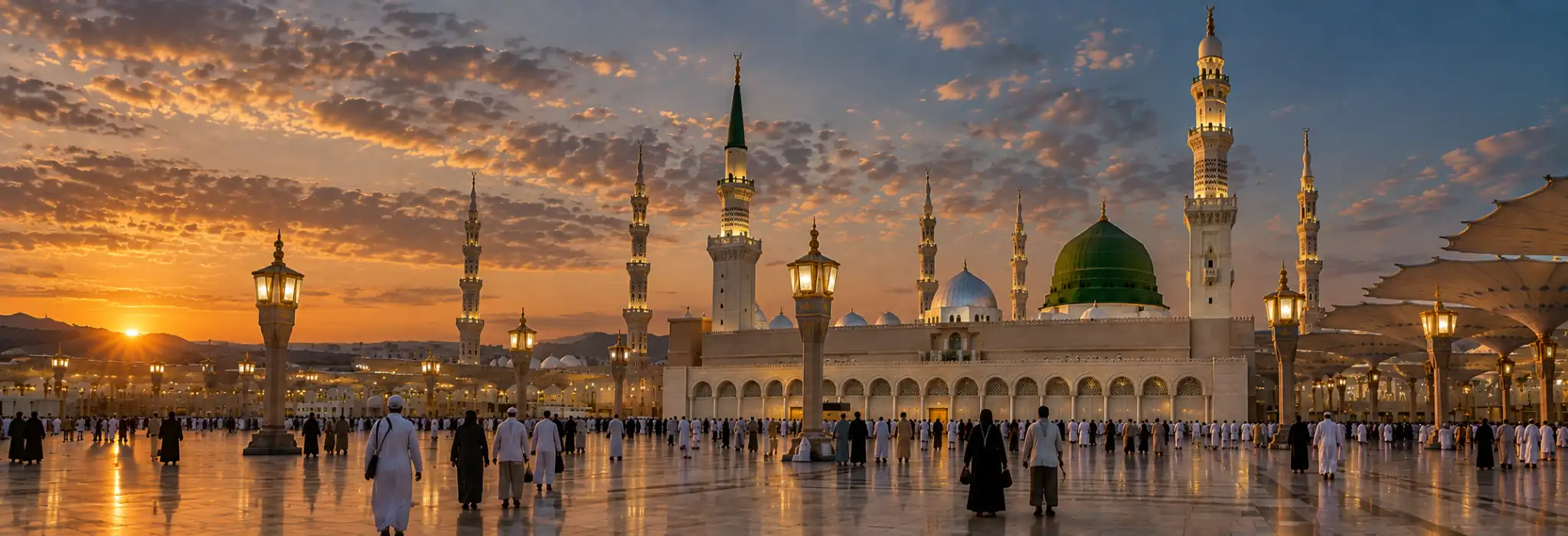
Several holy places are a part of this Mosque, including Rawdah, the Prophet’s Chamber, his minbar and mihrab and the Green Dome, which is also one of the well-known landmarks in Madinah.
We’ve curated a list of 10 important facts about Masjid-e-Nabawi that every visitor should know, as follows:
Facts About Al Masjid-e-Nabawi Barely Someone Knows About.
Prophet Muhammad ﷺ established Masjid-e-Nabawi
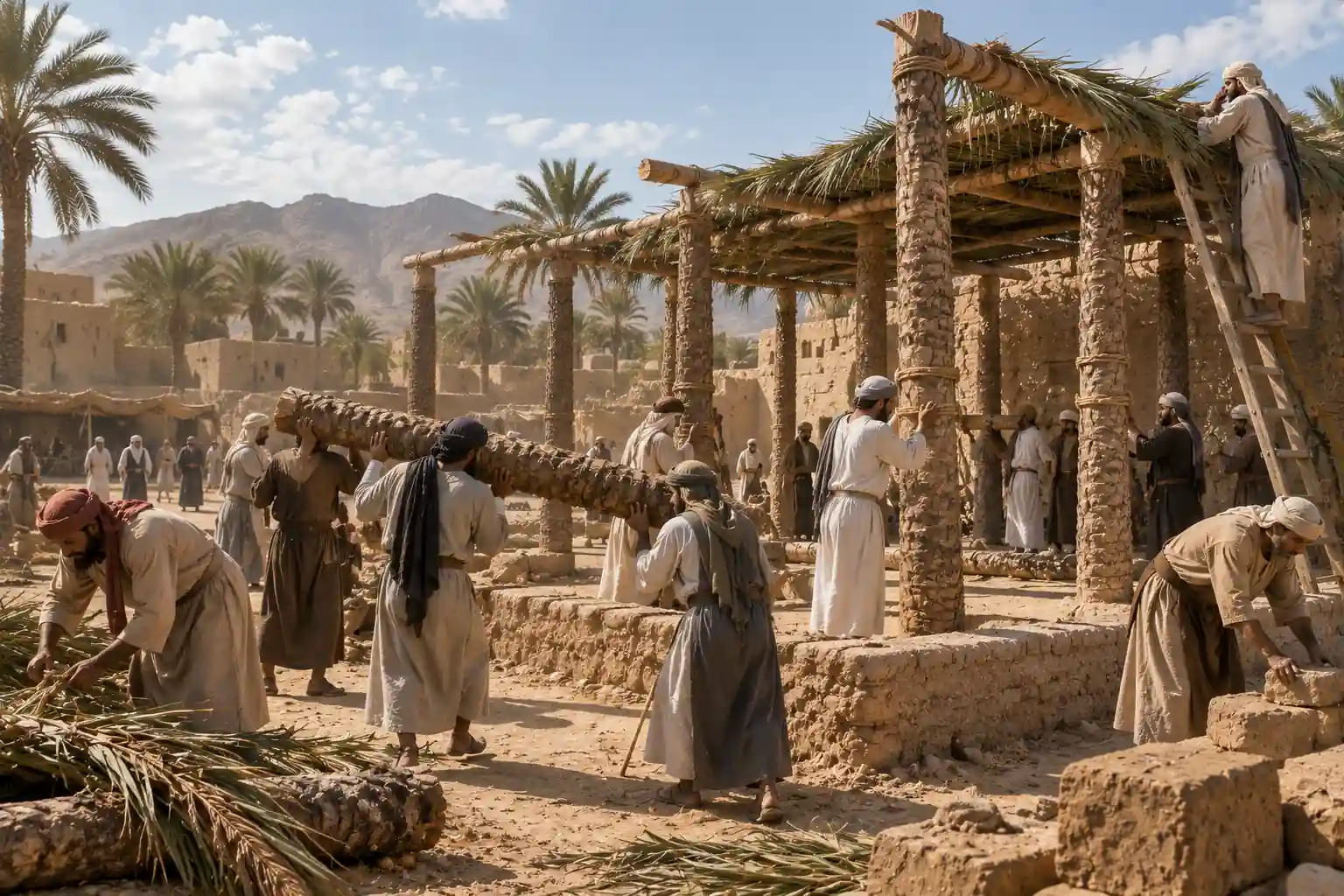
Prophet Muhammad ﷺ established Al Masjid-e-Nabawi soon after arriving in Madinah. He co-constructed (took part in building) the original mosque with his Companions.
It serves as a place for prayer, teaching good, meeting people and dealing with different matters of the muslim community.
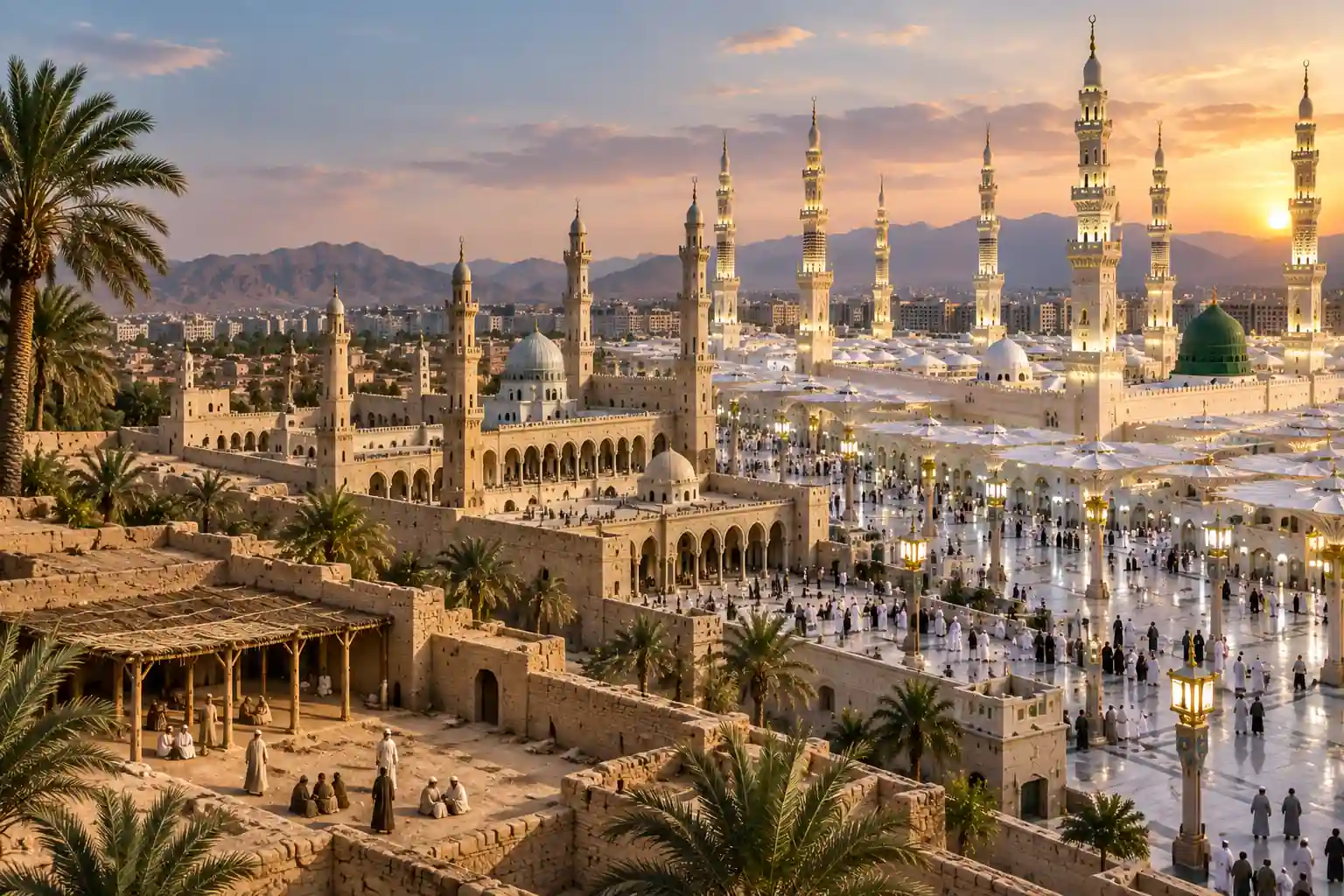
The original mosque was much smaller
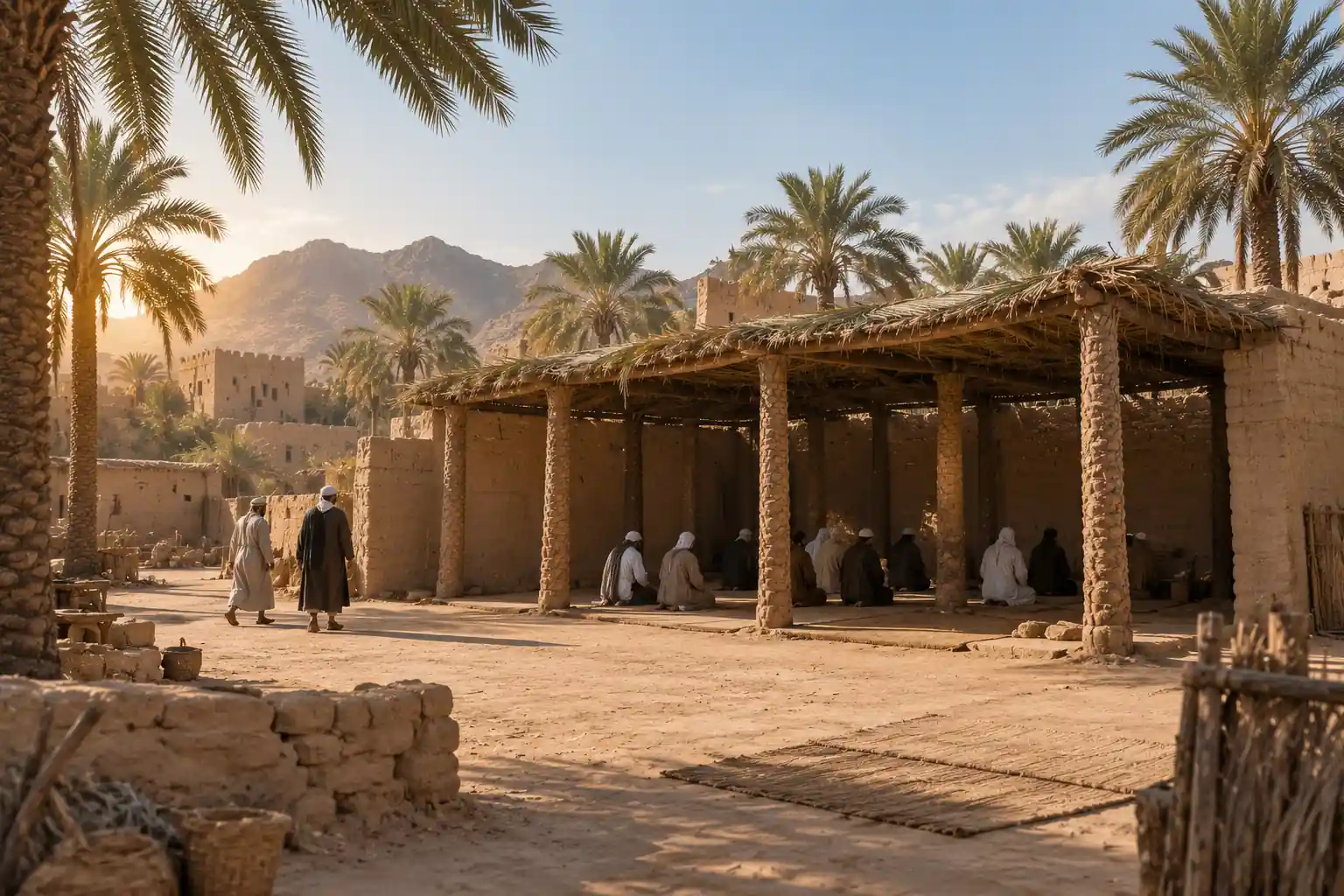
The first Masjid-e-Nabawi was a simple building in contrast with today's mosque; it had a roof made up of palm materials, with no huge courtyards or tall minarets or large modern structures.
Over time, the mosque was expanded to accommodate more worshippers by Muslim rulers; this mosque is the result of several stages of development and expansion.
Masjid-e-Nabawi has a special place in Islam
Out of the three mosques mentioned in the hadith, where Muslims are specifically encouraged to travel for worship is Masjid-e-Nabawi in Madinah.
The other two are Masjid al-Haram in Makkah and Masjid al-Aqsa in Jerusalem.
That’s why the Prophet’s Mosque has a unique position among other Mosques around the world.
Praying in the Prophet’s Mosque once is 1000 times more rewarding than praying in any other mosque.
Note that visiting is not a rite or ritual of Umrah, but it’s very rewarding, and many pilgrims make a visit before or after performing Umrah.
A prayer in Masjid-e-Nabawi has a special reward
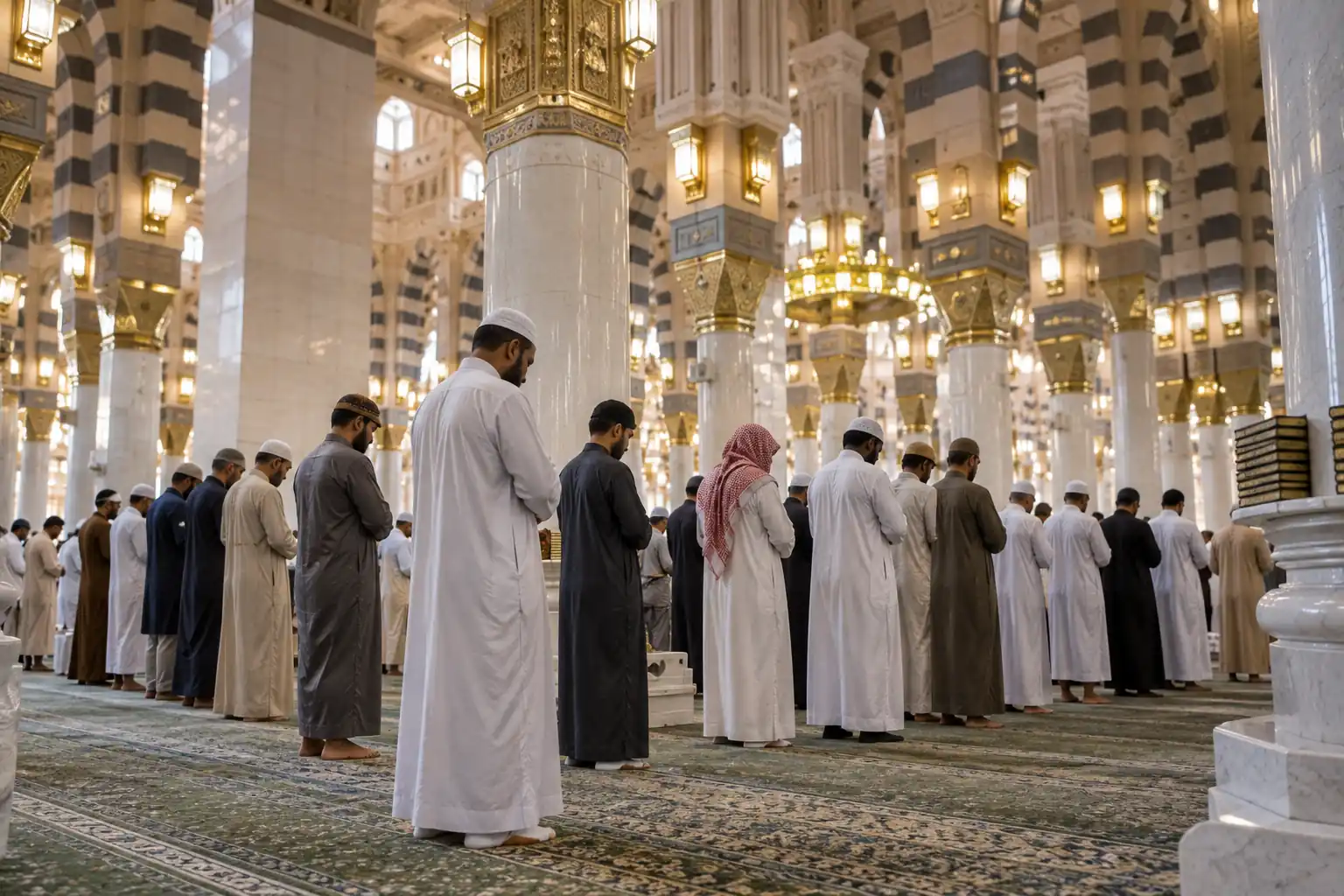
One of the most important facts about the Prophet’s mosque is the reward for prayer.
The Prophet ﷺ said that a prayer (Salah or Namaz) in his mosque is 1000 times more rewarding than praying in any other mosque, except Masjid al-Haram. This reward is also known as the Masjid al-Nabawi reward, showing its special status.
However, this reward does not mean that prayer in other mosques has no value. Muslims can earn great rewards for prayer wherever they worship sincerely.
{Abu Huraira (Allah be pleased with him) narrated it directly from Allah's Apostle (ﷺ), having said this:
A prayer in my mosque is a thousand times more excellent than a prayer in any other mosque, except Masjid al-Haram (Mosque of the Ka'ba).
(Sahih Muslim 1394, Book 15, Hadith 578 )}
The Rawdah is inside the mosque
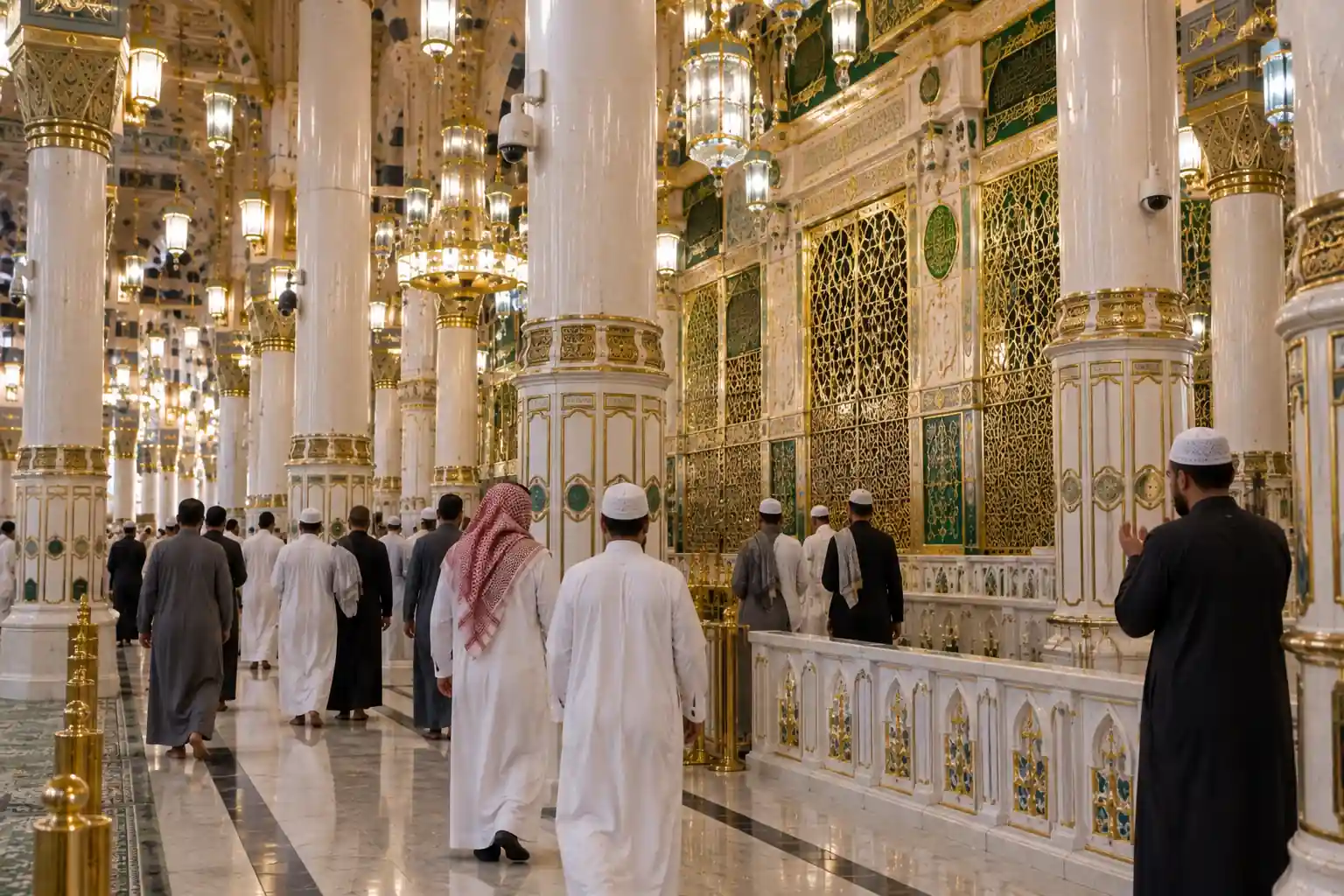
The Rawdah, also known as Rawdah Sharif or Rawdah al-Sharifah, is one of the most special areas of Masjid-e-Nabawi; it’s the area between the Prophet’s house and his minbar.
Prophet Muhammad ﷺ described this area as a garden from the gardens of Paradise.
The Rawdah is located inside the Prophet’s Mosque today. Because of its importance, many visitors pray there during their visit to Madinah, after or before Umrah.
But there’s a process to be followed: you must have a valid e-permit to access Rawdah, and visitors should follow the current official arrangements for entering the Rawdah.
For more details, read this guide: Things You Should Know Before Visiting Rawdah in Madinah.
Prophet Muhammad ﷺ is buried in the Sacred Chamber
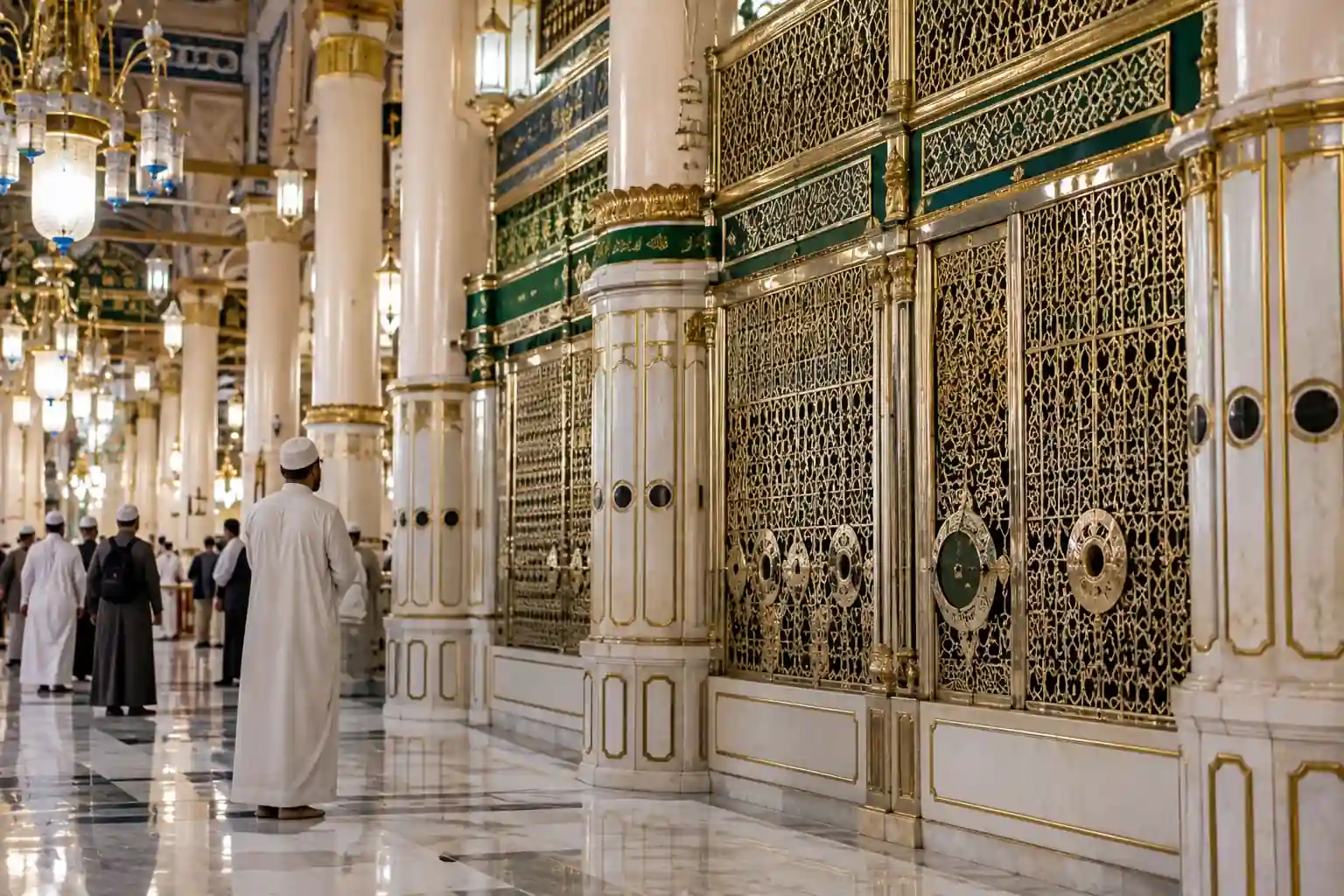
The Prophet’s Chamber is another important part of the mosque.
Prophet Muhammad ﷺ was laid to rest there, and Abu Bakr رضي الله عنه and Umar رضي الله عنه are also buried beside him.
The Prophet’s chamber, known as Hurjrah, was not a part of the mosque, but as the mosque expanded over time, it was enclosed within the larger mosque complex.
Sightseers should remember this place is an act of worship, and must abide by the rules of respect, good manners and calm behaviour.
The Green Dome was added later
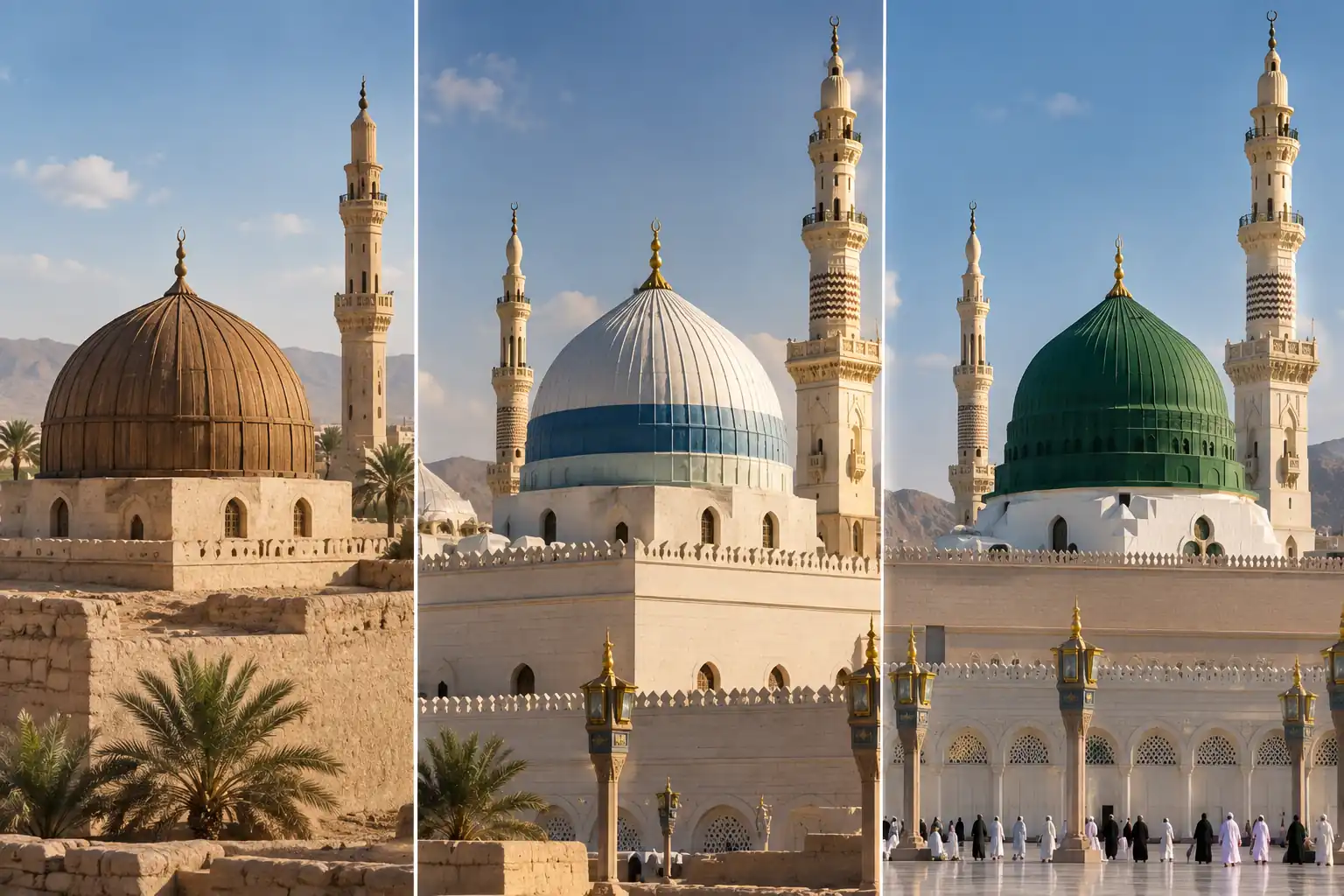
The famous Green Dome is one of the most recognisable features of Masjid-e-Nabawi.
However, the dome was not a part of the original mosque built during the lifetime of Prophet Muhammad ﷺ.
A dome was built over the Prophet’s Chamber over 600 years later. Historical records cite that the dome was first built in 1279 CE. It was originally made from wood and left unpainted.
During later centuries, it was painted white and blue, but a green coat of paint was applied in 1837 CE; now it’s commonly known as the Green Dome, closely associated with Madinah and also known as the Masjid-e-Nabawi dome.
Masjid-e-Nabawi has been expanded many times
Since the start of its history, 12 major expansions and renovations have been made to this Mosque.
Early expansions took place under the Umayyad Period (707–710 CE), and later by rulers including the Abbasids (777 CE), the Mamluks (1279 CE), and the Ottomans (1849 CE).
Modern Saudi expansions greatly increased the mosque's size and facilities. These changes allow a very large number of worshippers to pray in the mosque.
The history of Masjid-e-Nabawi expansion shows how the mosque developed from a simple structure into the huge complex that we see today.
The mosque contains several important landmarks
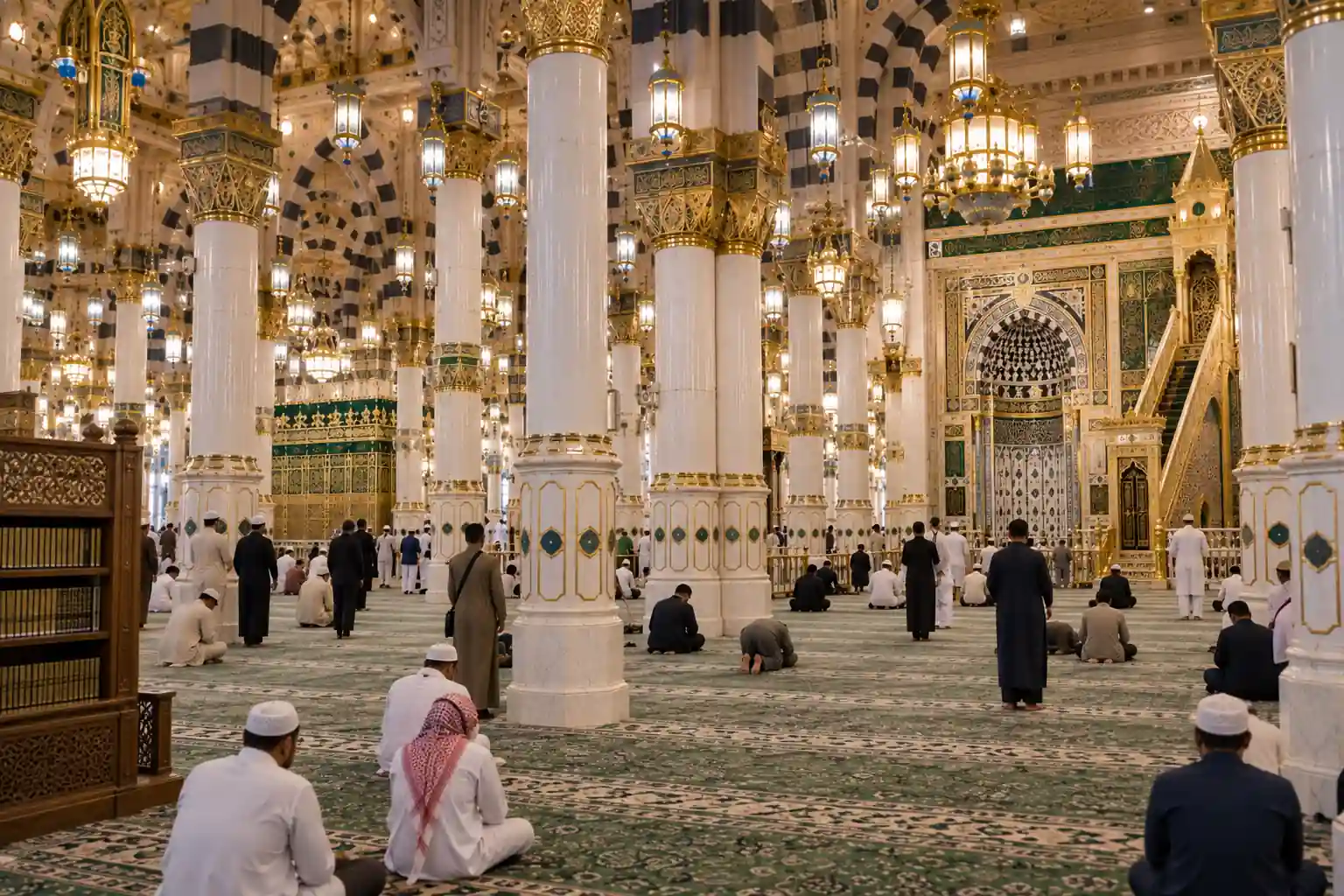
The Masjid-e-Nabawi interior has several important Islamic landmarks.
Include:
- The Rawdah
- The Prophet’s Chamber
- The Prophet’s minbar
- The mihrab
- The mosque library
- Historic pillars (Asatin)
- Old mosque area
The minbar holds a special place; that’s the exact spot where Prophet Muhammad ﷺ stood to address the Muslim community and guide early Muslims in faith.
The mosque interior combines Islamic design with modern facilities needed to serve millions of visitors.
The mosque combines history with modern facilities
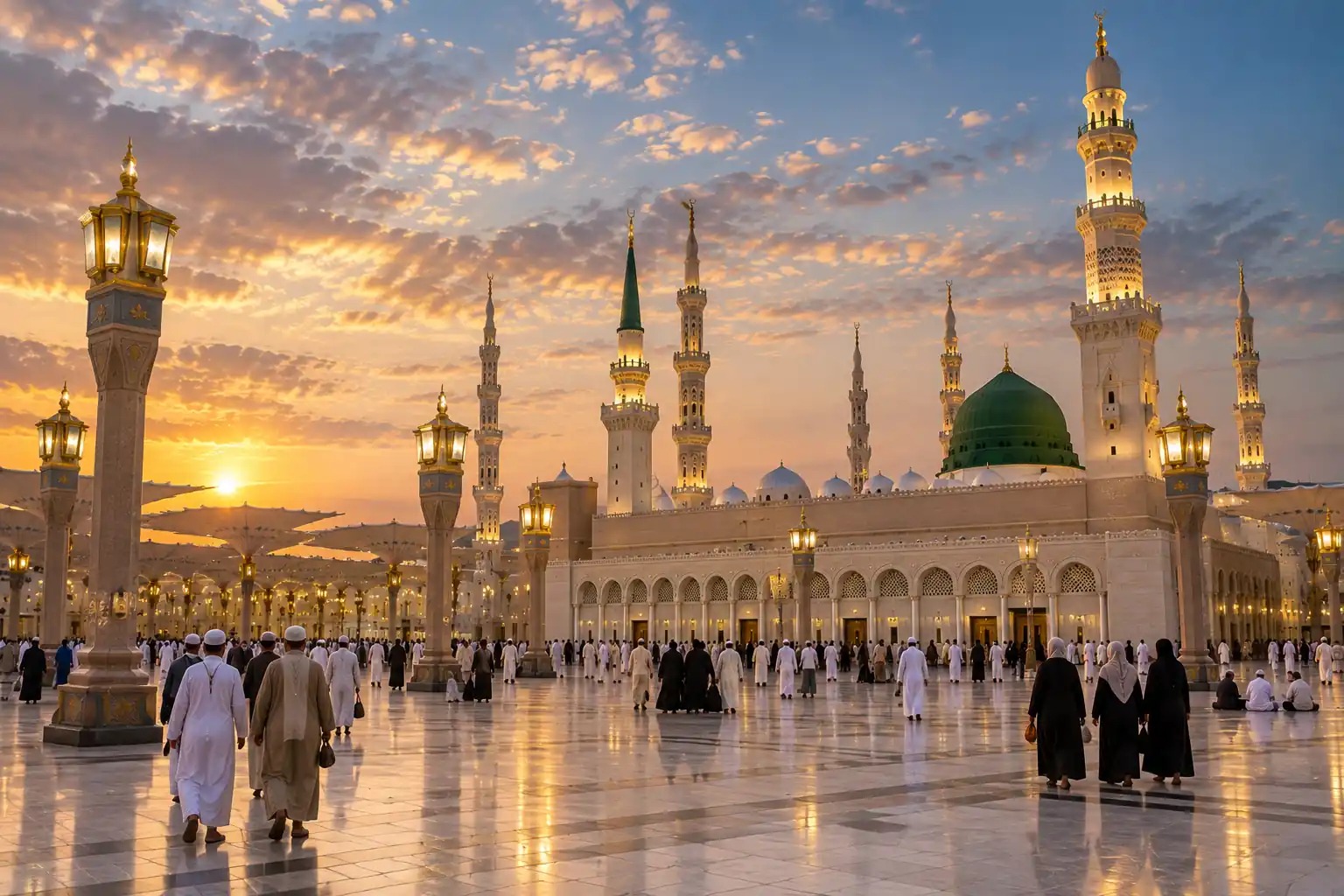
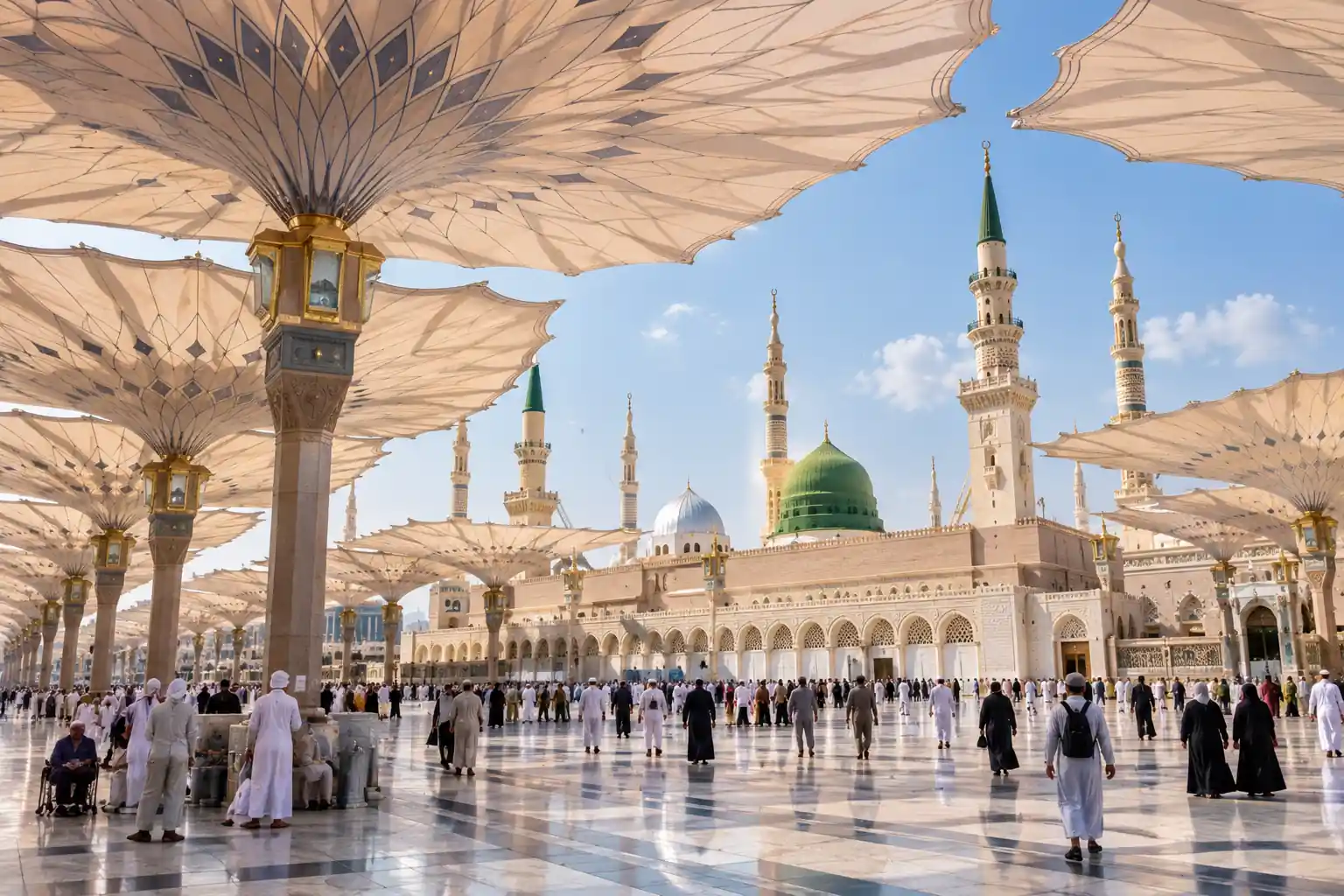
Today's Masjid-e-Nabawi is a large and highly developed mosque complex.
There are several Islamic landmarks alongside modern features designed to make worship easier and more comfortable.
The mosque has large courtyards, moving sunshades (umbrellas), cooling systems, drinking-water facilities and other services for worshippers.
The large Masjid-e-Nabawi umbrella structures in the courtyards are especially noticeable. There are 250 giant umbrellas; each stands 15 meters tall and protects 200,000 worshippers from the strong sun at once.
As part of its modern design, the mosque also has multiple minarets, entrances and large prayer areas.
Prepare Your Heart for a Meaningful Visit to Masjid-e-Nabawi ﷺ
Al Masjid-e-Nabawi is the sacred resting place of Prophet Mohammad ﷺ, and this place is closely connected to the life of the early Muslim community.
Praying in this mosque once is equal to praying 1000 times in other mosques, except Masjid al-Haram.
Each part of this mosque, from the Rawdah and Sacred Chamber to the Green Dome, has a story.
If you are planning Umrah from the UK, learning about Masjid-e-Nabawi before your journey will help you understand its rewards and virtues, the places you will visit and prepare for your time in Madinah.
Frequently Asked Question
What is the reward for praying in Masjid Nabawi?
A prayer in Masjid Nabawi is better than 1,000 prayers in any other mosque, except Masjid al-Haram.
This special reward is based on an authentic hadith reported in Sahih Muslim (1394a).
Who built Masjid-e-Nabawi?
Prophet Muhammad ﷺ established and helped build the original Masjid-e-Nabawi after arriving in Madinah in 622 CE (1 AH). His Companions also took part in its construction, and it was expanded many times later.
Who is buried inside Masjid Nabawi?
Prophet Muhammad ﷺ is buried in the Sacred Chamber. Abu Bakr رضي الله عنه and Umar رضي الله عنه are also buried there.
What is special about Masjid al-Nabawi?
Masjid al-Nabawi is the mosque of Prophet Muhammad ﷺ and one of the three mosques with special status in Islam.
Praying there one time is better than 1,000 prayers in other mosques, except Masjid al-Haram.
