


Common Money Mistakes During Umrah and How to Avoid Them
Practical Budgeting Advice for UK Pilgrims
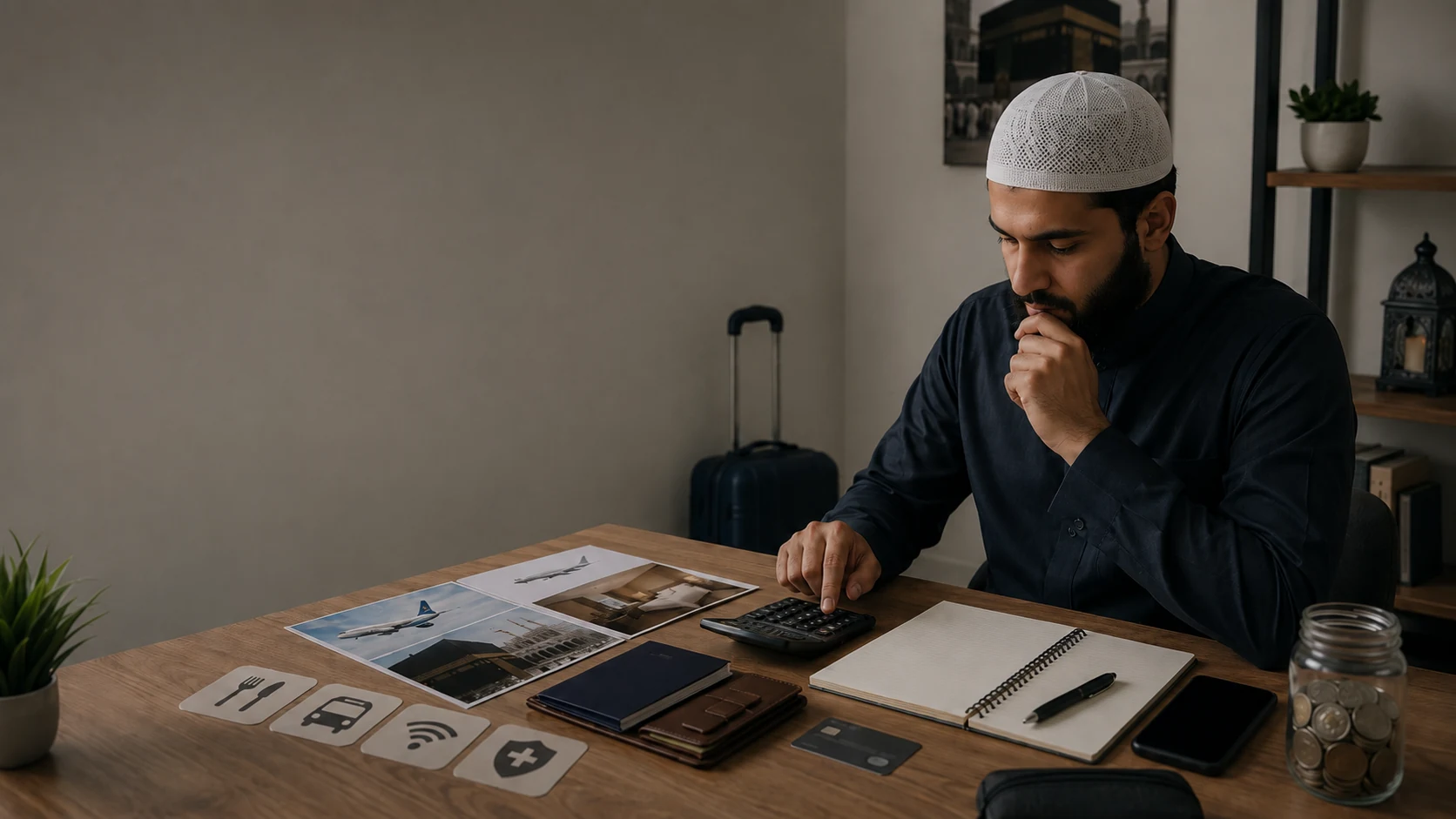
Performing Umrah is a deeply meaningful journey, but poor financial planning can create unnecessary stress before and during the pilgrimage. Some pilgrims focus heavily on flights and accommodation yet overlook everyday expenses such as meals, local transport, card charges, mobile data and emergency costs.
The aim is not to spend as little as possible. It is to understand what your package includes, prepare for additional expenses and manage your money without allowing financial concerns to distract you from worship.
Here are some of the most common money mistakes pilgrims make during Umrah and practical ways to avoid them.
Why Financial Planning Matters for Umrah
Even when flights, hotels and transfers are included in an Umrah package, pilgrims may still need money for food, taxis, laundry, medicines, shopping and other personal expenses.
Costs can also vary between Makkah and Madinah, depending on your hotel location, travel dates and spending habits. Creating a realistic budget before leaving the UK helps you make sensible decisions and reduces the risk of running short of money.
Pilgrims who are still comparing the overall price of their journey should review the complete cost breakdown of an Umrah trip rather than looking only at the advertised package price.
10 Common Money Mistakes Pilgrims Should Avoid
Booking the Cheapest Package Without Checking the Details
A low package price can appear attractive, but it may not represent the best overall value.
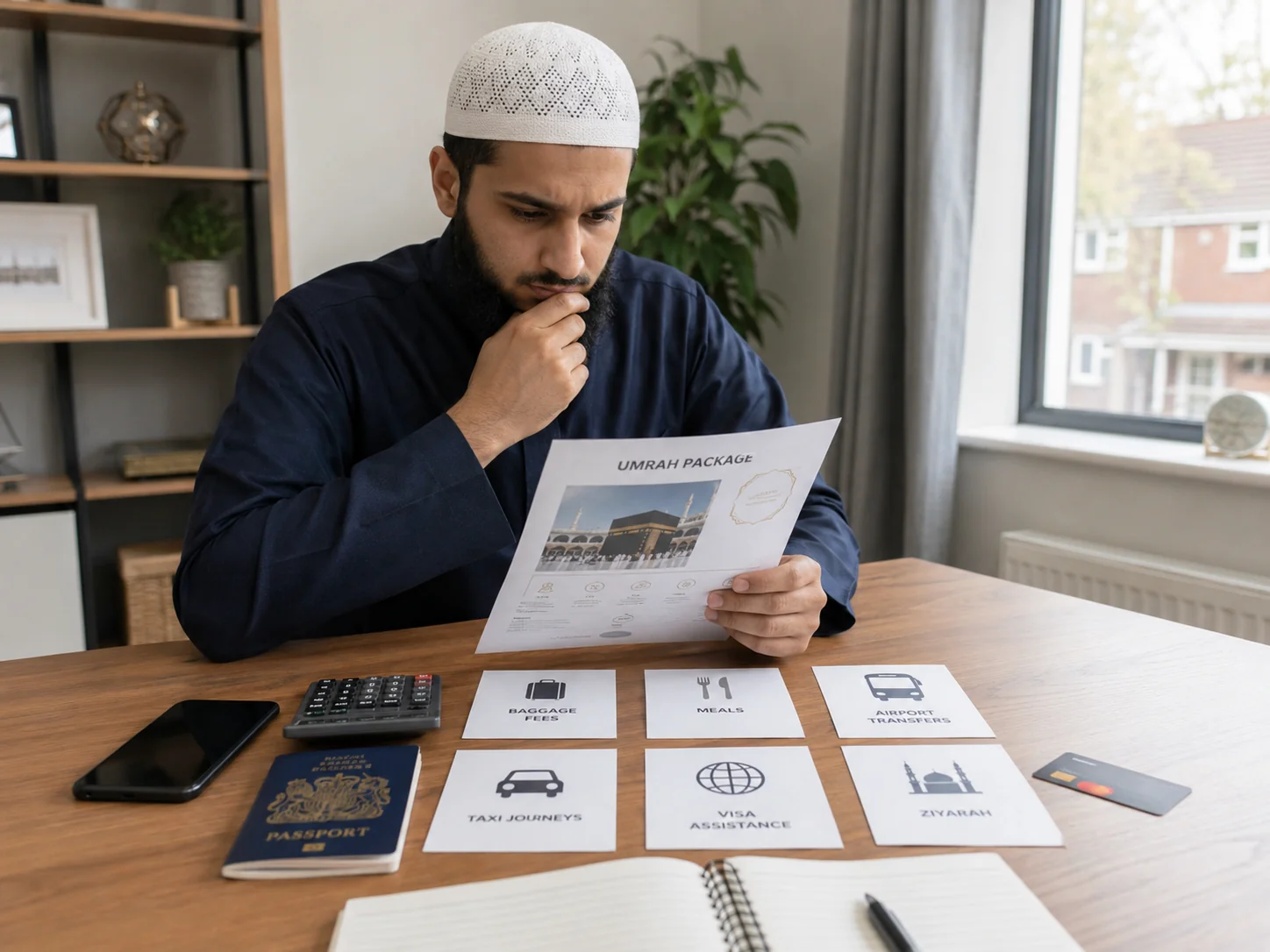
Some packages may exclude checked baggage, meals, airport transfers, Ziyarah visits or transport between Makkah and Madinah. A hotel described as being near the Haram may also require a long walk, a shuttle journey or frequent taxi fares.
Before paying, confirm:
- The hotel names and room type
- Distance from the Haram
- Flight and baggage details
- Airport and intercity transfers
- Meals and Ziyarah arrangements
- Visa-related services
- Cancellation and amendment conditions
Choosing suitable Umrah packages from the UK should involve comparing the complete arrangement, not simply selecting the lowest headline price.
Travelling Without a Realistic Spending Budget
Another common mistake is taking an estimated amount of money without deciding what it needs to cover.
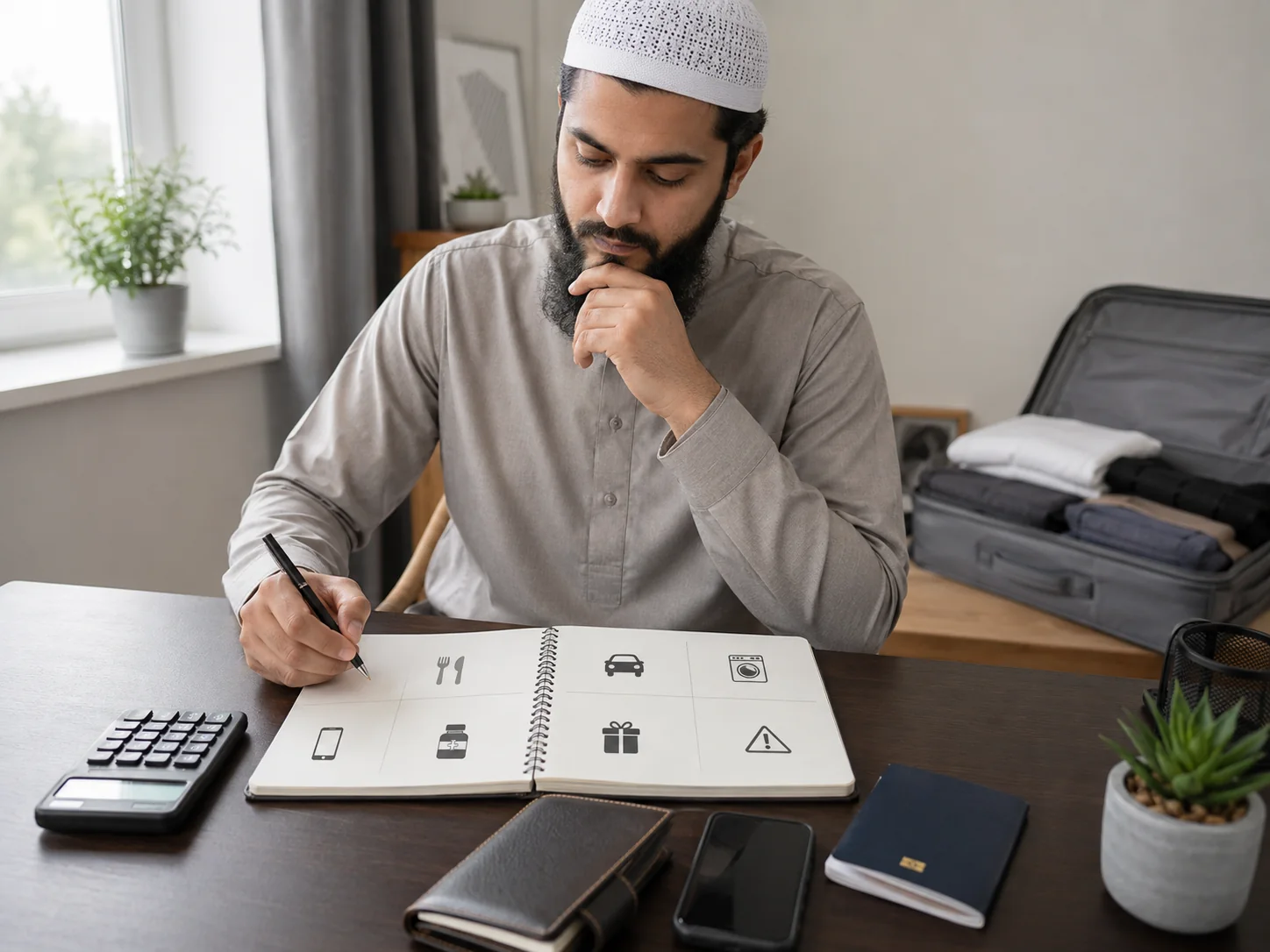
Separate your expected expenses into categories such as:
- Meals and refreshments
- Taxis and local transport
- Laundry
- Mobile data or calls
- Medicines and personal items
- Gifts and souvenirs
- Emergency expenses
Your required spending money will depend on what is already included in your booking. A pilgrim with breakfast, dinner and transfers included may need considerably less than someone arranging meals and transport independently.
Set a total budget and a rough daily allowance, but keep a separate emergency reserve that is not treated as normal spending money.
Depending Entirely on Cash
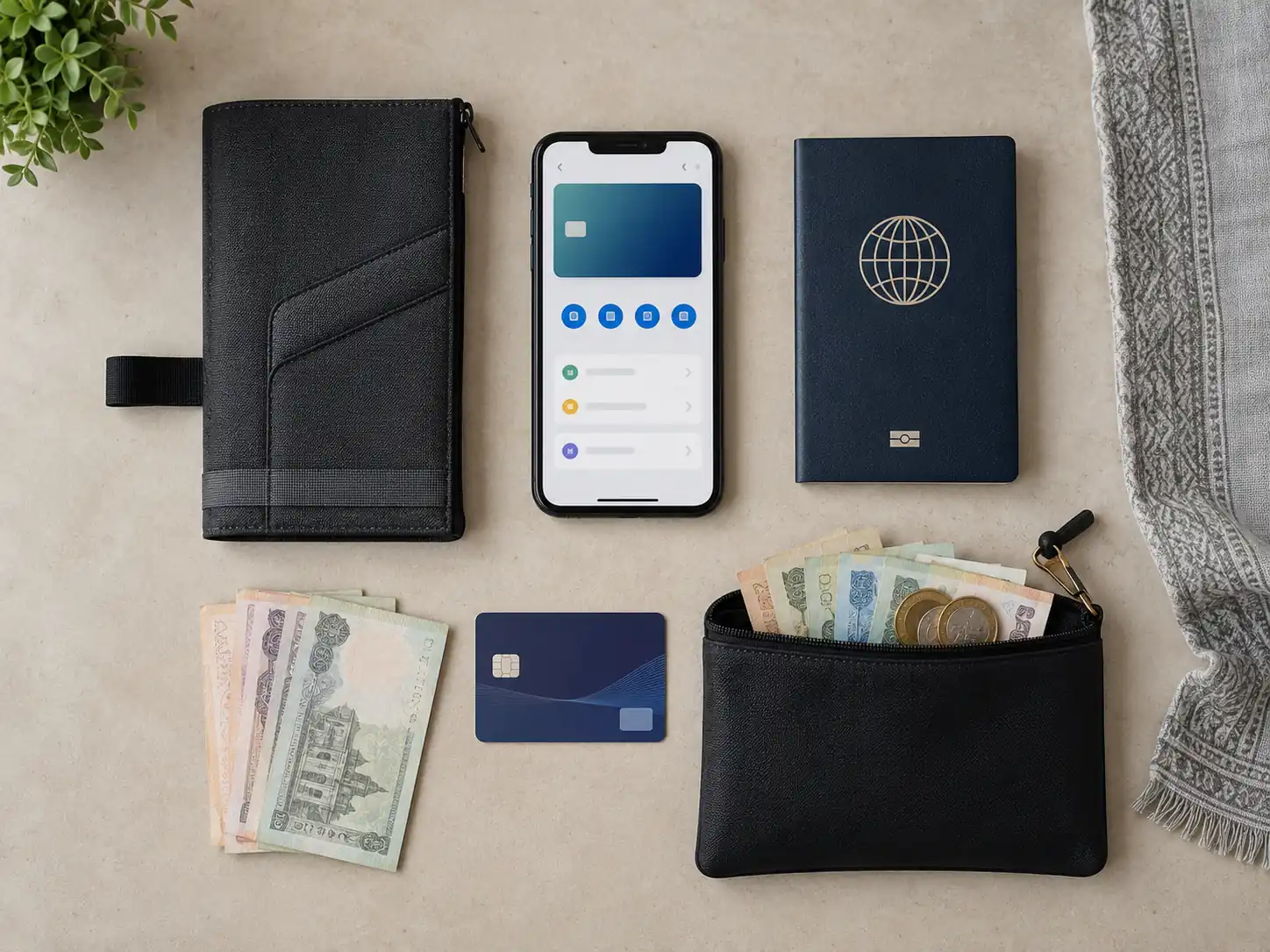
Cash can be useful for small purchases, local shops and situations where card payments are unavailable. However, carrying your entire travel budget in cash creates unnecessary risk.
Losing a wallet containing all your money can cause serious disruption. It can also be difficult to replace cash once it has been lost or stolen.
Carry only the amount you are likely to need during the day. Keep the rest securely stored and separate your money between more than one safe location.
You should also avoid displaying large amounts of cash in public or counting money in crowded places.
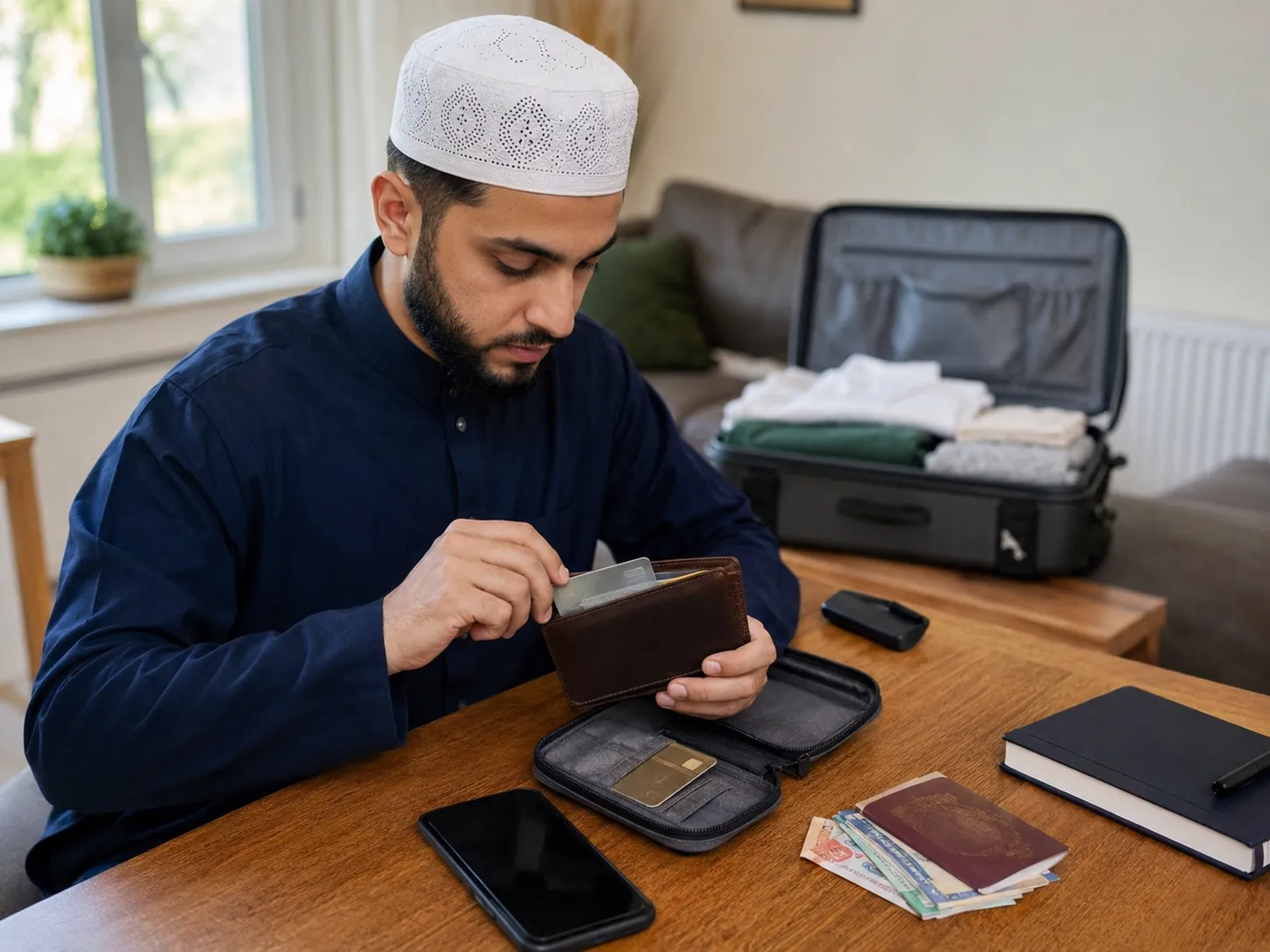
Relying Only on One Bank Card
Using one card for your entire journey can also cause problems. A transaction may be declined, the card could be lost, or your bank may temporarily block it after detecting overseas activity.
Take at least one suitable backup payment method and keep it separately from your main wallet.
Before travelling, check:
- Whether your card works in Saudi Arabia
- Foreign transaction charges
- Cash-withdrawal fees
- Daily withdrawal limits
- What number to call if the card is lost
- Whether your banking app will remain accessible abroad
Card acceptance and overseas charges can vary depending on the merchant and card provider, so confirm the details directly with your bank before departure.
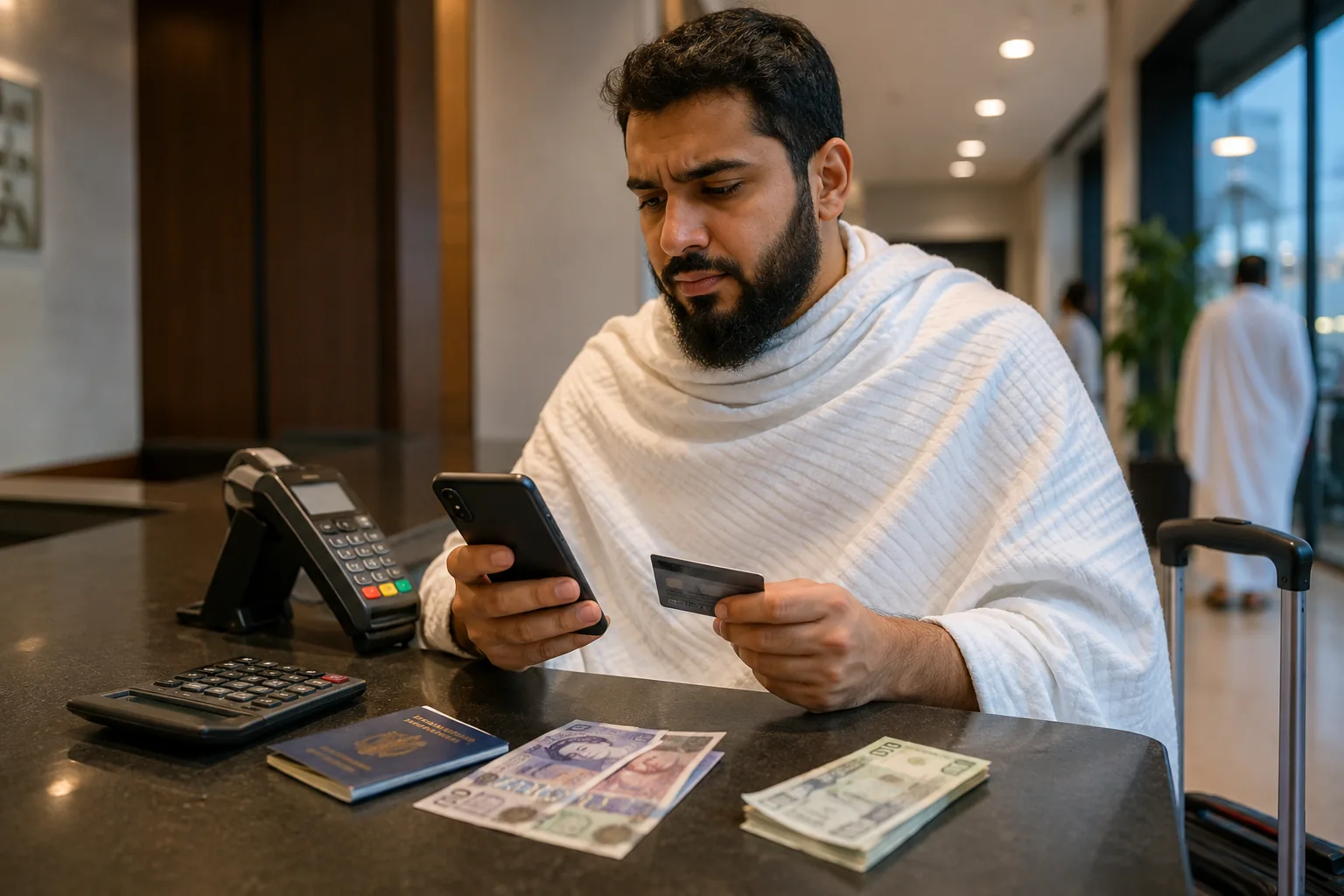
Accepting Poor Currency Conversion
Some card machines or ATMs may offer to convert a payment into pounds rather than charging it in Saudi riyals.
This may appear convenient because you immediately see the amount in GBP. However, the conversion rate offered by the machine or merchant may be less favourable than the rate used by your card provider.
When presented with a choice, check the figures carefully rather than accepting the conversion automatically. Your bank’s foreign exchange rate and overseas fees should also be reviewed before travelling.
It is sensible to compare currency exchange providers instead of changing all your money at the airport at the last minute.
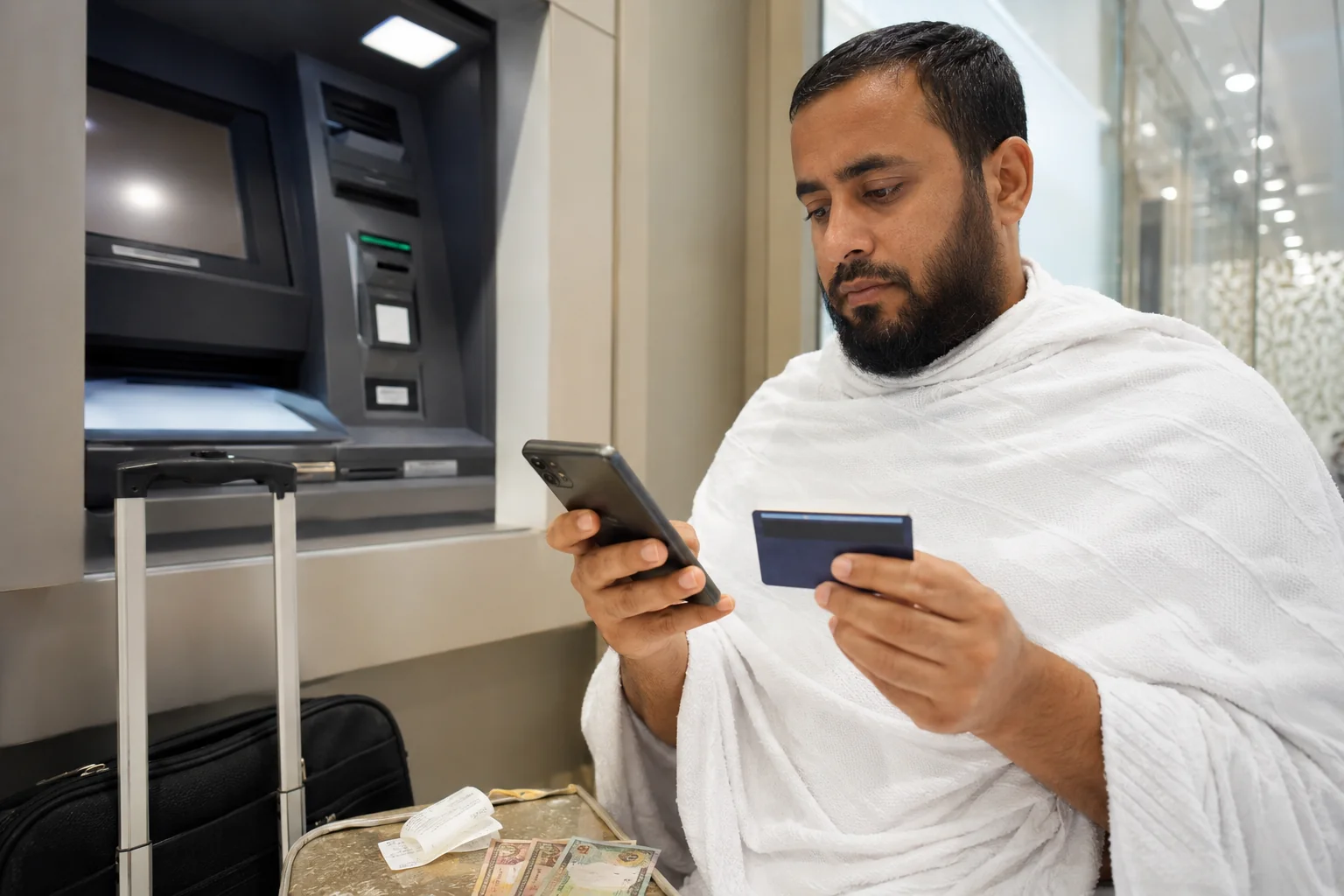
Ignoring Small Bank and ATM Charges
A single card fee may seem insignificant, but repeated payments and cash withdrawals can increase the total cost of your trip.
Possible charges include:
- Foreign transaction fees
- ATM withdrawal fees
- Currency-conversion charges
- Charges from the local cash machine
- Interest on credit-card cash withdrawals
Rather than withdrawing a small amount every day, plan your cash needs and limit unnecessary ATM visits. Never withdraw more than you can store securely.
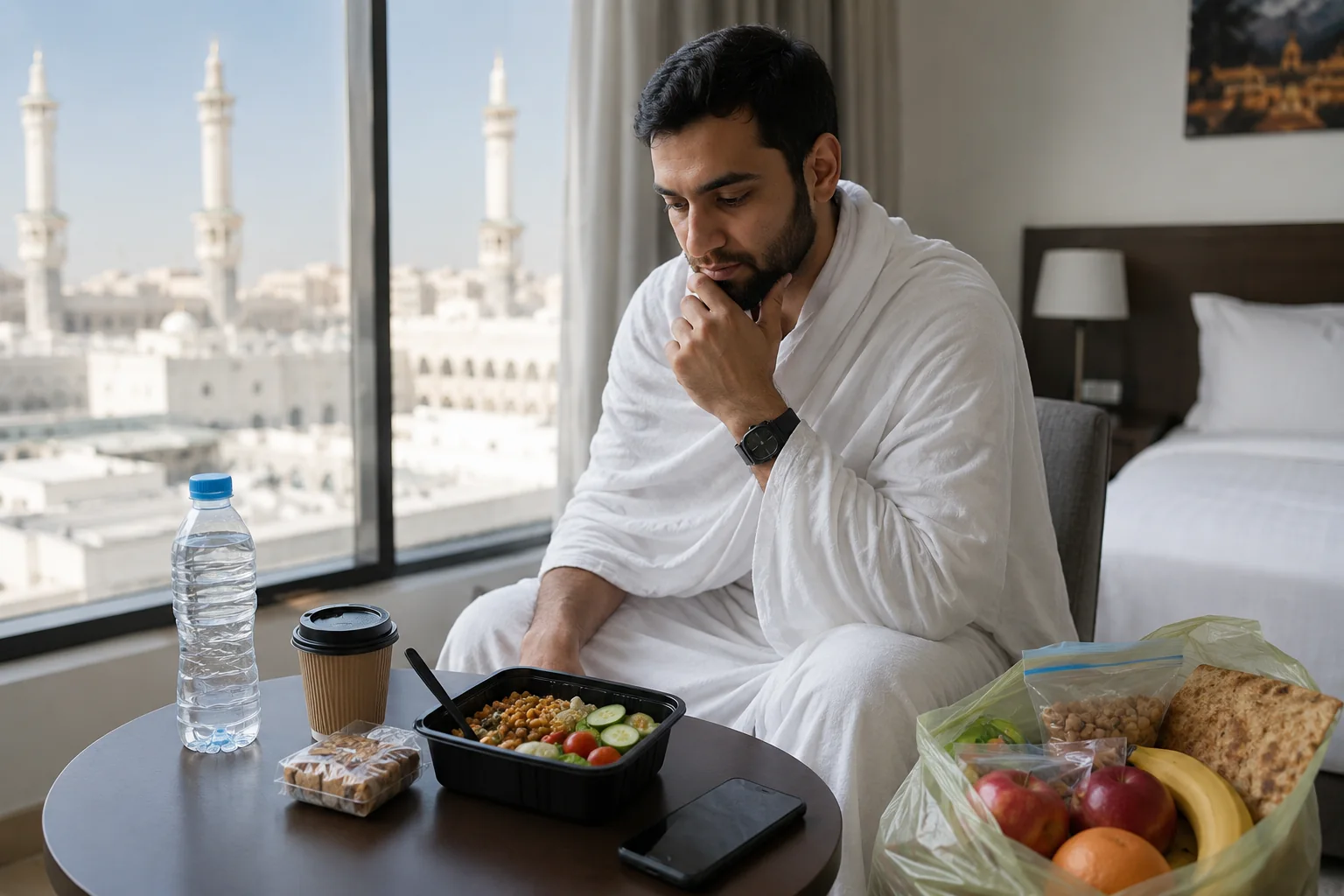
Overspending on Food and Convenience Purchases
Hotels and restaurants close to the Haram can be convenient, but frequent impulse purchases can quickly increase your daily expenses.
Pilgrims sometimes spend more than expected on bottled drinks, snacks, cafés, room service and food delivery because they have not planned where or when they will eat.
Before travelling, check whether your hotel booking includes breakfast or other meals. Buying food from supermarkets or reasonably priced local restaurants may help control spending without compromising comfort.
However, do not reduce your food or water intake simply to save money. Maintaining your strength and hydration is important, especially when walking long distances or performing Umrah in hot conditions.
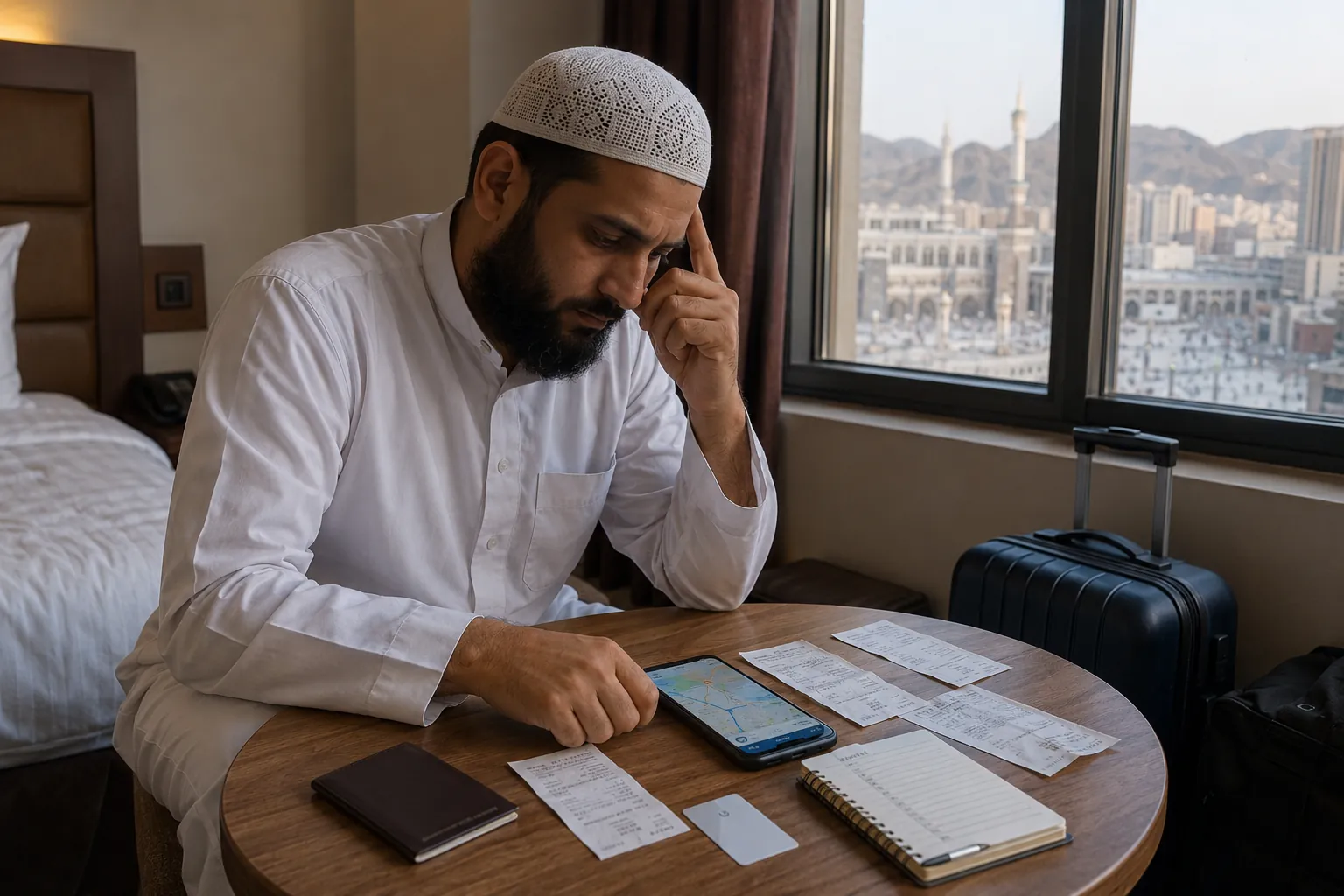
Failing to Budget for Transport
Transport is frequently underestimated.
Even when airport and intercity transfers are included, you may still use taxis for shopping, medical appointments, Ziyarah, restaurants or journeys between your hotel and the Haram.
Hotels that appear cheaper may create additional transport costs if they are located further away. This is particularly important for elderly pilgrims, families with children and travellers with limited mobility.
Check your hotel location carefully and ask which transfers are included before booking. The cheapest room may not remain the cheapest option once daily taxi fares are added.
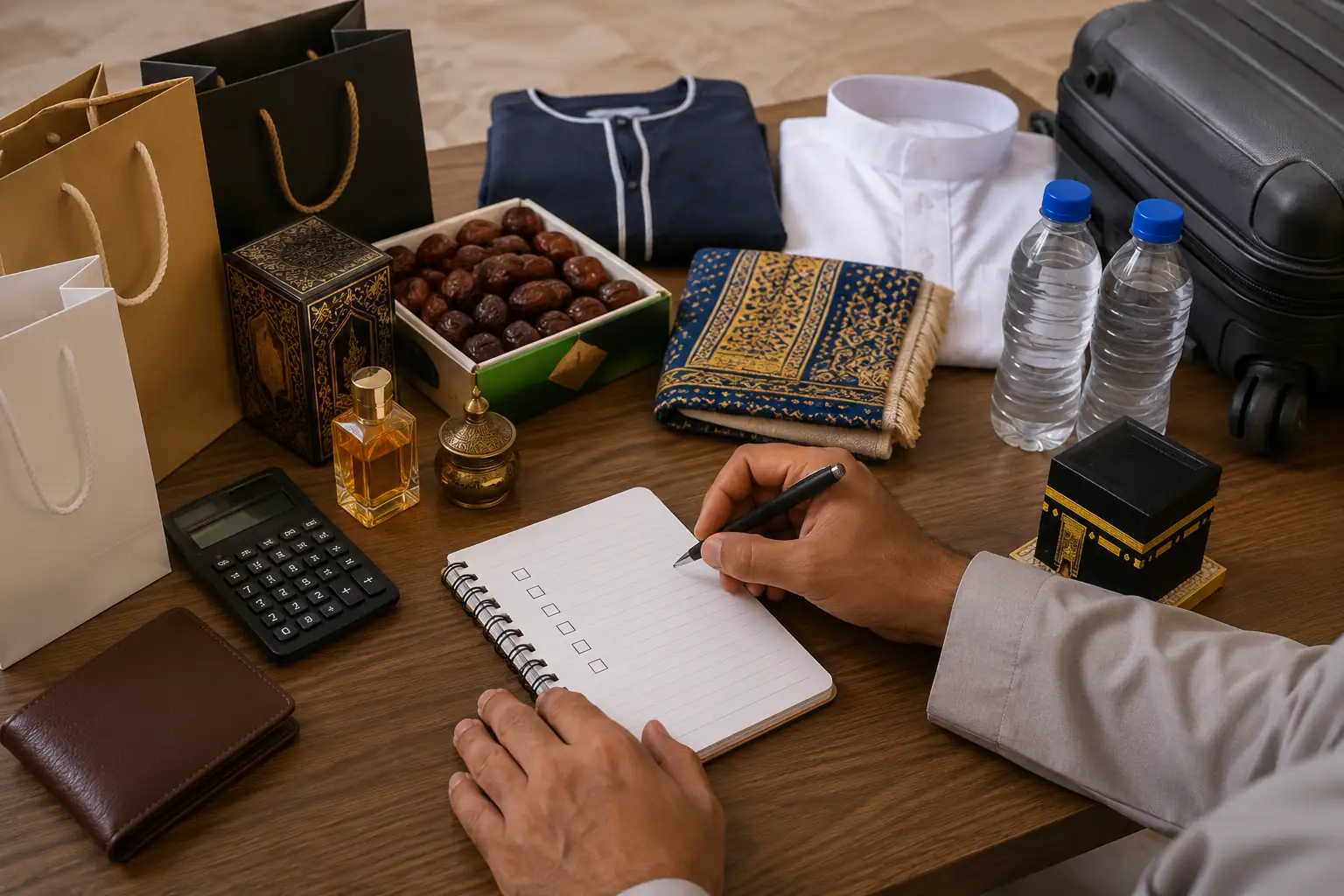
Spending Too Much on Gifts and Souvenirs
Buying gifts for family and friends is a valued part of the journey for many pilgrims, but shopping without a limit can place pressure on the rest of your budget.
Create a separate shopping allowance and list the people you intend to buy for. This can prevent repeated purchases and help you avoid using emergency money for gifts.
Remember that extra shopping may also affect your baggage weight. Excess-baggage charges can make an inexpensive item considerably more costly.
Check your airline allowance before purchasing bulky or heavy goods, and do not assume additional Zamzam water will automatically be accepted outside your normal baggage allowance.
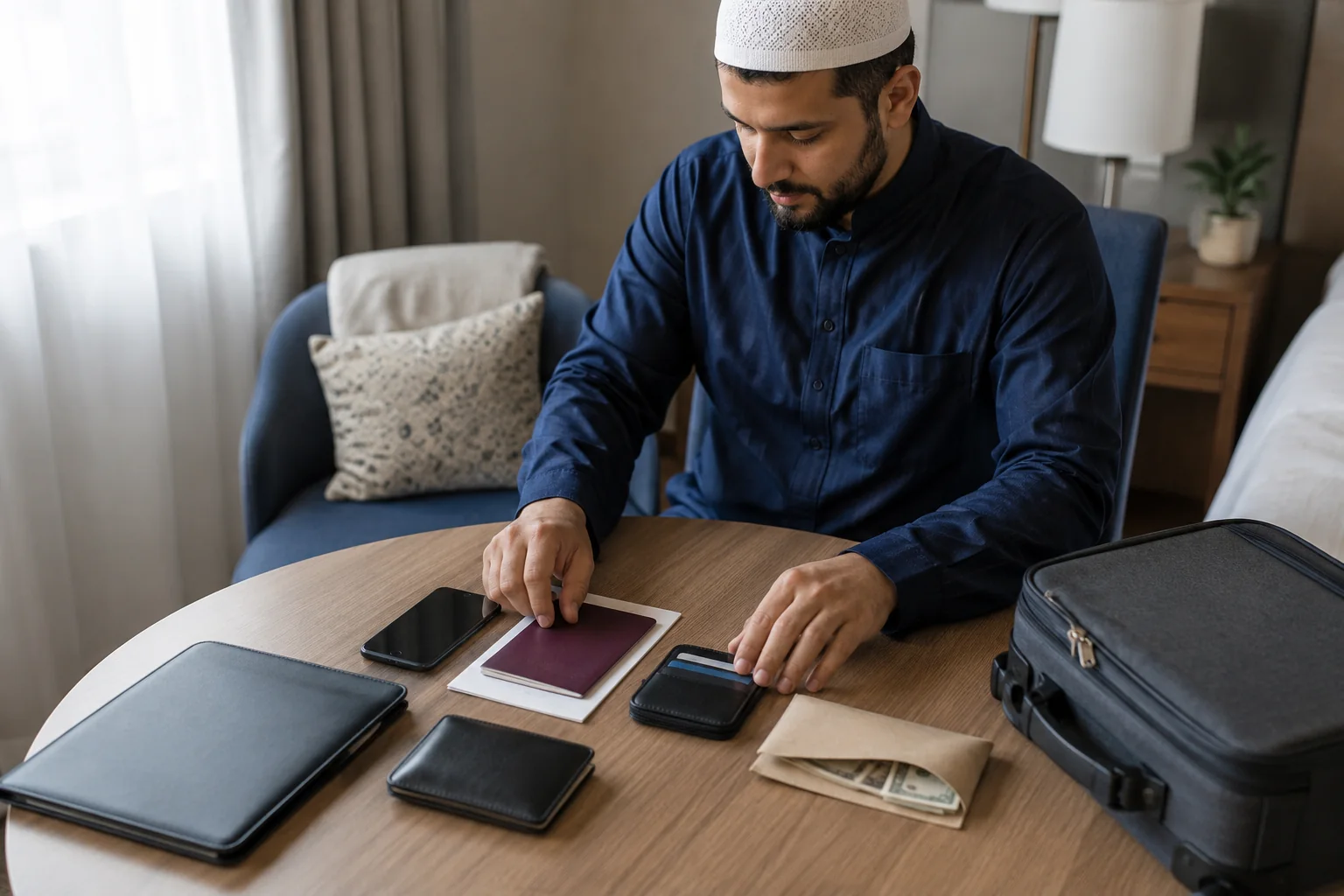
Keeping Money, Cards and Documents Together
Keeping your passport, cash, cards and phone in one bag is convenient but risky. If that bag is lost, you may lose every means of identification and payment at once.
Store backup cards, emergency cash and copies of important documents separately. Keep digital copies accessible through a secure account where possible.
Your passport, visa, insurance details and booking confirmations should also remain easy to access. For wider preparation advice, use Itimaar’s Umrah preparation guide.
Should You Take Cash or a Card for Umrah?
Using a combination of cash and cards is generally more practical than depending entirely on one payment method.
Cash can help with smaller purchases and unexpected situations, while cards may be convenient for hotels, larger shops, restaurants and other established businesses.
A sensible arrangement may include:
- A manageable amount of Saudi riyals
- A main payment card
- A separately stored backup card
- A small emergency reserve
The right balance depends on your bank charges, accommodation, package inclusions and personal spending habits.
How Much Spending Money Should You Take for Umrah?
There is no single amount that suits every pilgrim.
Your budget should reflect:
- Length of stay
- Meals included in the package
- Hotel location
- Included transfers
- Number of people travelling
- Shopping plans
- Personal and medical needs
- Travel style
Instead of copying another traveller’s budget, calculate your likely daily expenses and multiply them by the number of days you will be away. Then add an emergency reserve.
Simple Money Checklist for UK Pilgrims
Before leaving the UK:
- Confirm exactly what your package includes
- Create a daily spending budget
- Check card and ATM charges
- Carry more than one payment method
- Keep cash and cards separately
- Set a fixed shopping allowance
- Check baggage restrictions
- Arrange suitable travel insurance
- Save emergency contact details
- Review current official travel advice
Final Thoughts
The biggest money mistakes during Umrah usually come from poor preparation rather than unavoidable expense.
Booking on price alone, relying on one payment method, ignoring card charges and spending without a daily budget can all create unnecessary pressure. A little planning allows you to manage your money responsibly while keeping your attention on the purpose of the journey.
Prepare enough for your needs, keep an emergency reserve and avoid turning every saving decision into a compromise on safety, health or comfort.
Frequently Asked Questions
Is it better to carry cash or use a card during Umrah?
A combination is usually more practical. Carry some Saudi riyals for smaller expenses and keep a card available for larger payments. Take a backup payment method and store it separately.
Can I use my UK debit card in Saudi Arabia?
Many UK debit cards can be used in Saudi Arabia, but overseas fees, withdrawal charges and security controls vary by provider. Contact your bank before travelling and confirm that international payments are enabled.
How much spending money should I take for Umrah?
The amount depends on the length of your stay, meals, transport, shopping plans and what your package already includes. Calculate a realistic daily budget and add a separate emergency reserve.
How can I avoid overspending during Umrah?
Set a daily allowance, create a separate shopping budget and keep emergency money apart from everyday spending. Tracking larger purchases can also help you stay within your planned budget.
