


A Beginner's Guide to Ziyarat - Madinah & Makkah Ziyarat Places
Most Visited Places in Makkah & Madinah
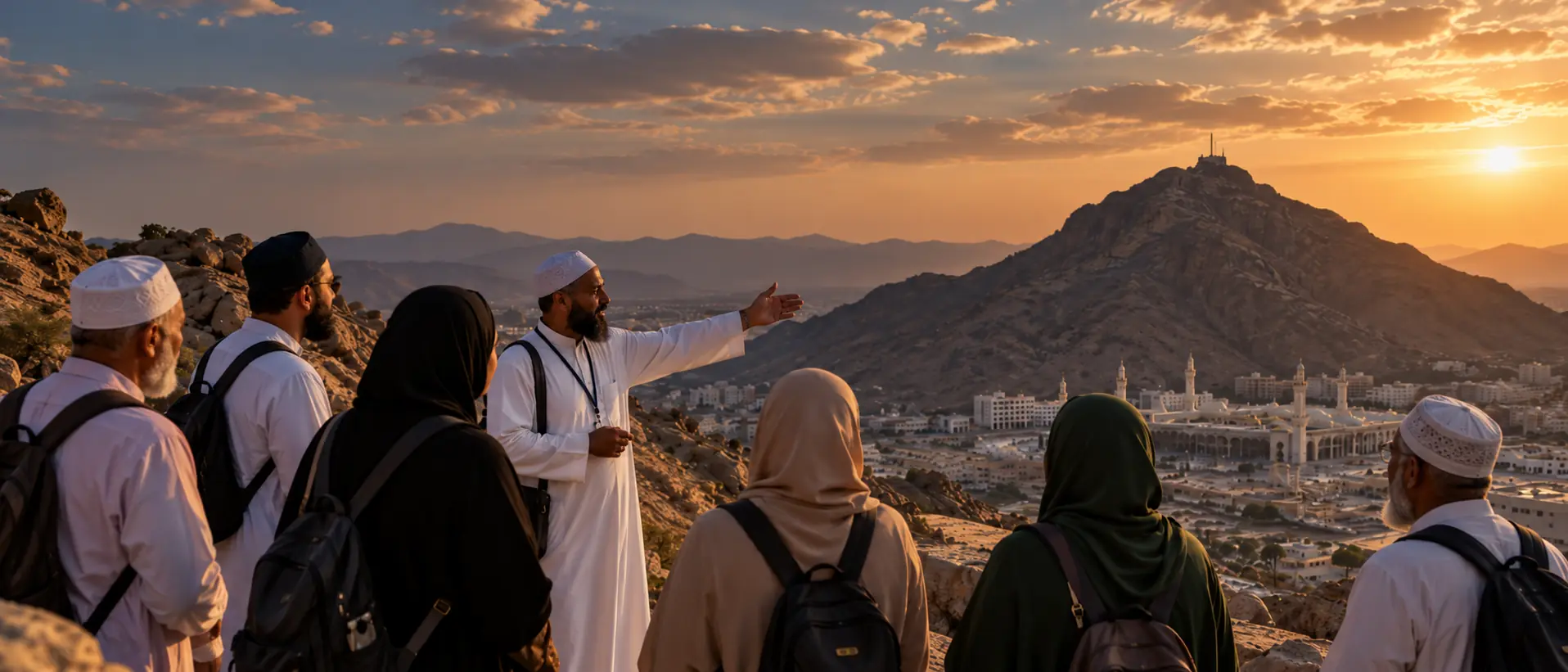
Visiting holy and historic sites is known as Ziyarat. Pilgrims of Umrah and Hajj visit such places tied to Prophet Muhammad ﷺ and his companions.
Ziyarat is an act of Sunnah, not a mandatory part of Hajj or Umrah. But it really makes your trip into a lesson of Islamic history.
In this guide, we’ve listed top Makkah ziyarat places, the best sites in Madinah, and a few tips to visit them.
What Is Ziyarat?
Ziyarat is an Arabic term for "visit." Ziyarat helps to shed light on the Prophet ﷺ life and pray at these sites.
Many pilgrims add ziyarat in Mecca and Madinah to their plans because these two cities hold the most important sites in Islamic history.
Why Should You Do Ziyarat?
Doing ziyarat brings immense rewards and help connect deeply to Islamic history.
Have you heard of terms like Hira, Uhud, and the Hijrah your whole life?
Ziyarat lets you stand where these events happened; what you assumed as stories becomes real, your dua feels deeper, and it creates a memory that lasts.
It shapes how you understand your faith.
Top 6 Makkah Ziyarat Places
The most common standard route taken by most pilgrims is booking Makkah Ziyarat as a half-day trip and scheduling it after finishing the Umrah rites.
Here are the key stops for Ziyarat in Makkah:
Jabal al-Nour and Cave Hira
The Prophet ﷺ received the first revelation here, when Angel Jibreel (AS) brought the opening verses of Surah Al-Alaq. The climb is steep and takes over an hour. Go only if you are fit, and start early.
Jabal Thawr and Cave Thawr
The Prophet ﷺ and Abu Bakr (RA) hid here during the Hijrah. Their trust in Allah is the lesson of this place. The climb is hard, so many pilgrims view the mountain from below.
Jannat al-Mualla
This cemetery holds Khadijah (RA), the Prophet's ﷺ first wife and his greatest supporter. Visit quietly and make dua.
Masjid Aisha (Taneem)
Pilgrims already in Makkah enter Ihram here to perform another Umrah.
Arafat, Mina and Muzdalifah
These are the Hajj sites. Arafat's Jabal al-Rahmah rises near where pilgrims stand on the Day of Arafah. Many pilgrims see all three during ziyarat Makkah trips outside Hajj season.
The Prophet's ﷺ birthplace
A library now stands on the spot that people traditionally mark as his birthplace.
Top 6 Madinah Ziyarat Places
Most of these stops are close to one another, so a well-planned day covers them. Ask your Umrah travel partner to add a Ziyarat in Mecca day and a Madinah day to your plan, and you cover every major site.
Masjid an-Nabawi and the Rawdah
The Prophet ﷺ built this mosque. The Rawdah is the area between his house and his pulpit. Entry requires a permit, so check the Nusuk app before you go.
Masjid Quba
This is the first mosque in Islam. The Prophet ﷺ taught that praying here after wudu earns the reward of an Umrah.
Masjid al-Qiblatain
Muslims changed their prayer direction here, from Jerusalem to the Kaaba. Pray two rakat and remember that moment.
Mount Uhud and the Martyrs of Uhud
Hamza (RA), the Prophet's ﷺ uncle, rests here. Reflect on the lessons of the Battle of Uhud: patience, obedience, and sacrifice.
Jannat al-Baqi
This cemetery sits beside Masjid an-Nabawi. Many companions and family members of the Prophet ﷺ rest here.
Masjid al-Fath
This site marks the Battle of the Trench. It stands with a group of smaller mosques.
How to Do Ziyarat the Right Way?
Follow these rules:
- Set your intention. Go to learn about Islamic history and remember.
- Dress modestly. Stay calm and follow the signage you’ll encounter.
- Prepare. Wear good shoes, carry a water bottle, and visit in the morning or late evening to beat the heat.
- Avoid wrong acts. Do not touch, kiss, or pray to stones, graves, or walls. Make dua to Allah alone.
- Check the rules. Confirm the opening and closing times and any access changes before you go.
- Ask a qualified scholar. If you feel unsure, get advice before you act.
When and How to Plan Your Visits?
Plan for Ziyarat when you’ve fully completed your Umrah; avoid booking your trips on Friday since the mosques fill up.
There are two best options to choose from: Morning right after Fajr prayer or Late afternoon after Asr prayer.
Keep your hotel card and ID/Passport in an easily accessible pocket.
Use licensed transport; agree on the exact price and the specific route stops.
If you’re travelling with parents or children, pick the one with fewer stops.
Visit each site with a proper plan, not to rush; one visit with enough time is better than visiting each just to check off the list.
Can You Visit These Sites on Your Own?
Yes, you can visit these sites as a solo traveller; this can be done easily via three modes depending on your budget and preference, as follows:
- Licensed Group Bus tours: Very cost-effective; most multilingual operators explain the rich Islamic history of each bus stop.
- Ride-hailing apps (Uber, Careem, or Jeeny): These apps run 24/7, completely relying on your proposed destinations.
- Private Street Taxis or Ziyarat Drivers: Hiring a private taxi is also available for a flat rate.
What to Pack
Here’s the list:
- Cross-body sling bag or waist pouch
- Copy of your ID/Passport
- Hotel Card
- Reusable Water bottle
- Dates or ORS
- Unscented wet wipes
- Use fully broken-in walking shoes
- Power bank
- Foldable pocket prayer mat
- Drawstring shoe bag
Book Your Trip, Then Start Your Ziyarat
What if you book your Umrah and cover all the Ziyarat in Mecca and Madinah?
All of it can be done when your flights, hotels and transport are ready, and Itimaar is here to help you along the way.
Book your Umrah package today, then use this guide to plan every stop.
Pick your dates today and start planning.
Frequently Asked Questions
What does Ziyarat mean in Islam?
Ziyarat is an Arabic word for visit. In Islam, it means visiting holy places, historic sites tied to the Prophet's ﷺ life, and graves to make dua to Allah and remember death.
What is the difference between Ziyarat and Hajj?
Hajj is a required pillar of Islam and mandatory for every able person. Whereas Ziyarat is optional, has no set rites, and you can do it anytime.
How do you perform Ziyarat?
All you need to do is set a sincere intention, visit the holy site, pray in mosques, and make dua to Allah alone. Learn the history and make sure never, ever to pray to graves or stones.
Is Ziyarat allowed in Islam?
Yes, Islam allows you to visit mosques, historic sites, and graves with the right intention. But it’s completely forbidden to worship the site or ask the dead for help. Ask a qualified scholar for more details.
