


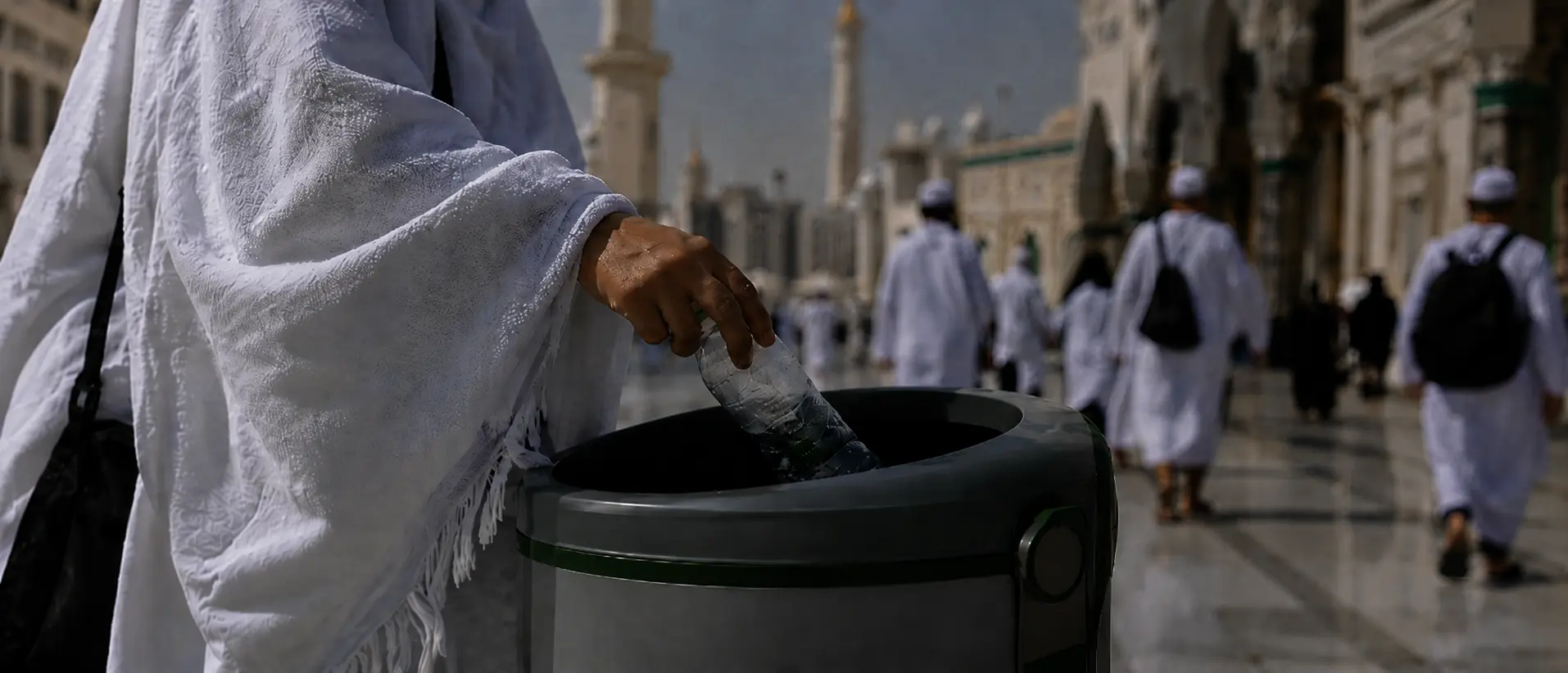
Tips To Minimise Waste During Hajj and Umrah
Practical Guide on how pilgrims can minimise waste during Hajj and Umrah
Hajj is one of the most profound obligations in Islam, while Umrah is a deeply rewarding minor pilgrimage. Every year, millions of Muslims travel to the holy cities of Makkah and Madinah to perform Hajj and Umrah, seeking forgiveness and strengthening their connection with Allah (SWT).
In 2025, nearly 2 million Muslims performed Hajj, and countless others completed Umrah throughout the year. While these journeys are spiritually meaningful, yet they also create a lot of trash and waste that has a big impact on the environment. From plastic bottles, disposable items, food packaging, carbon emissions and more.
But as a responsible pilgrim and steward of the Earth, it's essential to focus on environmental care like we do while performing the rituals. Minimising waste during Hajj and Umrah doesn't just show Islamic values of cleanliness and modesty. It also helps keep the holy sites sacred for future generations.
Here are practical tips to help you minimise waste during your Hajj and Umrah, ensuring a spiritual, fulfilling and sustainable pilgrimage journey.
Understand The Environmental Impact Of Hajj and Umrah
Before diving into the tips to minimise waste during Hajj and Umrah, let's first understand the environmental impact of these sacred journeys.
During Hajj and peak Umrah seasons (Ramadan), the Kingdom of Saudi Arabia collects thousands of tonnes of waste daily, mostly plastic bottles, food containers, leftovers and disposable items. This waste requires massive resources to manage and ultimately ends up in landfills, thereby polluting the environment.
Being a Muslim, it's our duty to not only protect the environment but also all the creations of Allah (SWT). Our beloved Prophet Muhammad (PBUH) also emphasised the importance of cleanliness and reminded the ummah of the duty of khilafah (stewardship).
The Prophet (PBUH) said;
"The earth is green and beautiful, and Allah has appointed you his stewards over it"
This quote highlights the responsibility Muslims have to protect and preserve the natural world—an obligation rooted in the belief that Allah has entrusted humanity with the stewardship of the Earth.
Practical Tips For Reducing Waste During Hajj and Umrah
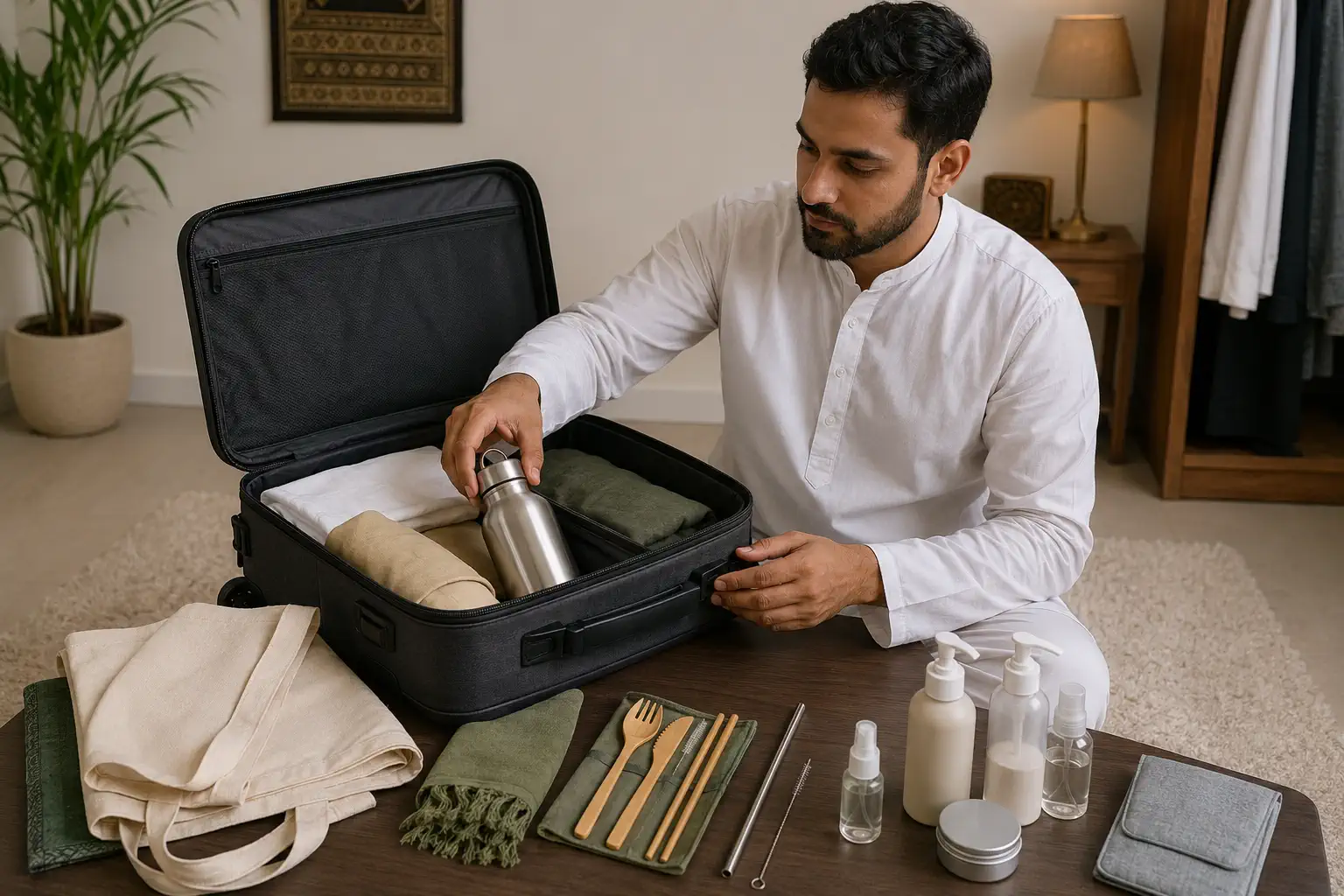
Pack Reusable, Not Disposable
When planning for a sustainable Hajj or Umrah, you should be mindful of your packing. A small change in your packing list can make a big impact. Here's what to consider:
- Carry reusable water bottles and avoid relying on plastic bottles.
- Bring your own tote bag or get reusable shopping bags.
- It would be best if you carry your own cutlery, basically travel-sized utensils.
- Get refillable toiletry containers and avoid single-use sachets.
- Carry reusable straws made of bamboo, stainless steel or silicone and avoid using plastic ones.
Note: Reusable items will not only help reduce plastic waste but also save you money in the long run
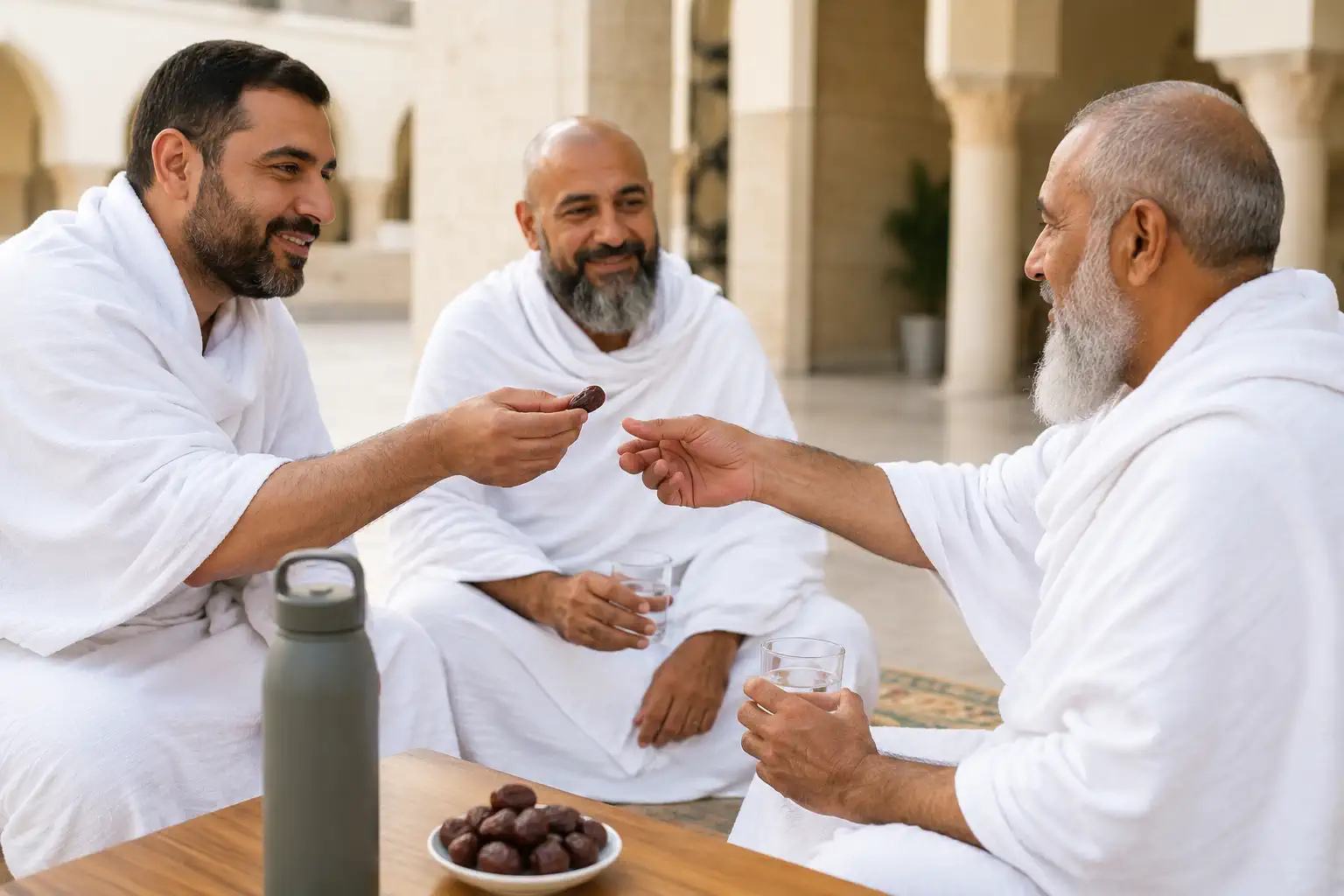
Be Mindful Of Food Waste During Hajj and Umrah
One of the biggest environmental and ethical issues during the Hajj and Umrah journey is food wastage. Wasting food is common, and you may see many pilgrims buying more food than needed and hence leaving it for the dustbins. Here's what you can do:
- Do not buy large portion sizes if you are alone.
- Share your food with other fellow pilgrims, it's a Sunnah.
- Don't get attracted to buffet meals if you are not really hungry.
- Always store leftovers in a container.
- Go with less or biodegradable packaging, and avoid plastic food packaging.

Avoid Single-use Plastic
Do you know that single-use plastic is one of the major sources of trash coming from sacred places? Single-use plastic-like cups, bags, straws, and cutlery may seem to be economical, but they cause a severe impact on the environment. Instead of single-use plastic, you can use:
- Reusable bottles, cups, straws and bags
- Bring your own cutlery and utensils made from bamboo or metal, if they're travel-sized.
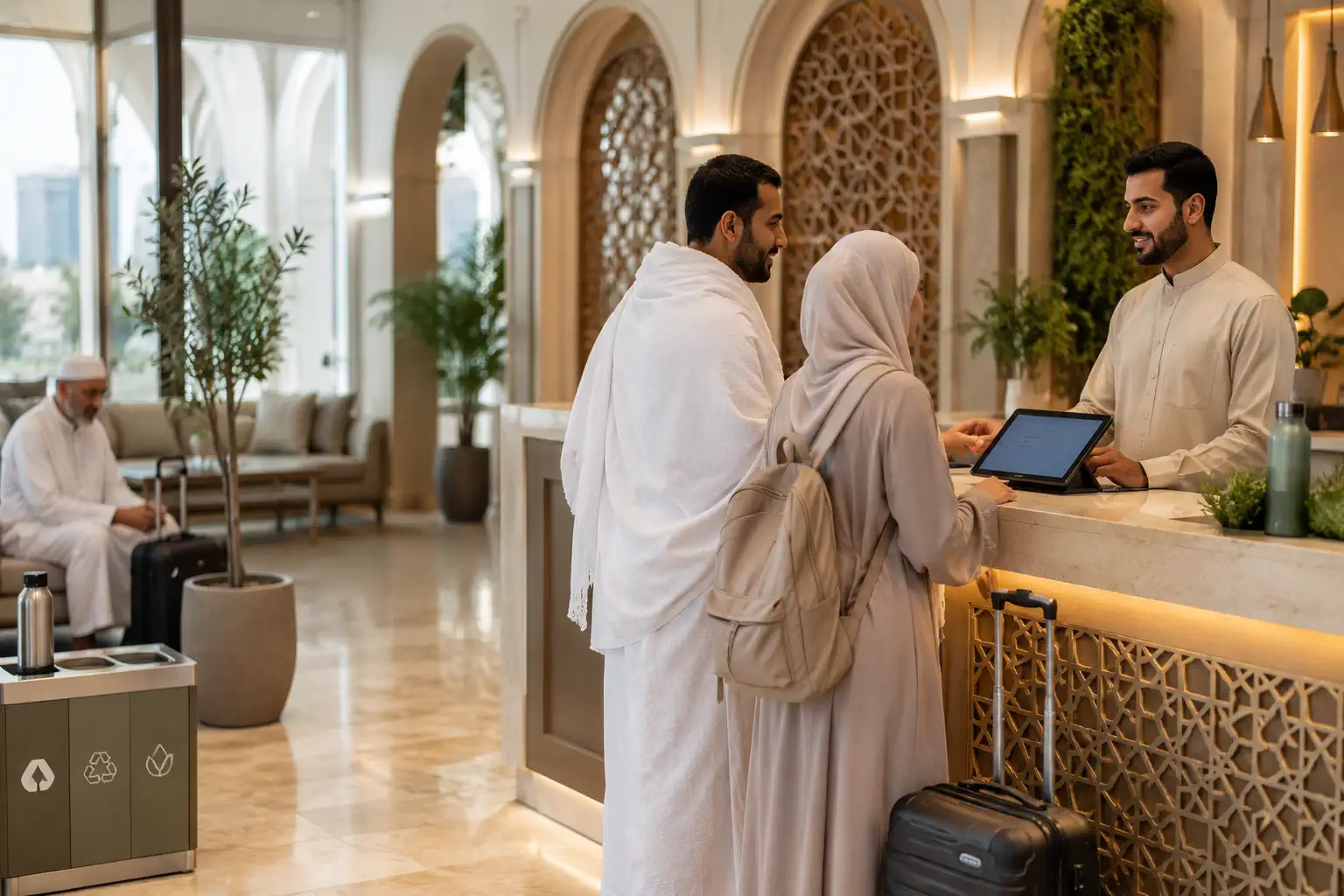
Choose Eco-Friendly Travel- Accommodation & Transport
After the Green Hajj initiative, many hotels are encouraging sustainability and offering eco-friendly stays. With efficient lighting fixtures, digital check-ins and water-saving features.
- Book accommodation with green certifications and encourage recycling initiatives.
Ask your travel agent:
- Do they prefer e-documents?
- Do they contribute to reducing carbon footprint through shared group transfers?
- Do they partner with hotels which prioritise sustainable programs?
Itimaar, for example, strive to provide thoughtful, ethical pilgrim journeys, including group trips that lessen your impact on the environment while boosting your spiritual connection with Allah (SWT).
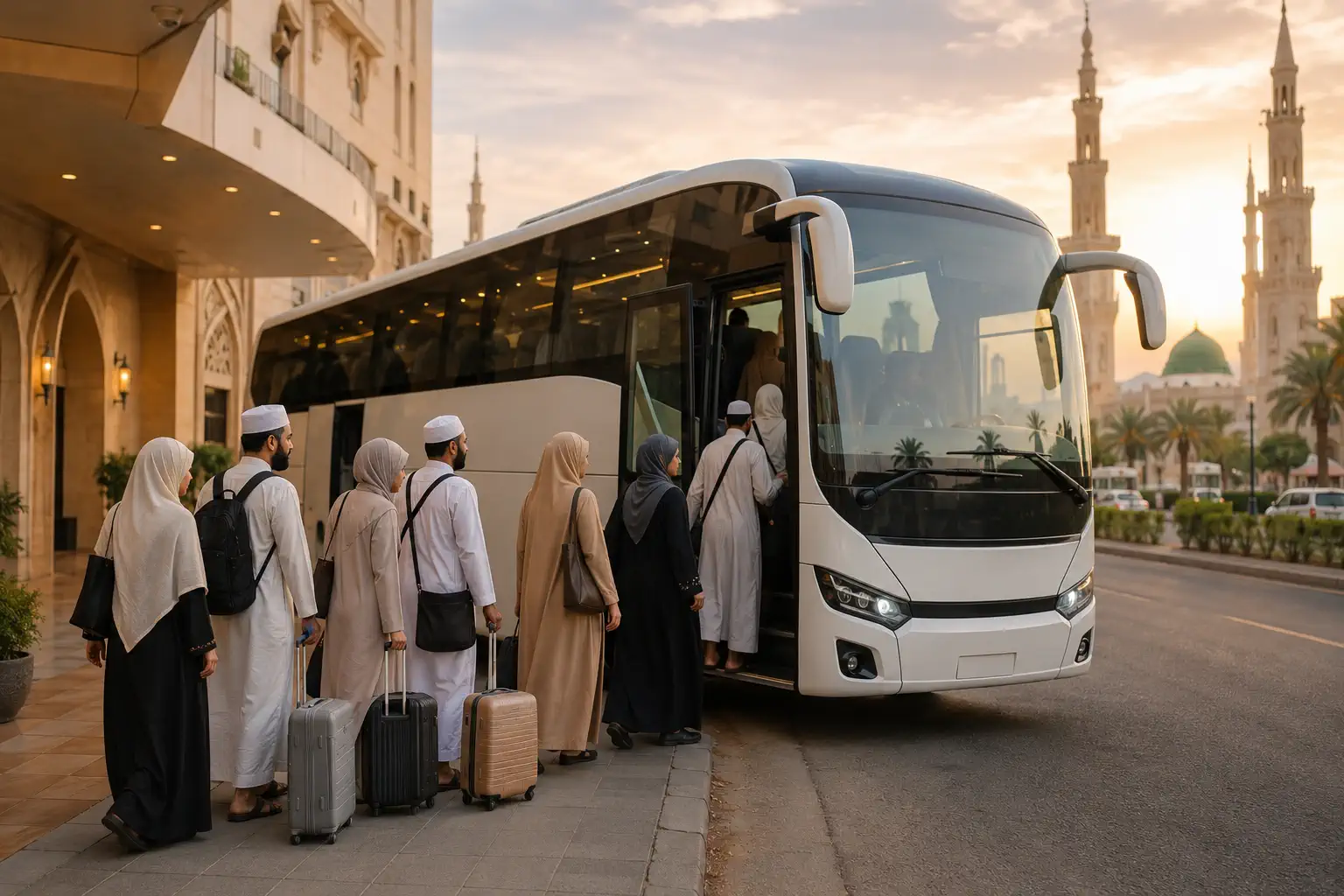
Prefer Public and Shared Transport
During your Hajj and Umrah journey, you may require transportation services to travel within the cities and holy sites. Transportation contributes to carbon emissions, so to contribute less, prefer public and shared ones.
- Always use Haramain High-Speed Rail to travel between Makkah and Madinah.
- Choose shared shuttle services and travel with groups instead of private cabs.
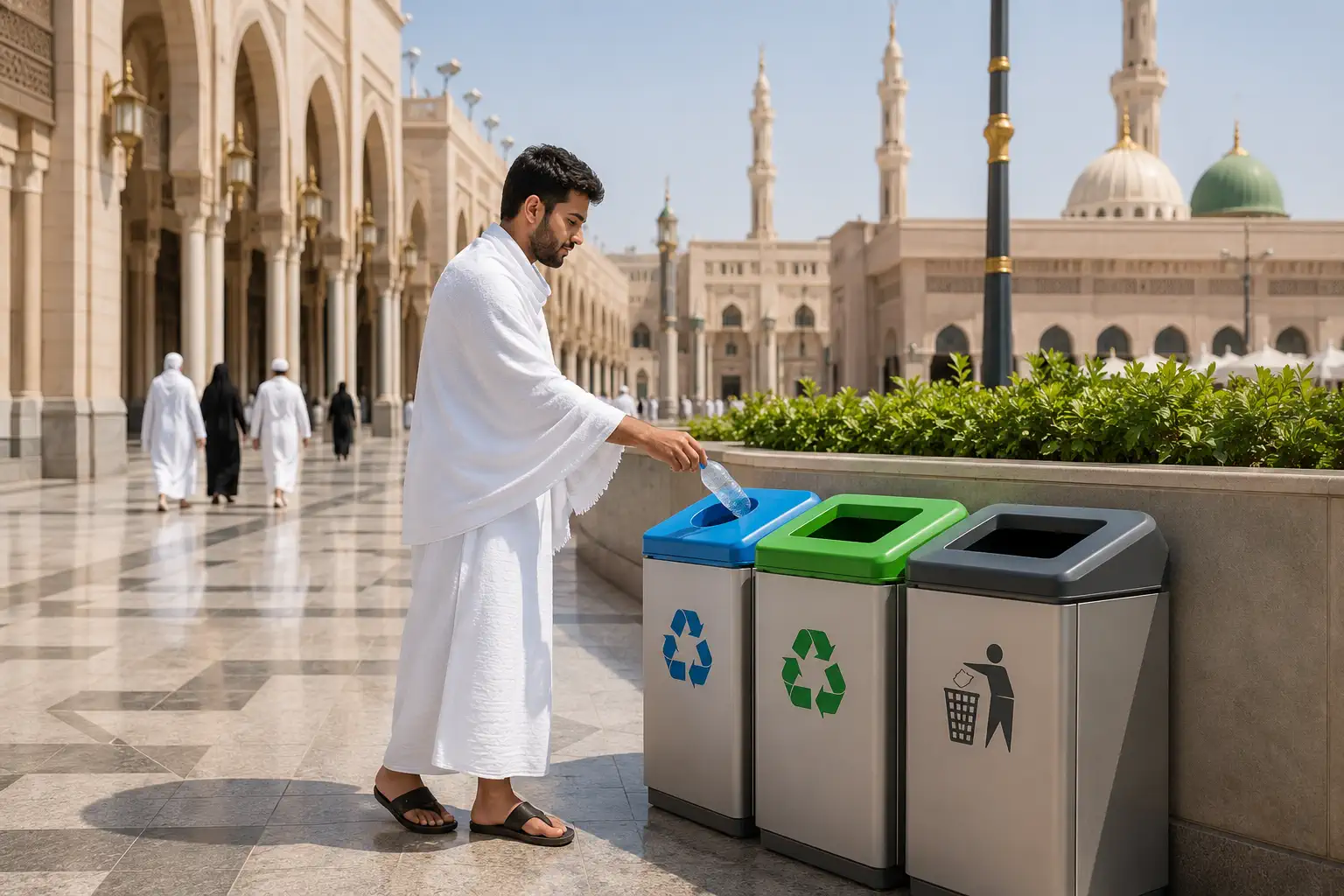
Dispose of Waste Responsibly
In the Kingdom of Saudi Arabia, you will find a wide network of bins for different types of waste almost everywhere. However, due to laziness, overcrowding and lack of understanding, many pilgrims dispose of waste incorrectly. To minimise waste during Hajj and Umrah:
- You should never throw items inside the mosque area or in the walkways.
- Find the right type of bin for your waste (Recycle, Organic, etc.)
- If your nearest bin is full, take your waste with you until you find the right place to dispose.
Cleanliness is part of faith, which is not only related to your personal hygiene but also to your environment.
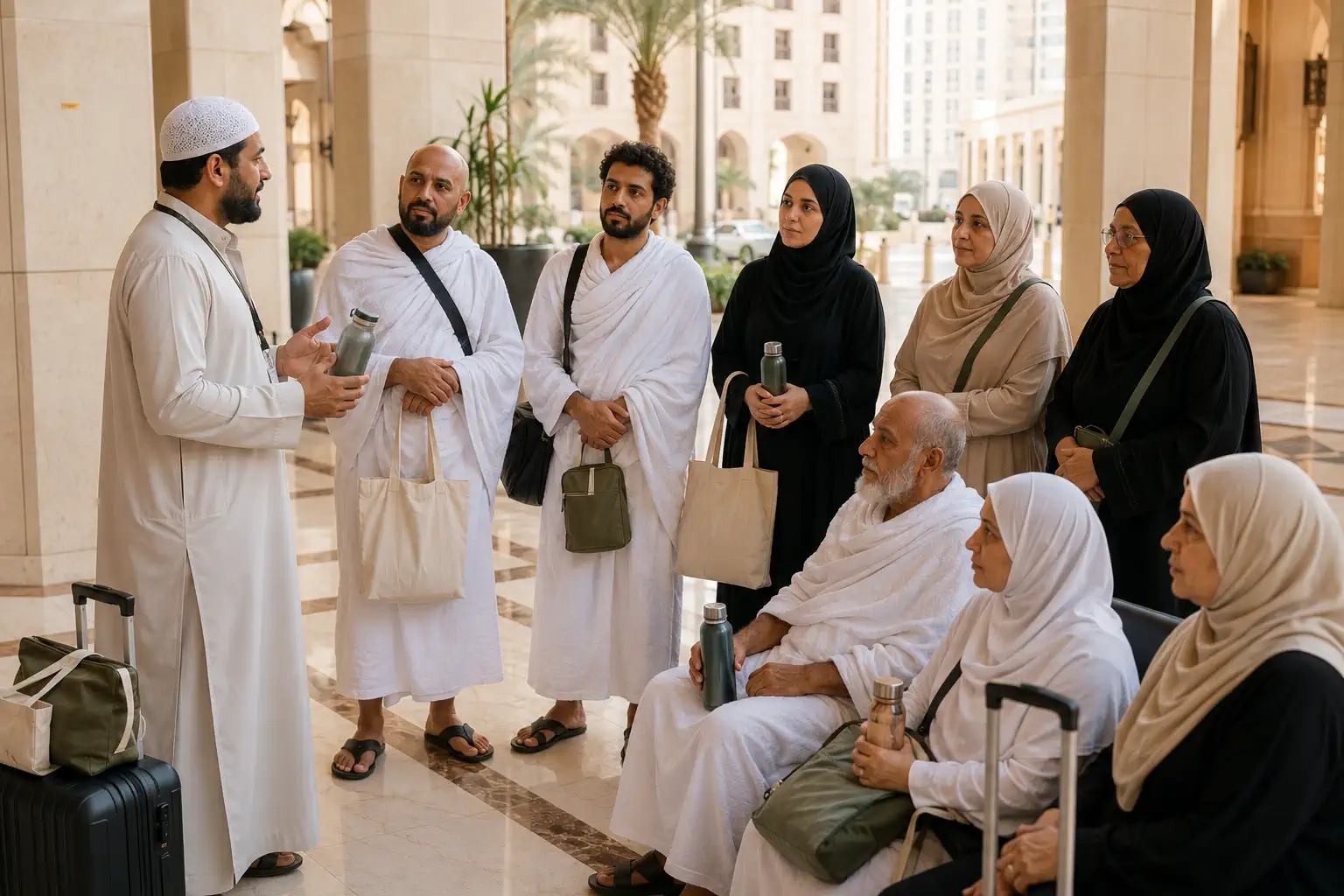
Educate Others And Lead By Example
Positive things and actions during the pilgrimage spread quickly. When others see you acting mindfully, they will get inspired and do the same.
If you are travelling with a group, suggest:
- Carrying reusable bottles, bags and other items.
- Set strict rules about proper waste disposal.
- Sharing sustainable practices during group discussions and briefings.
Final Reflections
Minimising waste during the pilgrimage is more than just a trend and modern concern; it's a reflection of Islamic belief. With the right intentions, thoughtful preparations and encouraging others, you not only protect the environment but also make your sacred journey fulfilling.
Frequently Asked Question
Why is it important to minimise waste during Hajj and Umrah?
Minimising waste during Hajj and Umrah is important because millions of pilgrims gather in Makkah and Madinah every year, creating significant environmental pressure through plastic waste, food waste and excessive consumption. Islam teaches cleanliness, moderation and stewardship of the Earth, making sustainable behaviour part of responsible worship.
How can pilgrims reduce plastic waste during Hajj and Umrah?
Pilgrims can reduce plastic waste by carrying reusable water bottles, reusable shopping bags, refillable toiletry containers and reusable cutlery. Avoiding single-use plastics such as cups, straws and plastic bags helps protect the environment around the holy sites.
What are some eco-friendly travel tips for Hajj and Umrah?
Eco-friendly travel tips for Hajj and Umrah include using shared transport or the Haramain High-Speed Railway, choosing hotels with sustainability initiatives, avoiding food waste, carrying reusable items and disposing of rubbish responsibly in designated bins.
Does Islam encourage environmental responsibility during pilgrimage?
Yes, Islam strongly encourages environmental responsibility. The Prophet Muhammad (PBUH) taught Muslims to avoid wastefulness, maintain cleanliness and care for the Earth. Protecting the environment during Hajj and Umrah reflects Islamic values of responsibility, moderation and stewardship (khilafah).
