

10 Hidden Secrets of Madinah That You Don’t Know
Exploring the Hidden Secrets of Madinah: Sacred Places & Lesser-Known Virtues
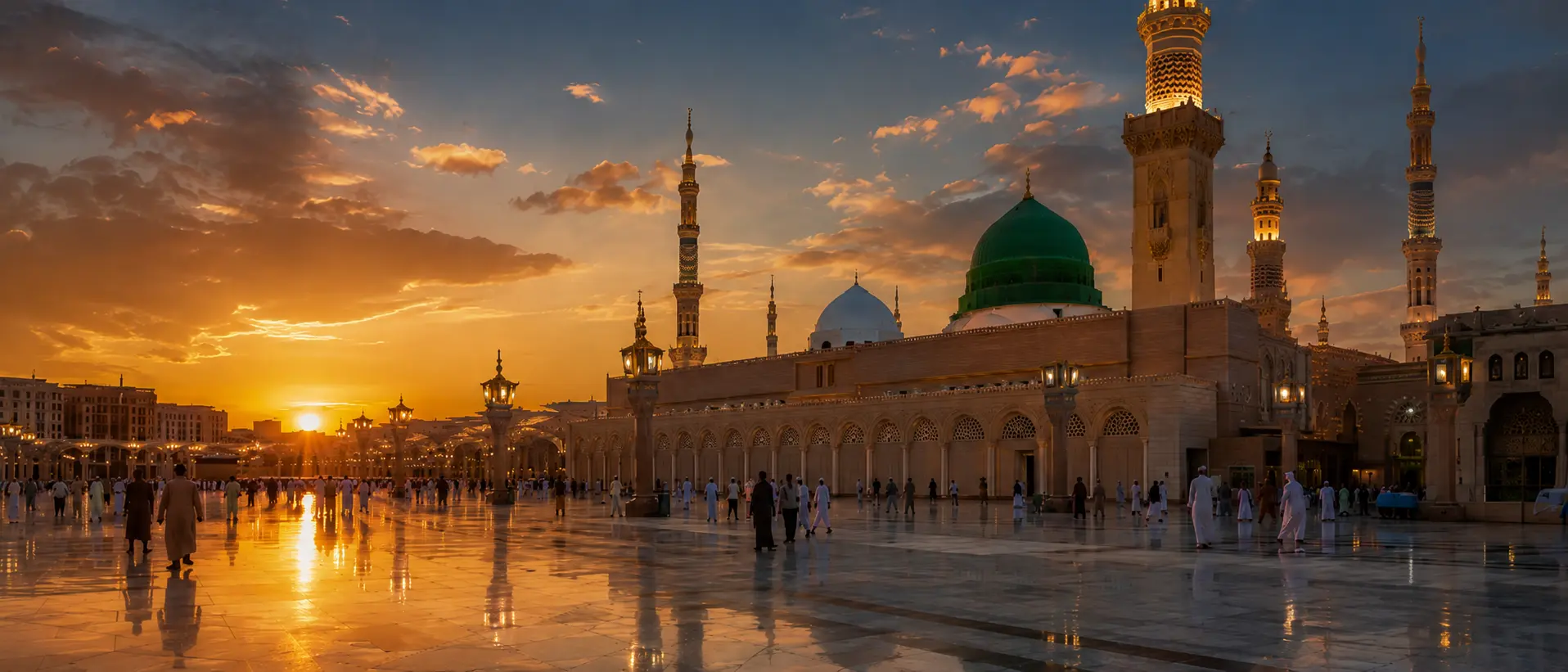
Madinah is the second most sacred city for Muslims and a major pilgrimage destination. Located in the Hejaz region of Saudi Arabia, Madinah Munawwarah literally means the radiant city and is often referred to as the city of the Prophet (PBUH).
It was the city of Madinah where Prophet Muhammad (PBUH) migrated to after he was directed by Allah to move out of Makkah, and there, in Madinah, he attracted his first followers. Today, it has a population of more than 1.1 million and is home to “The Prophet’s Mosque.”
Hidden Secrets of Madinah
Here are some of the Hidden secrets of Madinah, which are revealed by the Qur’an and Prophet Muhammad (PBUH) himself:
Madinah is immune to Dajjal
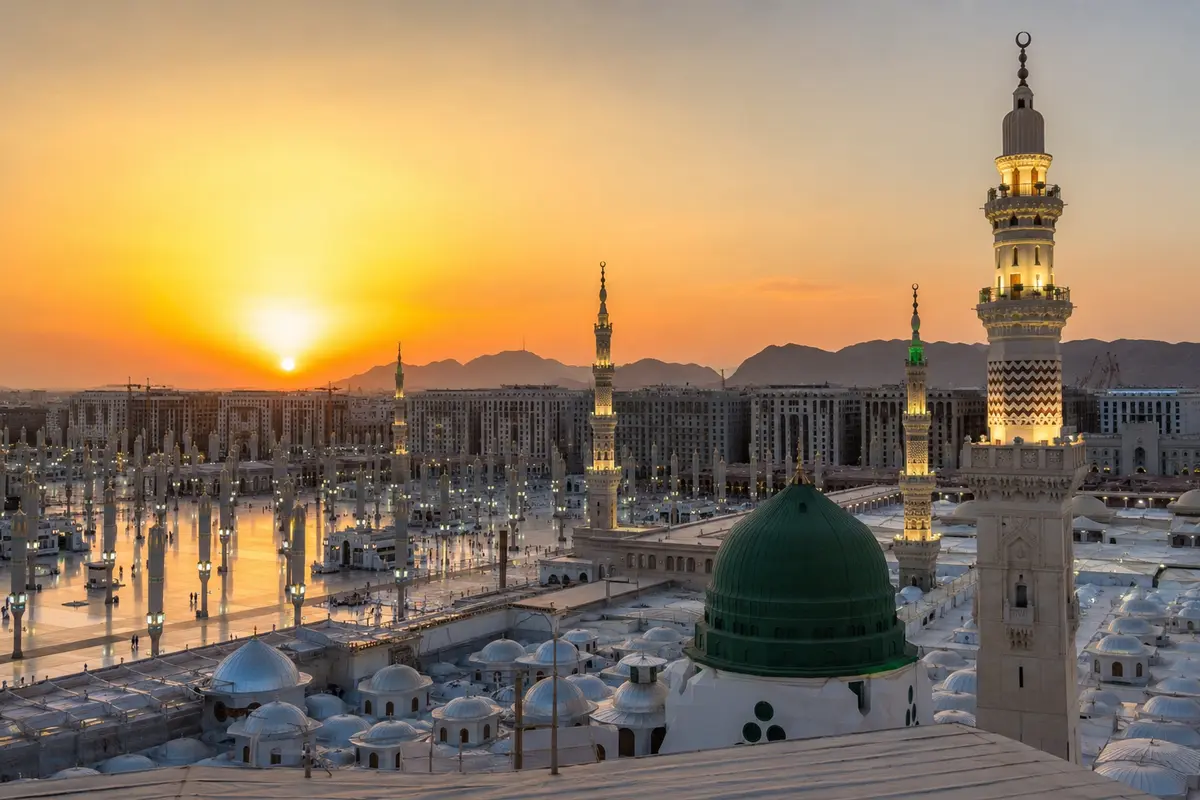
One of the hidden secrets of Madinah is that the blessed city is immune to Dajjal.
It was stated in hadith by Prophet Muhammad (PBUH) “There will be no town which Ad-Dajjal (the anti-Christ) will not enter except Makkah and Madinah and there will be no entrance (road) but the angels will be standing in rows guarding it against him, and then Madinah will shake with its inhabitants thrice and Allah (SWT) will expel all the nonbelievers and the hypocrites from it.” [Bukhari]
Presence of Mosque Quba
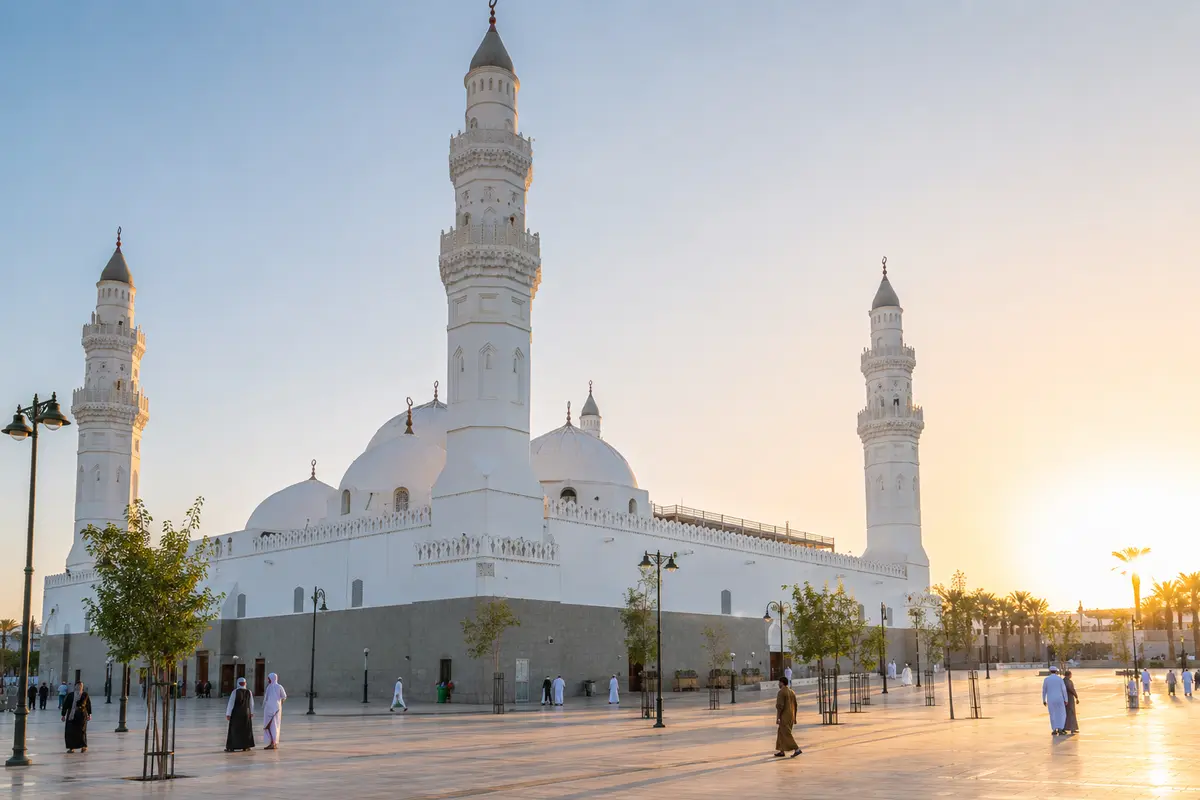
Quba mosque was the first mosque built, after Masjid Al Haram, in Islam, and it carries huge significance. The virtue of praying in the Mosque Quba is mentioned in the following Quranic verse in Surah Taubah:
“…certainly a mosque founded on piety from the very first day is more deserving that you should stand in it…” [9:108]
The Prophet (PBUH) also speaks of the importance of Quba mosque when he says: “He who purifies himself at his home and comes to Masjid Quba and offers two rakats therein, will be rewarded the reward of an Umrah (lesser pilgrimage).” [Sunan ibn Majah]
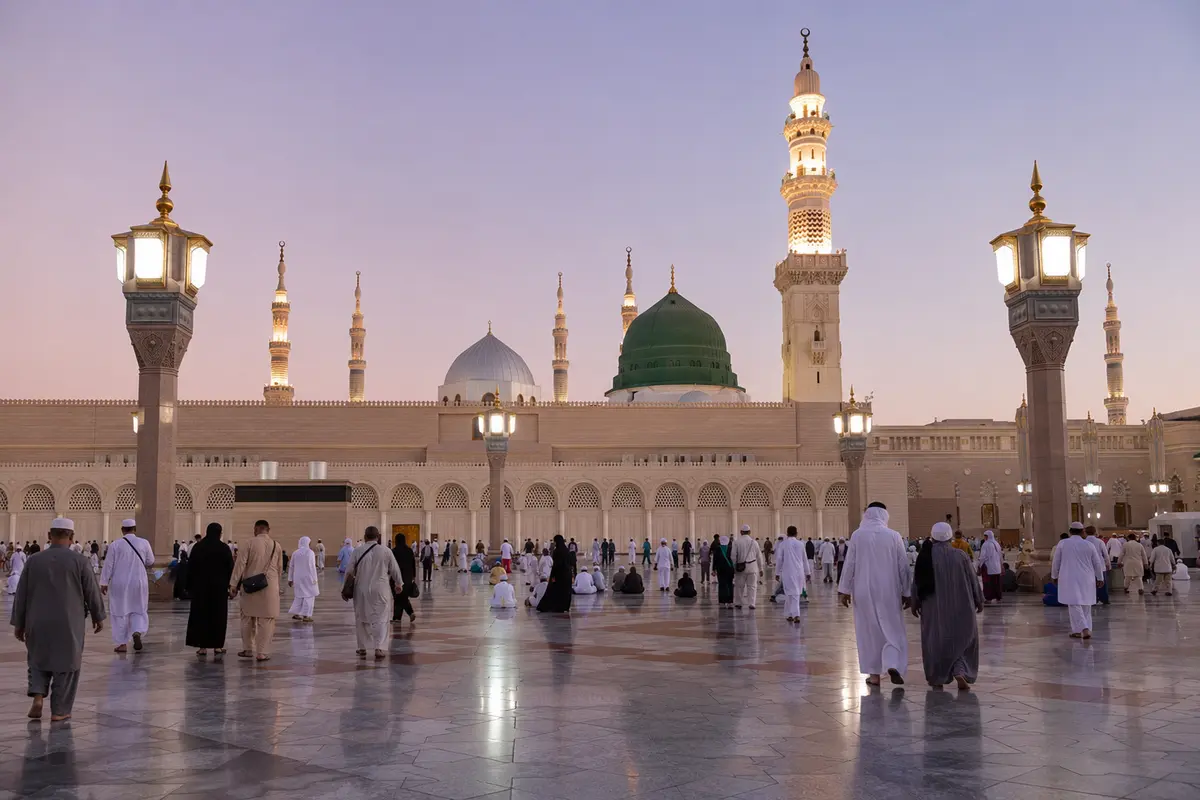
Location of Masjid-e-Nabawi
Another hidden secret of Madinah is that the location of the Masjid an-Nabawi mosque was chosen by Allah (SWT). When Prophet Muhammad (PBUH) migrated to Madinah (then called Yathrib), the city chiefs and his followers rode around his camel in their best clothes and in glittering armour, hoping that he would stop and stay at their house.
The Prophet (PBUH) would answer everyone politely and say, “[This camel] is commanded by Allah; wherever it stops, that will be my home.” The camel moved on with slackened rein and knelt down upon reaching the site of the present mosque. The Prophet (PBUH) said, “This is the home” and inquired about the owner of the land.
The land contained a few date trees, graves of polytheists, and was owned by two orphan brothers, Sahl and Suhail. The Prophet (PBUH) purchased the land from them and had the trees cleared, and the polytheists’ graves dug up and levelled.
Anas (RA) reports that the Prophet (PBUH) said: “Whoever performs forty salah in my masjid, not missing one salah in the masjid, for him is granted exemption from the fire of Hell, and exemption from punishment and he shall remain free of hypocrisy.” [Ahmad]
Abu Hurairah (RA) narrated that the Prophet (PBUH) said: “One salah offered in my mosque is superior to one thousand salahs offered in other mosques except for Masjid al-Haram (Makkah al-Mukarramah).” [Bukhari]
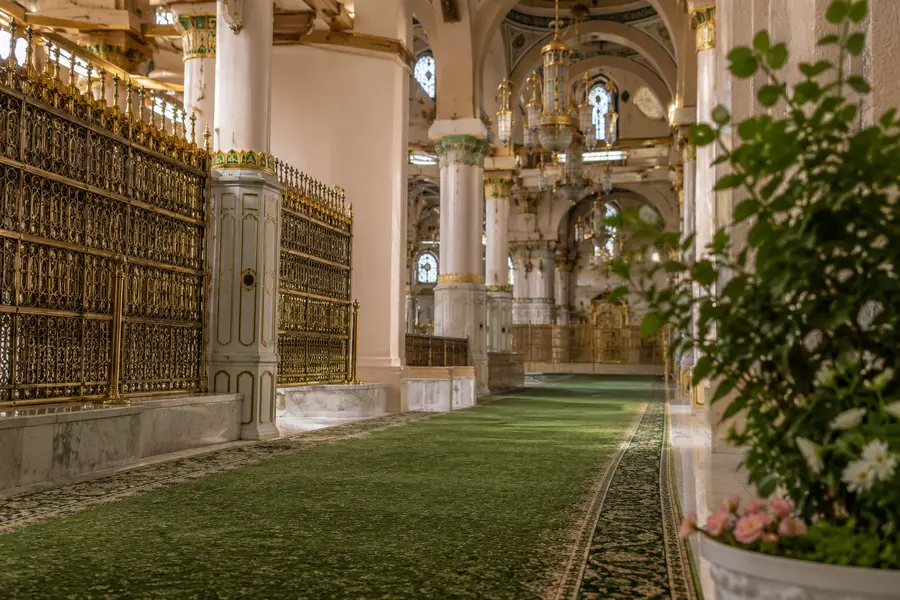
Riyaad-ul-Jannah (Rawdah)
Literally translated as the garden of Jannah, it is the area between the sacred chamber and the pulpit and is currently distinguished by a green carpet called Rawdah. It was narrated by Abu Hurairah (RA) that the Prophet (PBUH) said:
“Between my house and my pulpit lays a garden from the gardens of Paradise, and my pulpit is upon my fountain (Al-Kauthar).” [Bukhari]
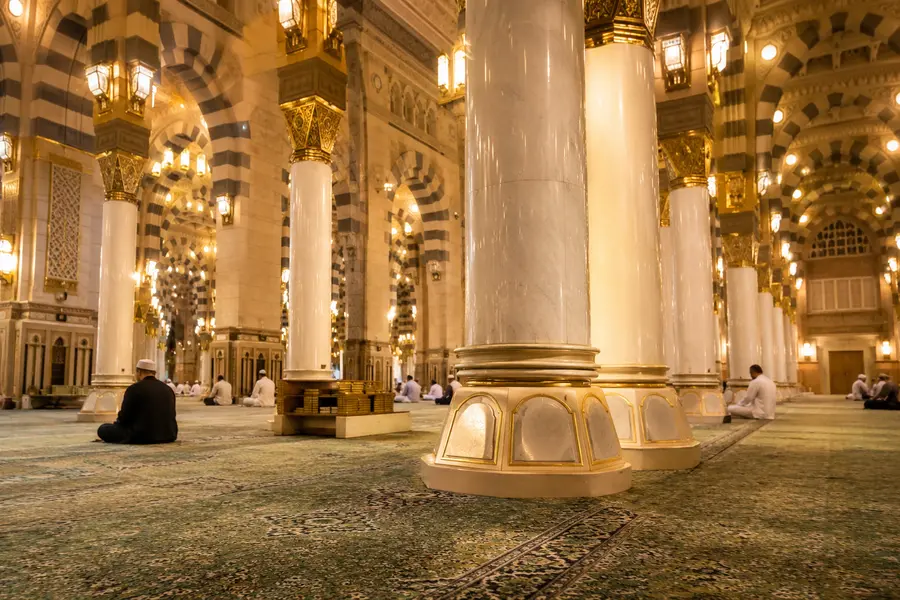
Ustuwaanah Aisha (RA)
Also called the Ustuwaanah Qu’rah, it is the place where the Prophet (PBUH) used to pray and then moved to Ustuwaanah Hannanah. Aisha (RA) reports that the Prophet (PBUH) said,
“In this masjid is one such spot that if people knew the true blessed nature thereof, they would flock towards it in such a manner to pray there they would have to cast such lots (i.e. Qu’rah).”
When people asked her to point out the spot, she refused to do so, but later at the insistence of Abdullah bin Zubair (RA) she pointed out this spot. This is the reason that the spot is called Ustuwaanah Aisha (RA). Umar (RA) and Abu Bakr (RA) used to pray here regularly.
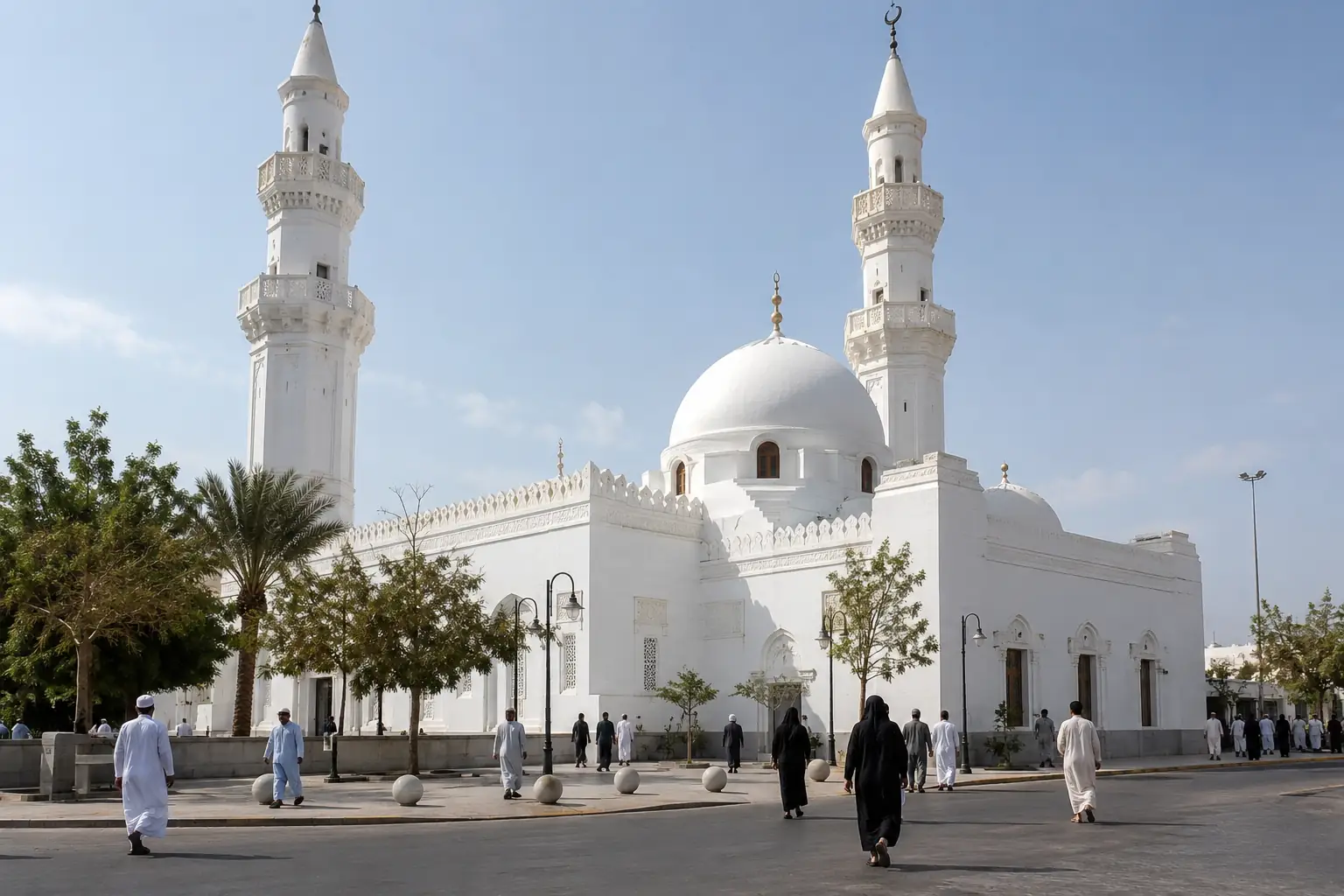
Masjid-e-Qiblatain
Masjid Al Qiblatain is among the hidden secrets of Madinah that not every Muslim know. This is the place where the revelation of the Quran came in Rajjab 2 AH to change the direction of Qibla from Bait-al-Muqadas in Jerusalem to the Kaaba in Makkah.
It was a day of joy for Muslims, but Jews were not happy about it. Muslims had become completely independent, and the prophecy in their old books had been fulfilled that the last prophet would change the direction of prayers from Jerusalem to the Ancient House of Ibrahim (AS). The Muslims began to have a distinctive character from the Jews, and many of the hypocrites reverted back to their own religion.
Wadi-e-Jinn
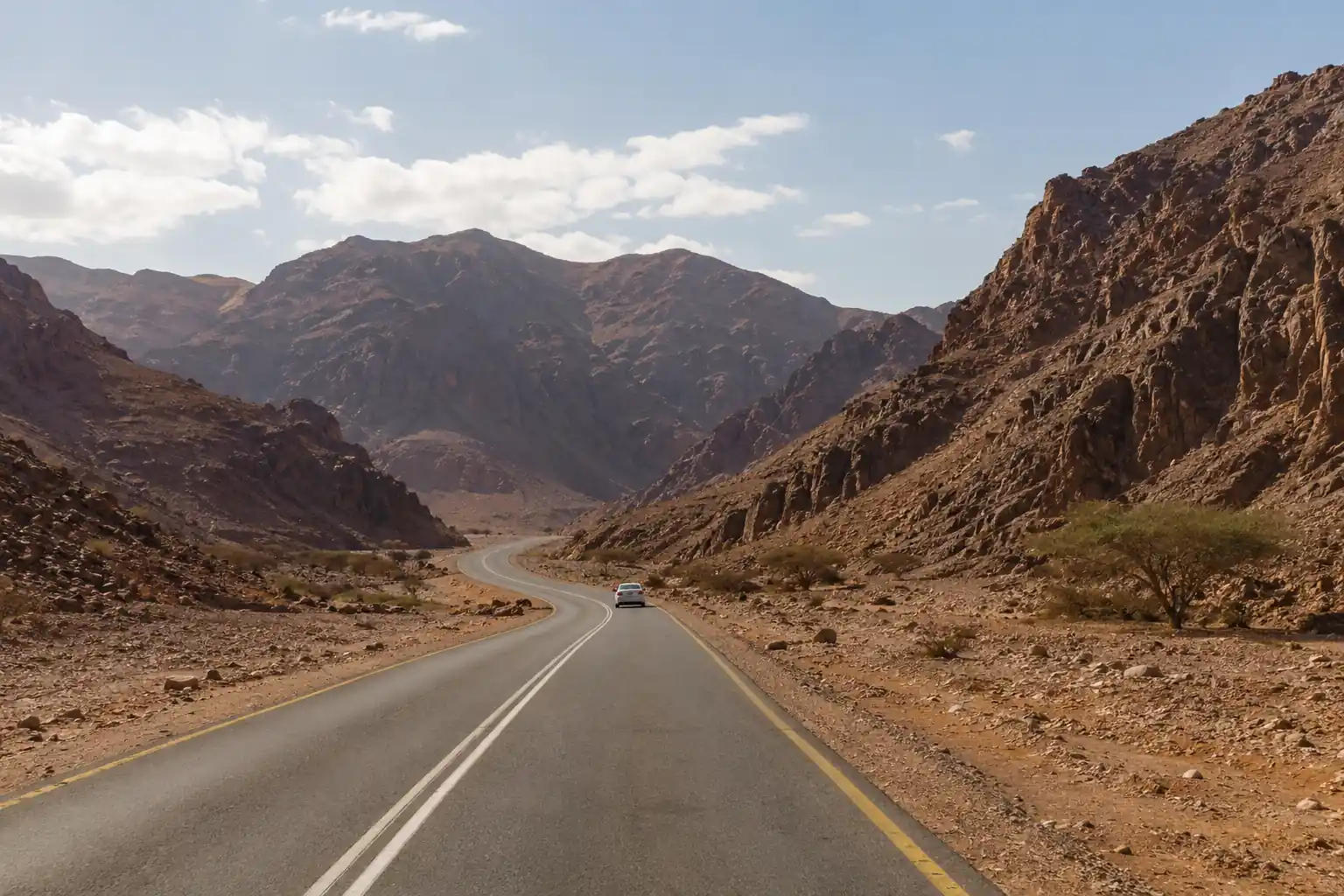
Wadi e Jinn Madinah, located at a distance of about 30-40 km from Madinah, the valley is known to have the odd phenomenon where cars run at 120 km/h even if the engine is switched off.
It is believed that the place is inhabited by jinn, and locals have claimed that they hear voices telling them, “Go, you don’t belong here”
Ustuwaanah Hannanah (the weeping pillar)
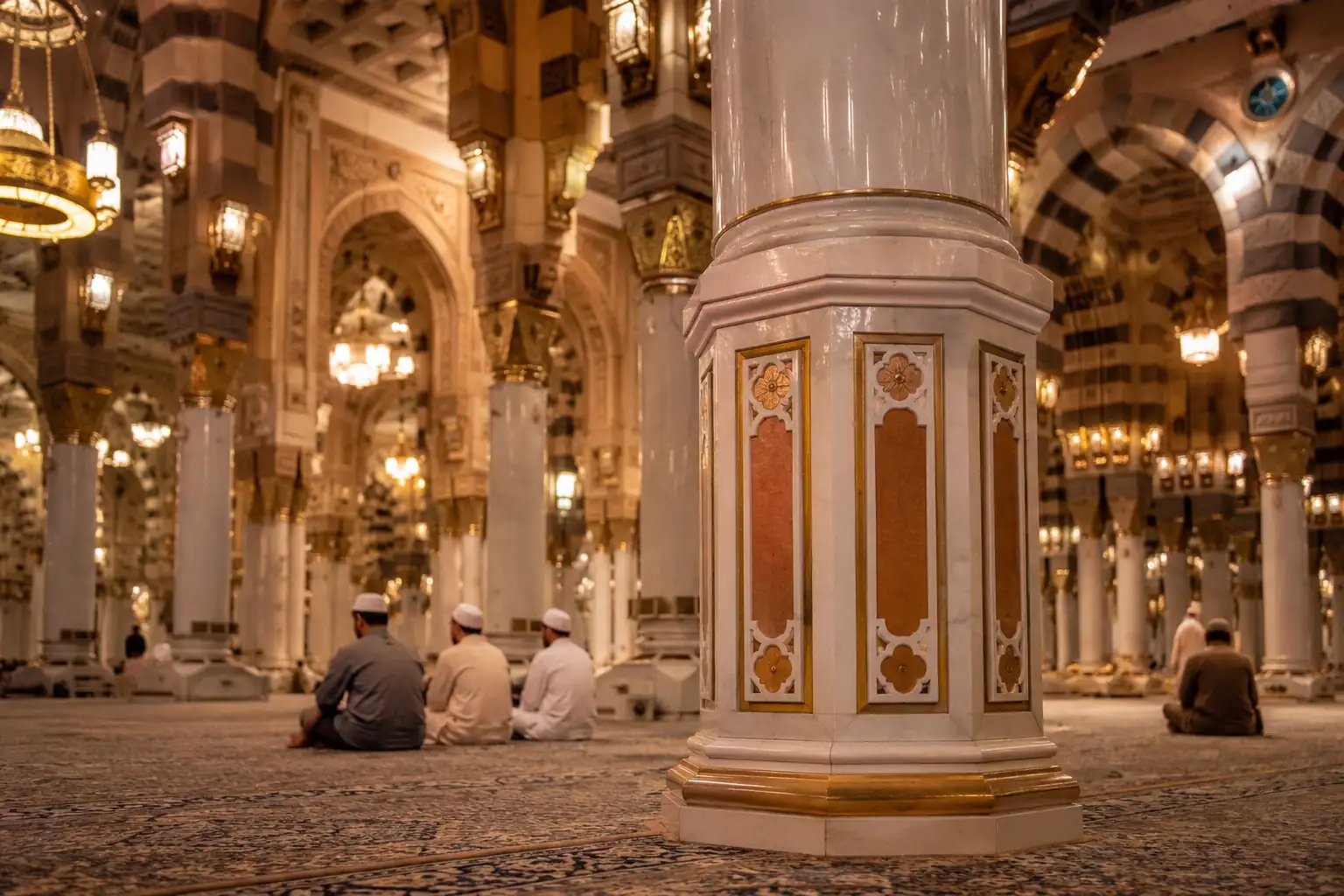
Also called the Ustuwaanah Mukhallaq, this is one of the most blessed pillars in Masjid-e-Nabawi. It was the Prophet’s (PBUH) place of salah. There used to be a date palm tree on the same spot, and before the advent of Mimbar, the Prophet (PBUH) used to lean on the tree while delivering the Khutbah (sermon).
When the Mimbar was made, the Prophet (PBUH) began using it for the Khutbah. It was stated that when the change took place, the whole mosque echoed with a bitter sound of weeping that was heard from the tree, and people in the mosque started weeping.
The Prophet (PBUH) then said: “The tree cries because the zikr of Allah was near it, and now that the Mimbar is built, it has been deprived of this zikr in its immediate vicinity. If I did not place my hand on it, it would have cried thus till the Day of Qiyamah.” The tree dried up after some time and was buried.
Jannat-ul-Baqi
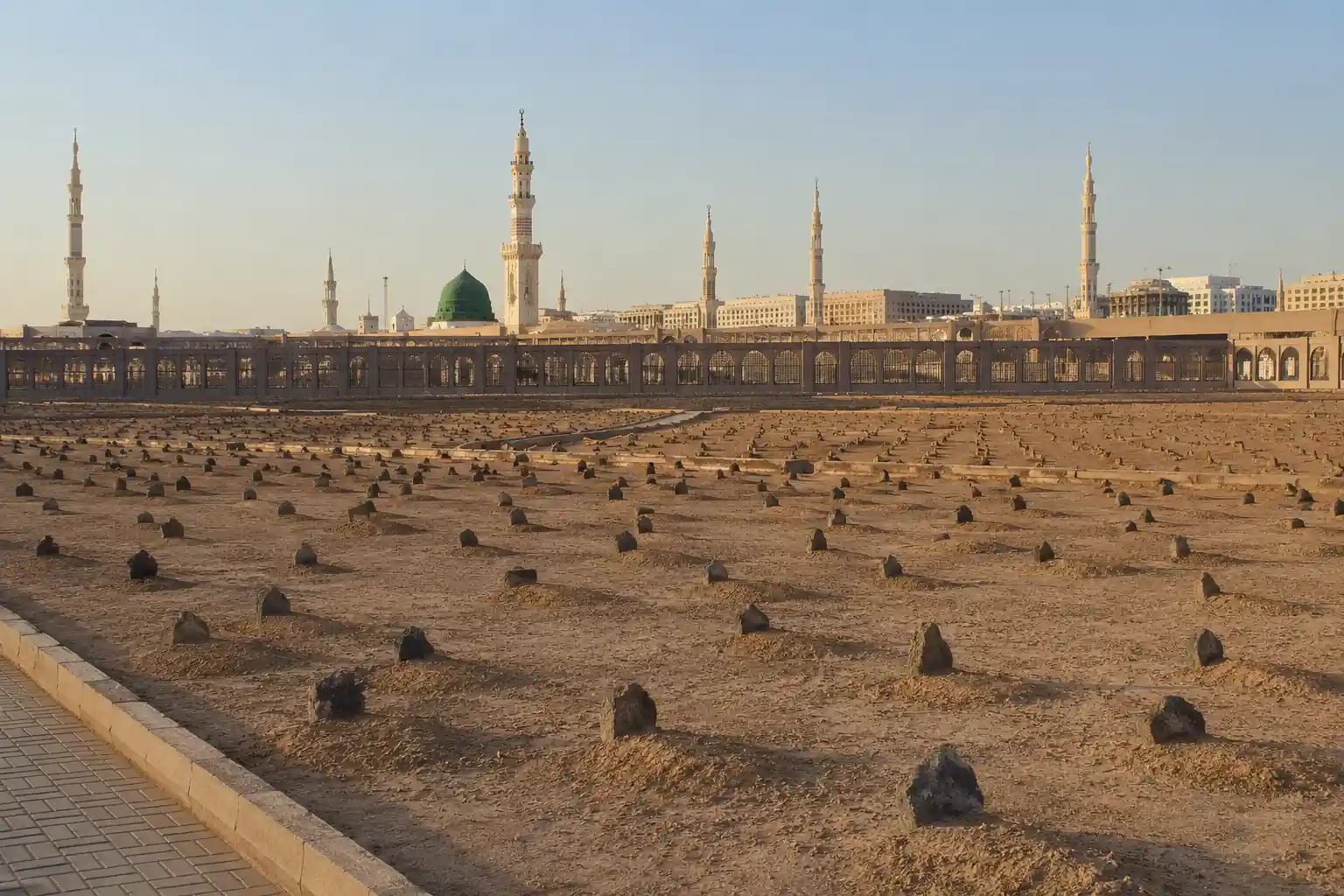
There is great significance in being buried in Jannat-ul-Baqi, and one should ask Allah (SWT) for a death in the city of Madinah. The Prophet (PBUH) said,
“On the day of Qiyamah my grave shall be opened first and I shall step forth. Then shall Abu Bakr (RA) step forth and then Umar (RA). Then shall I proceed to Baqi and take all its inmates with me. Then shall we await the inmates of the graveyard of Makkah, who shall meet me halfway between Makkah and Madinah.” [Tirmidhi]
The Mountain of Heaven and Hell
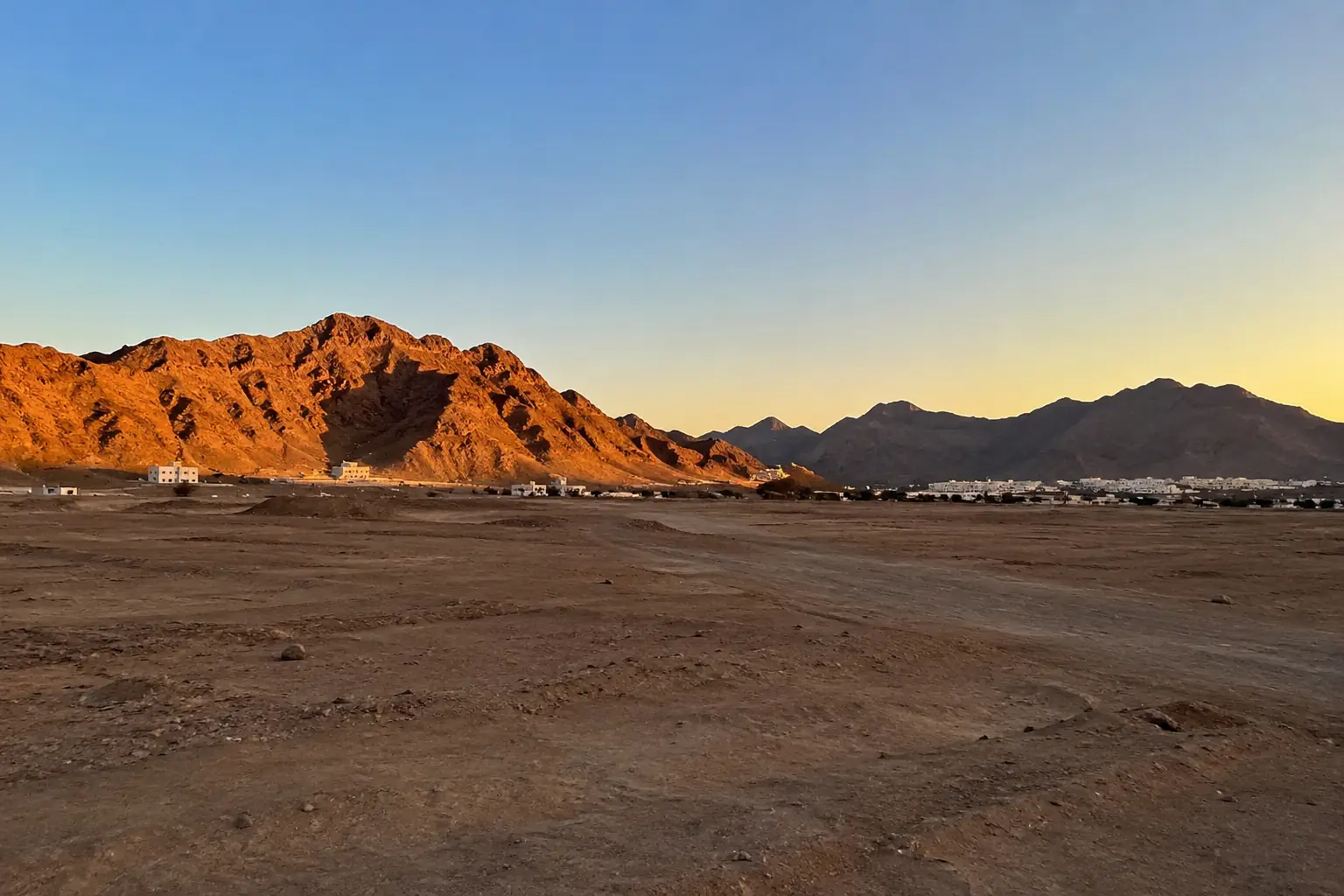
One of the other secrets of Madinah includes Mount Uhud, the mountain of heaven and Mount Ayr, the mountain of Hell. Located in the southern boundary of Madinah, Mount Ayr is the second largest mountain after Uhud and has been described as the mountain of hell. Prophet Muhammad (PBUH) said,
“Uhud is a mountain which loves us and which we love, it is upon the Gate of Heaven” adding, “And Ayr is a place which hates us and which we hate, it is upon the Gate of Hell.”
These were some of the most interesting secrets hidden in the city that one must know before visiting Madinah.
Final Wordings: Madinah, the Second Most Blessed City
Madinah is not just a historical city; it is a city filled with spiritual signs, sacred memories and hidden virtues that continue to inspire millions of Muslims around the world. From the blessed Rawdah and Masjid Quba to the stories connected with Mount Uhud and Jannat-ul-Baqi, every corner of Madinah carries lessons of faith, sacrifice and love for Allah (SWT) and His Messenger (PBUH).
Understanding these hidden secrets of Madinah allows pilgrims to experience the city with a deeper appreciation and spiritual connection rather than simply visiting landmarks. Every ziyarat becomes more meaningful when you know the history and virtues behind these sacred places.
At Itimaar, we believe every pilgrim deserves a spiritually enriching and well-guided journey. Our carefully planned Hajj and Umrah packages help pilgrims explore the sacred sites of Madinah with comfort, knowledge and proper guidance, making your journey memorable and meaningful from start to finish.
Frequently Asked Question
What are the most important hidden places to visit in Madinah?
Some of the most spiritually significant places in Madinah include Masjid Quba, Rawdah (Riyaad-ul-Jannah), Jannat-ul-Baqi, Masjid Qiblatain and Mount Uhud. These places hold deep historical and Islamic importance connected to the life of Prophet Muhammad (PBUH).
Why is Madinah considered a special city in Islam?
Madinah is the city of Prophet Muhammad (PBUH) and the home of Masjid an-Nabawi. It is one of the holiest cities in Islam and holds immense spiritual virtues mentioned in the Qur’an and authentic Hadith.
What is the significance of Rawdah in Masjid an-Nabawi?
Rawdah is the area between the Prophet’s house and pulpit inside Masjid an-Nabawi. The Prophet Muhammad (PBUH) described it as “a garden from the gardens of Paradise,” making it one of the most beloved places for prayer and dua.
Is Wadi-e-Jinn in Madinah real?
Wadi-e-Jinn is a famous valley near Madinah known for unusual vehicle movement on certain roads. While many local stories are linked to the area, experts often explain the phenomenon as a natural optical illusion caused by the landscape.
