

Halal and Haram in Islam - What They Mean and How to Tell the Difference
Halal vs Haram - What Is Halal Meat, Food and more? | Complete Guide
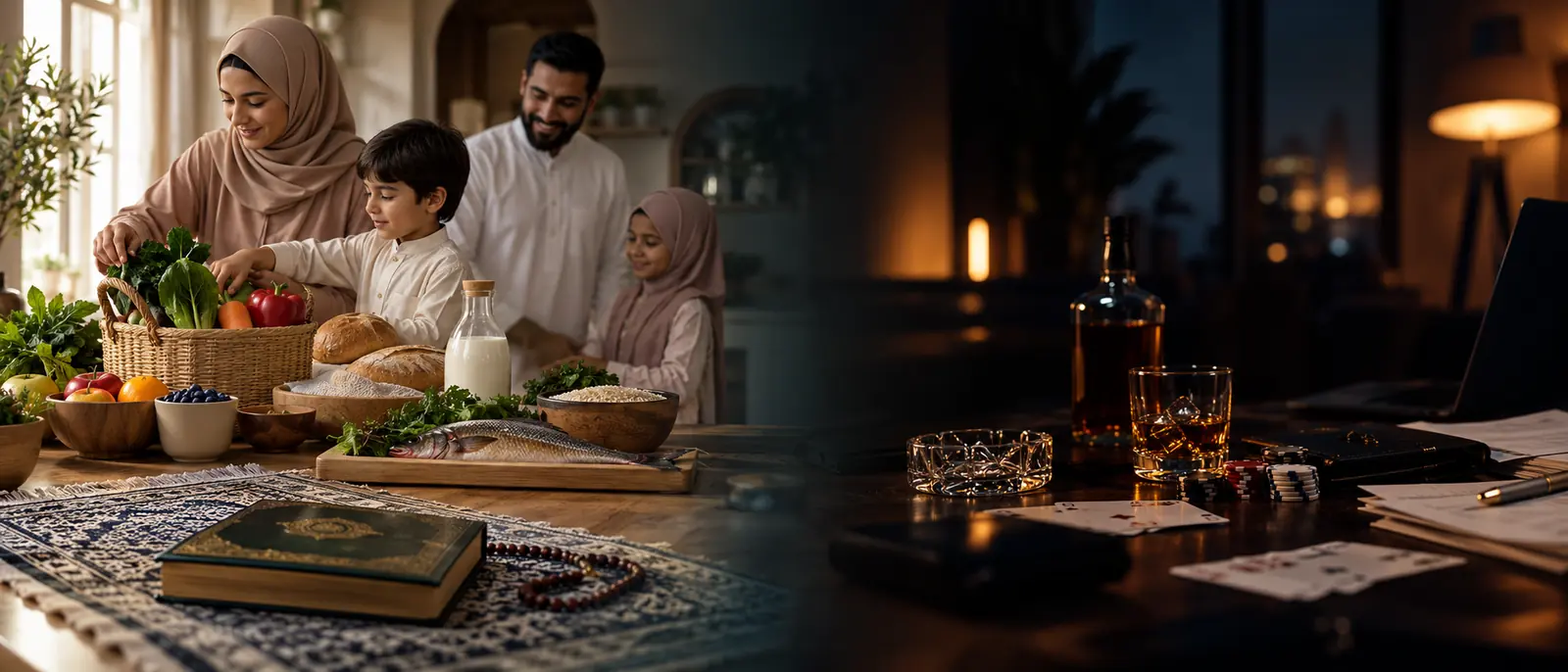
These two terms are used to govern dietary choices, lifestyle practices and human behaviour. In simple terms, Halal means permitted in Islam, and Haram means forbidden. These words aren’t limited to food, but to living a meaningful life that Allah wants us to.
In this guide, we’ll explain Halal vs Haram in easy-to-understand words. You will learn what haram things to avoid, how to spot halal food and meat and more.
Key Takeaways
- In Islam, Halal means permitted, and Haram means forbidden.
- Everything is halal unless clear evidence from the Quran or Sunnah prohibits it.
- Halal food includes fruit, vegetables, grains, dairy, eggs, fish, and meat slaughtered in the Islamic way and more.
- Haram things include pork, alcohol, blood, riba (interest), gambling, lying and more.
- The rules are also applicable to money, speech, clothing, and worship.
What Do Halal and Haram Mean in Detail?
Both words are Arabic and appear more often in the Quran and are used by Muslims in daily life.
Halal Meaning and Haram Meaning
Halal (حلال) comes from the Arabic root ح-ل-ل; it means "to untie or release." In Islam, halal is only what Allah allows.
Haram (حرام) comes from the root ح-ر-م; it means "to be prohibited." In Islam, haram is what Allah forbids.
Pronunciation and Transliteration
The correct pronunciation of halal is ha-LAL. Say haram as ha-RAM. In English writing, sometimes you will see ḥalāl and ḥarām. In Arabic, they appear as حلال and حرام.
Who Decides What Is Halal or Haram?
Only Allah has the right to declare something what should be halal or haram. Scholars explain the rulings. They do not invent them. The Quran warns that wrongdoers will have a painful punishment who make haram what Allah allowed, or make halal what Allah forbade (see Quran 42:21).
Whatever new questions arise, they can only be answered based on the Quran and Sunnah. This is why a clear answer always needs a source.
The Default Rule - Everything Is Halal Unless Proven Haram
The starting point is permission. “O mankind, eat from whatever is on earth [that is] lawful and good and do not follow the footsteps of Satan. Indeed, he is to you a clear enemy.” (Quran 2:168)
If the Quran and Sunnah do not forbid something, it’s considered halal.
The Prophet ﷺ said that the halal is clear and the haram is clear, and between them are doubtful matters which many people do not know (Bukhari and Muslim); that’s where hadith shapes the whole framework.
The Five Rulings in Islamic Law (Al-Ahkam al-Khamsa)
Islam does not sort life only based on these two terms. Scholars use five rulings. They show where halal and haram fit in the bigger picture; here’s the detailed table in which the first four rulings are all permitted:
Ruling |
Meaning |
Consequence |
Example |
|---|---|---|---|
| Fard / Wajib | Mandatory | Reward for doing it, sin for leaving it | Five daily prayers |
| Mustahabb | Recommended | Reward for doing it, no sin for leaving it | Fasting on Mondays |
| Mubah | Neutral (Permissible) | No reward, no sin | Choosing a shirt colour |
| Makruh | Disliked | Better to avoid, no sin if done | Using the right hand for hygiene cleaning |
| Haram | Forbidden | Sin for doing it, reward for avoiding it for the sake of Allah | Drinking alcohol |
Halal vs Haram vs Makruh
Here is the Haram vs Halal difference in one view, with makruh in between.
Detail |
Halal |
Makruh |
Haram |
|---|---|---|---|
| Meaning | Allowed | Disliked but allowed | Forbidden |
| Sin if you do it? | No | No | Yes |
| Should you avoid it? | No | Better to | Yes, you must |
| Example | Eating fish | Using the right hand for hygiene cleaning | Eating pork |
Where Do the Rulings Come From?
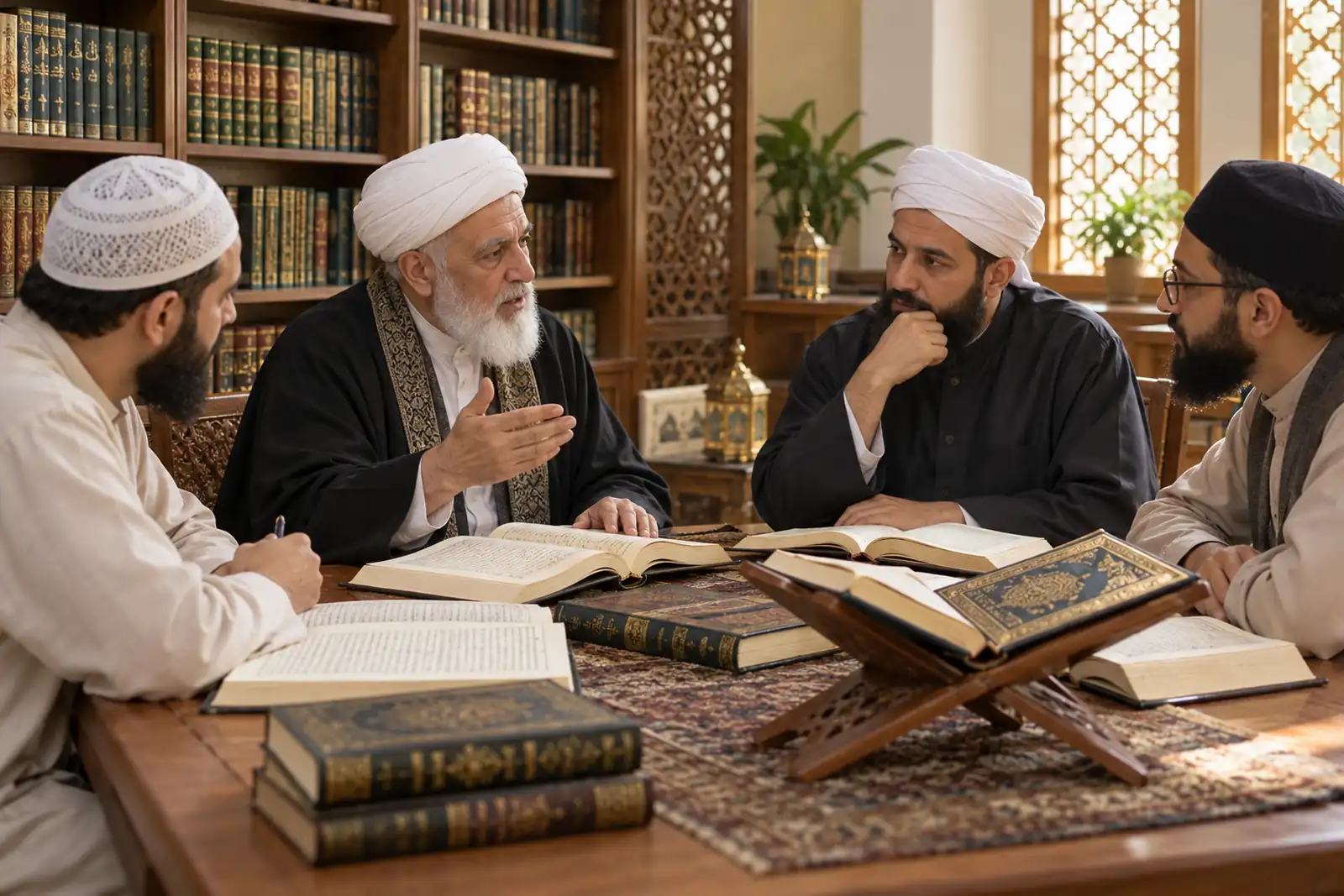
Scholars draw rulings from the following four main sources:
- The Quran, the words of Allah.
- The Sunnah, the teachings and example of the Prophet ﷺ.
- Ijma, the agreement of scholars.
- Qiyas, reasoning by comparison with a known ruling.
With more new sources and development, new issues come; this is where ijtihad (careful consideration based on qualified effort to find the ruling) takes place, to cover modern questions such as food additives.
Why Does Islam Have Halal and Haram?
As a Muslim, we follow these rules of Halal and Haram for the sake of Allah, as an act of worship; obeying Allah is the main reason.
Scholars say the rulings protect the following five things. This idea is called maqasid al-shariah:
- Life: Harmful acts are forbidden.
- Intellect: Alcohol and intoxicants are forbidden.
- Lineage: Zina (unlawful sex) is forbidden.
- Wealth: Riba, fraud, and theft are forbidden.
- Religion: Shirk and invented acts of worship are forbidden.
There is one point to note: Halal and Haram food looks and tastes the same, but we as Muslims feel the difference.
The Quran joins two terms: halalan tayyiban, that is lawful and good (2:168).
Food must be permitted and also wholesome. That is why halal food can harm your health if it’s not in good condition or is rotten.
Halal and Haram Foods and Drinks
Here is the difference in detail:
Foods That Are Explicitly Haram
The Quran names these in Surah al-Baqarah (2:173), Surah al-Ma'idah (5:3), and Surah al-Ma'idah (5:90):
- Pork and pork products
- Blood
- Carrion (animals that died on their own)
- Meat offered to anyone other than Allah
- Animals killed by strangling, a heavy blow, or a fall
- Alcohol and all intoxicants
These are the core Haram vs Halal food rules. Everything outside this list is halal unless it contains a forbidden ingredient mentioned in the Quran or highlighted as a Sunnah.
Foods That Are Halal by Default
Food that is Halal by default includes:
- Fruit and vegetables
- Grains, bread, and rice
- Milk, yoghurt, and eggs
- Fish and most seafood
- Beef, lamb, goat, and chicken, if slaughtered the Islamic way
Knowing the difference between Halal vs Haram foods saves a lot of worry, like you don’t have to search for a banana or an apple; just check whether it comes from animals or has processed ingredients.
What Is Halal Meat?
Halal meat comes from a permitted animal that’s been slaughtered in following Islamic method that requires a swift incision using a sharp tool, done by a practising Muslim who must invoke the name of Allah, and ensure the animal is treated Humanely. Animals such as Cattle, sheep, goats, camels, and chickens are permitted since they are Halal.
Note that pork, domestic donkey, predators with fangs and birds wth talons are haram.
Halal Slaughter (Dhabihah)
Dhabihah is the Islamic method of slaughtering an Animal. The usual conditions are as follows:
- A sane person slaughters the animal. Most scholars accept a Muslim, and many accept the People of the Book.
- The slaughterer says "Bismillah" (in the name of Allah).
- Uses a sharp knife.
- The cut severs the throat, windpipe, and main blood vessels.
- The animal is alive and healthy at the time of the cut.
- The blood drains fully.
There is one word used by many Muslims, “zabiha”, used when an animal is sacrificed by hand in the name of Allah.
Halal vs Haram Chicken
Halal vs Haram chicken also follows the same rules: if the chicken is slaughtered in the Islamic way, if Halal; if not, then it’s Haram. And it’s also mentioned in the Quran that the animal slaughtered by People of the Book, ie. jews and Christians, is allowed for us and the one slaughtered by us is permissible for them. (Surah al-Ma'idah, 5:5).
If eating in a restaurant, ask how the chicken was slaughtered, especially in takeaways; also ask about shared fryers and grills.
What If I Eat Haram by Mistake?
You don’t need to panic if it happens by mistake, but Allah holds those who make mistakes intentionally accountable.
So stop right away once you find out, and check labels more carefully next time.
When Haram Food Becomes Permitted? - Only in Necessity!
Allah mentions in Quran 2:173, allows forbidden food for a person in real need if they are neither desiring it nor transgressing its limit.
This also applies to life-threatening hunger crises, but does not apply to cravings or convenience. Only consume what you need to survive in such situations.
Seafood
Here’s the detailed table with Qur’an / Hadith evidence:
Halal seafood/category |
Full Qur’an / Hadith evidence |
Reference |
|---|---|---|
| Fish | The Prophet ﷺ said: “Two kinds of dead meat and two kinds of blood have been permitted to us. The two kinds of dead meat are fish and locusts, and the two kinds of blood are the liver and spleen.” | Sunan Ibn Majah 3314 |
| Sea game/seafood caught from the sea | Allah says: “Lawful to you is game from the sea and its food as provision for you and the travellers, but forbidden to you is game from the land as long as you are in the state of ihram. And fear Allah to whom you will be gathered.” | Qur’an 5:96 |
| Dead sea animals/fish | The Prophet ﷺ said: “Its water is pure, and its dead are lawful.” This was said when a man asked about using seawater for purification and eating from the sea. | Jami‘ at-Tirmidhi 69 |
| Large sea creature (Al-‘Anbar) | Jabir رضي الله عنه reported that the sea cast out a huge dead fish called Al-‘Anbar. They ate from it for half a month. When they told the Prophet ﷺ, he said: “Eat, for it is food Allah has brought out for you, and feed us if you have some of it.” Some of it was brought to him, and he ate it. | Sahih al-Bukhari 4362; Sahih Muslim 1935 |
Halal vs Haram List - Quick Reference Table
This Halal vs Haram list gives you the key points in one view.
Category |
Halal example |
Haram example |
Key source |
|---|---|---|---|
| Food | Fruit, fish, halal-slaughtered meat | Pork, blood, carrion | Quran 2:173, 5:3 |
| Drink | Water, milk, juice | Alcohol, intoxicants | Quran 5:90 |
| Money | Honest trade, ethical investment | Riba (interest), gambling, fraud | Quran 2:275 |
| Speech | Truth, kind words | Lying, backbiting, slander | Sahih Muslim 2589 |
| Clothing | Modest dress | Gold and silk for men | (Riyad as-Salihin 807) Abu Dawood, An-Nasa'i |
| Relationships | Marriage, family ties | Zina, cutting family ties | Quran 17:32, 47:22 |
| Worship | Prayer, fasting, Hajj | Shirk, bid'ah | Quran 4:48, 42:21 |
Halal vs Haram List - Quick Reference Table
This Halal vs Haram list gives you the key points in one view.
Category |
Halal example |
Haram example |
Key source |
|---|---|---|---|
| Food | Fruit, fish, halal-slaughtered meat | Pork, blood, carrion | Quran 2:173, 5:3 |
| Drink | Water, milk, juice | Alcohol, intoxicants | Quran 5:90 |
| Money | Honest trade, ethical investment | Riba (interest), gambling, fraud | Quran 2:275 |
| Speech | Truth, kind words | Lying, backbiting, slander | Sahih Muslim 2589 |
| Clothing | Modest dress | Gold and silk for men | (Riyad as-Salihin 807) Abu Dawood, An-Nasa'i |
| Relationships | Marriage, family ties | Zina, cutting family ties | Quran 17:32, 47:22 |
| Worship | Prayer, fasting, Hajj | Shirk, bid'ah | Quran 4:48, 42:21 |
Halal and Haram Beyond Food
Many people think Haram things are only limited to foods; they are not.
Islam guides all of life and tells us the right way to live.
Money and Business
It’s mentioned in (Quran 2:275 and 5:90) that Riba (interest), gambling, fraud, and cheating are Haram. Similarly, the jobs and industries built on them, such as alcohol sales, are a Haram way of earning.
Whereas, honest trade is halal. Fair pay, clear deals, and keeping promises when made all of this brings blessing to your income and peace to your home.
Speech
Lying, backbiting, and slander are haram in Islam. The Prophet ﷺ defined backbiting as mentioning your brother in a way he would dislike (Muslim). (Hadith Number: Sahih Muslim 2589).
Truthful, kind speech is halal and highly rewarded.
Relationships and Family
This is mentioned in (Quran 17:32): And do not approach zina. Indeed, it is ever an immorality and is evil as a way; so is cutting off family ties without a valid reason.
In (Quran 17:23), it’s mentioned that Marriage, kindness to parents, and keeping family bonds are halal and encouraged.
Clothing and Adornment
Wearing clothing that covers the intimate parts (awrah) is Halal. For men, wearing gold and silk clothes is haram but allowed for women.
Avoiding revealing clothes and being arrogant is highly discouraged.
Worship
It’s a grave sin when someone joins others in worship of Allah (called Shirk) mentioned in (Quran 4:48).
And inventing new acts of worship (bid'ah) is also forbidden. We must only follow what Allah and His Messenger ﷺ taught.
Ethics and Character
Deceit, oppression, and cruelty are haram in Islam.
Honesty, fairness, and mercy are halal and highly rewarded; these rules shape a person's character.
Entertainment - Music and Media
Music is Haram in Islam.
Doubtful Matters (Shubuhat)
Some things sit in a grey area. The Prophet ﷺ said that whoever avoids doubtful matters has protected his religion and honour (Sahih Muslim 1599a). He also taught us to leave what makes us doubt for what does not (Jami` at-Tirmidhi: Hadith 2518).
Use this checklist when the answer is unclear:
- Check the ingredients.
- Check the halal certification.
- Ask a qualified scholar in case of doubts.
- Choose caution if you are still unsure.
There’s a Dua to ask Allah seeking self-suffiency through Halal means, repayment of debts, and financial relief.
- Arabic text: اللَّهُمَّ اكْفِنِي بِحَلَالِكَ عَنْ حَرَامِكَ وَأَغْنِنِي بِفَضْلِكَ عَمَّنْ سِوَاكَ
- Transliteration: Allahumma ikfini bi-halalika 'an haramika wa aghnini bi-fadlika 'amman siwak.
- English Translation: O Allah, suffice me with Your halal (permissible) provisions instead of Your haram (forbidden), and make me independent of all others besides You through Your grace.
How to Check If Something Is Halal in the UK?
In UK, there are several Halal options with many labels.
Here is how to be sure.
1. Halal Certification
Look for Halal certification on food items in the UK; there are two bodies: Halal Food Authority (HFA) requires mechanised slaughter, whereas Halal Monitoring Committee (HMC) requires manual slaughter.
2. Labels, Apps, and Barcode Checkers
Read all the ingredients carefully; look for the type of gelatine, E-numbers, and alcohol. You can take help from apps or barcode scanners. Inspect carefully if the app says it's doubtful.
3. Eating Out, School, Work, and Hospitals
- Restaurants: Ask about the meat source, the sauces used by the chef, and shared grills.
- School meals: Ask for halal, vegetarian, or fish choices.
- Workplace: Ask HR or the canteen about halal options.
- Hospitals: Many NHS hospitals offer halal meals; ask ward staff for details.
Mini checklist: Read the food label, check the certifier. Ask whether alcohol is added in any product. Ask about the slaughter method. Discuss with a scholar when unsure or doubtful.
Halal and Haram During Hajj and Umrah
When performing Umrah or Hajj, some common things become Haram while you’re in the state of Ihram.
Ihram Restrictions
While in ihram, these acts are haram:
- Cutting hair or nails (Surah al-Baqarah, 2:196)
- Wearing perfume or scented products (explicitly commanded by the Prophet ﷺ)
- Sexual relations and marriage contracts (Surah al-Baqarah, 2:197)
- Hunting (Surah al-Ma'idah, 5:95)
- Cutting plants in the Haram area (Sahih al-Bukhari 1349)
Men can’t wear stitched clothing or cover their heads in the state of Ihram, and Women can’t wear the niqab or gloves.
Allah also forbids arguing and sinful behaviour during Hajj (Quran 2:197). Just be kind and patient throughout your pilgrimage.
Halal Food in Makkah and Madinah
Check ingredient lists on meals on UK flights and imported snacks in Saudi Arabia after landing. Ask your hotel about its halal options before you arrive.
Wondering which flight would be better, direct or connecting to Makkah? Read this guide.
Money and Conduct
Pay for your Umrah or Hajj with halal money (Sahih Muslim 1015). Avoid arguments, lies, and gossip. Stay away from shortcuts that break the rules of Ihram. Read our guides on mistakes to avoid during Umrah.
Are you planning your Umrah this year? Browse the Umrah packages and plan your Umrah, or plan for your loved ones.
At Itimaar, we will take care of your journey from starting your Umrah until your return home with blessings and rewards.
Benefits of Following Halal and Consequences of Haram
Halal living brings a good life. Allah promises a pure and good life to the believer who does good (Quran 16:97).
The Prophet ﷺ also said that Allah accepts only what is pure (Sahih Muslim 1015). He spoke of a man who raises his hands in dua while his food and drink are haram. How can his dua be answered? (Sahih Muslim 1015).
Haram has consequences. It harms the heart, the home, and the community. The Quran warns of punishment in the hereafter.
Yet Islam does not leave people without hope. Allah tells His servants not to despair of His mercy (Quran Surah Az-Zumar 39:53). Sincere repentance (tawbah) wipes out sin.
Stop the haram act, feel regret, ask Allah for forgiveness and promise not to return to sin again.
Common Myths and Misconceptions
Myth: Halal is only about meat. Halal covers money, speech, clothing, conduct and more.
Myth: Halal is a religious tax. Halal certification is a service fee just like other quality and safety checks. The rulings themselves cost nothing.
Myth: Halal food tastes different. It tastes the same; the difference is in the source and the method.
Myth: Halal slaughter is cruel. The method requires using a sharp knife, kind handling, and a swift cut. Welfare is part of the conditions.
Planning your Umrah this Year?
If you’re planning to perform Umrah this year.
Itimaar helps UK pilgrims plan Umrah with clear options. Explore Itimaar Umrah packages and take the first step toward your journey today!
Frequently Asked Question
Is seafood halal?
Yes, it comes directly from the Quran: “Lawful to you is game from the sea and its food...” (Surah al-Ma'idah, 5:96).
But the Hanafi school traditionally limits it to fish, with different views on prawns and shellfish. Discuss with a qualified scholar for more detail.
Is gelatine halal?
It depends on the source; pork gelatine is haram. And fish gelatine is halal. Beef gelatine is halal only if the cow was slaughtered the Islamic way. Note that the scholars differ on whether processing changes the ruling.
Is it haram to eat non-zabiha meat?
Yes, it’s Haram to eat non-zabiha meat. No matter if it’s chicken, lamb or cow, if not slaughtered in the Islamic way (Dhabihah) is Haram to eat.
What is the difference between Haram and Makruh?
Haram is completely forbidden, and doing it is a sin. Makruh is anything that’s disliked in Islam; doing it is not a sin, but avoiding it is better.
