

Umrah Guide
Plan Your Tour
Common Mistakes To Avoid During Umrah
Below is the list of mistakes that you must avoid during Umrah:
Mistake 1: Changing The Intention Of Umrah after Entering Ihram
Intention (niyyah) is the foundation of all acts of worship, including Umrah. A pilgrim must be clear about the type of Umrah before assuming Ihram.
It is permissible to change the intention before entering the state of Ihram. However, once Ihram has been assumed, changing the intention is restricted. A pilgrim may change from Umrah al-Mufradah to Umrah al-Tamattu, but not the other way around.
The Prophet ﷺ said: “Actions are judged by intentions…” (Sahih al-Bukhari, Sahih Muslim)
Therefore, intention should be sincere, clear, and solely for the pleasure of Allah (SWT).
Mistake 2: Not changing the Ihram clothes
Changing the Ihram clothes will not disturb the state of Ihram. Many pilgrims wrongly think that if they change their current Ihram clothing, they will have to renounce their Ihram. You are allowed to change the Ihram clothing whenever you find it necessary. Pilgrims exit from Ihram only after completing all the essential rites of Umrah.
Mistake 3: Touching or wiping over the Kaabah or any part of Masjid-ul-Haram
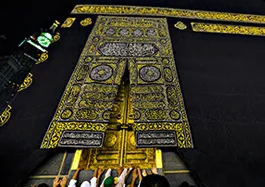
One of the most common mistakes that Umrah pilgrims make is to think that touching or wiping any part of the Kaaba and Maqam-e-Ibrahim would bring mercy and barakah. This has no basis in Hadith or Sunnah. Our beloved Prophet Muhammad (pbuh) did not touch any part of the Kaaba except the Black Stone and the Yemeni corner. Innovation in Islam is one of the things forbidden in Umrah rituals or generally in Islam, and therefore, it must be avoided.
Mistake 4: Doing multiple Umrahs
Some pilgrims repeatedly travel to Masjid Tan‘eem or other locations to perform multiple Umrahs during a single visit.
This practice is not established in the Sunnah. The Prophet ﷺ and his Companions did not repeatedly perform Umrah in this manner. Scholars generally recommend increasing Tawaf, Salah, and dhikr instead, which carry immense reward.
Mistake 5: Distance Kissing of Hajr-e-Aswad (The Black Stone)
The biggest mistake pilgrims make during their Umrah journey is harming others to kiss the Hajr al Aswad (the black stone). Kissing the black stone is a beautiful Sunnah, but due to the huge crowd, not all the pilgrims can reach it. That is why many people try to kiss it from a distance. While performing Tawaf, they stop in the middle to face the black stone and put their hands up to kiss the black stone in the air.
Kissing the Black Stone is a Sunnah only when it can be done without harm. If unable to reach the Black Stone:
- Simply point towards it
- Say “Allahu Akbar”
- Continue walking without stopping
Ibn Abbas (RA) narrated:
“Allah's Messenger (ﷺ) performed Tawaf (of the Ka`ba) riding a camel (at that time the Prophet (ﷺ) had a foot injury). Whenever he came to the Corner (having the Black Stone) he would point out towards it with a thing in his hand and say, "Allahu-Akbar."
(Sahih al-Bukhari)
Kissing the Black Stone is a Sunnah practice. The stone itself has no power to benefit or harm anyone.
Mistake 6: To think that Dua is accepted at the first glance of Kaaba
Witnessing the Holy Kaaba is itself an act of worship, but many pilgrims mistakenly believe that any duʿāʾ made at the very first glance of the House of Allah (SWT) is guaranteed to be accepted. It is not true and has no evidence in Shariah. We could not find any genuine Hadith in this matter.
Mistake 7: Shouting Du’a in groups
While performing Tawaf, some pilgrims shout Dua in unison. They follow a leader or an imam who speaks out different dua’s loudly, and the people repeat after him in unison. This disturbs other pilgrims and creates a lot of confusion, which is wrong.
Before going for Tawaf, the right thing to do is to make a list of Du’a that you want to make or the verses from Qur’an that you want to recite. This way, you won’t have to follow anybody, and you will be making Du’a from your own heart in your own language. Remember to make your dua with humility and Khushoo’.
The Prophet (pbuh) said, “Each one of you is conversing with his Lord, so do not disturb one another or raise your voices over one another when reading (or he said) when praying.” [Abu Dawood, Sahih by Al-Albani]
Mistake 8: Assigning specific Du’a for various rounds of Tawaf
Nowadays, you will find many books with fixed du’as for each round of Tawaf that are widely circulated but have no authentic foundation.
There is no prescribed du‘a for each circuit of Tawaf. Pilgrims may recite Qur’an, make du‘a, or remain silent.
The only du‘a consistently reported from the Prophet ﷺ during Tawaf is between Rukn-e-Yamani and Hajr-e-Aswad:
“Rabbana atina fid-dunya hasanah wa fil-akhirati hasanah wa qina ‘adhaban-naar.”
[“Our Lord, give us good in this world and good in the Hereafter and save us from the punishment of the Fire.’’]
Mistake 9: Doing Tawaf on someone’s behalf
Many pilgrims commit this mistake during their Umrah journey. Some pilgrims perform additional Tawaf intending to gift its reward to others. There is no authentic evidence allowing Tawaf to be performed on behalf of another person. Only Hajj and Umrah may be performed on behalf of someone else under specific conditions. Tawaf is an individual act of worship.
Mistake 10: To think that praying 40 Raka’t prayers in Madinah is compulsory
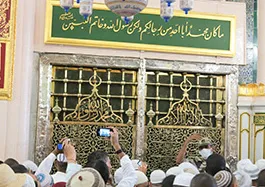
Most people think that praying 40 Raka’t Naf’l salah is compulsory in Masjid-e-Nabawi. Neither the Naf’l prayers at Masjid-e-Nabawi nor visiting Madinah is a part of Hajj or Umrah. It is good to spend maximum time in praying inside the Prophet’s Mosque in Madinah, but it is not correct to think that praying 40 nafl is necessary. Having such a notion is one of the misconceptions and common mistakes to avoid during Umrah.
Common Mistakes Women Make during Umrah
A common misunderstanding among women is believing that removing a head covering breaks Ihram. This is incorrect. Women pilgrims must remove coverings when making wudu to ensure validity.
Other mistakes include:
- Crowding closely with men
- Neglecting the proper hijab
- Speaking loudly during Talbiyah (women should recite softly)
Maintaining modesty, dignity, and awareness is essential.
Note: It is recommended to consult and seek an opinion from scholars on doubtful Islamic matters.