


How Can You Make a Short Umrah Trip Feel Less Rushed?
Practical Ways to Make the Most of a Short Umrah Journey
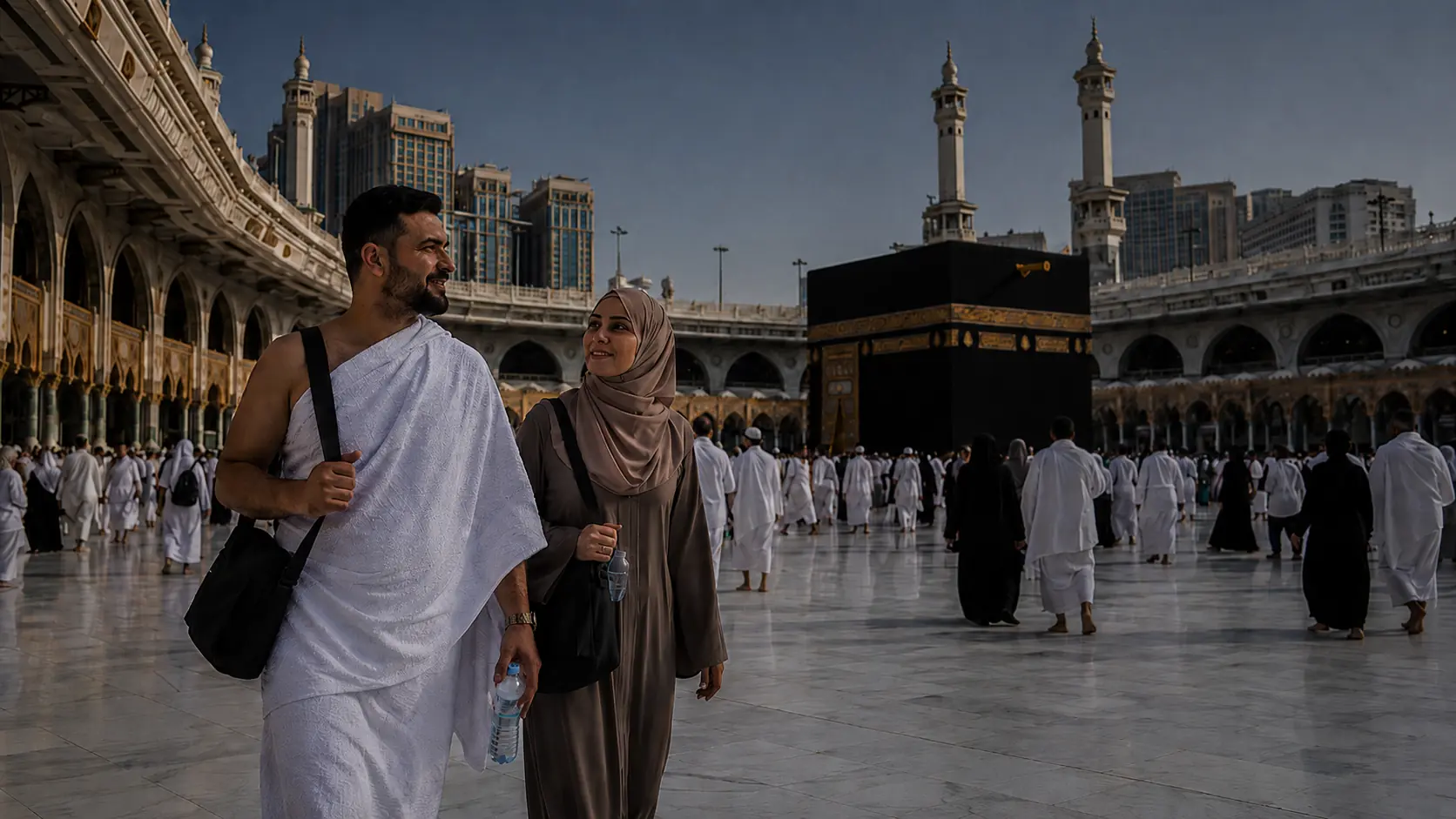
A short Umrah trip does not have to feel hurried. The key is to reduce unnecessary travel, prepare before leaving the UK and avoid trying to fit every possible activity into a few days.
For most pilgrims on a short itinerary, the priority should be simple: perform Umrah properly, protect enough time for worship and rest, and organise flights, hotels and transfers so they do not consume more of the trip than necessary.
A seven-day journey can work well when the itinerary is efficient, but poor flight timings, distant hotels, long transfers or an overloaded sightseeing schedule can make even a longer trip feel rushed.
This guide explains how UK pilgrims can organise a shorter Umrah journey without turning it into a race against the clock.
Quick Answer: How Do You Make a Short Umrah Trip Less Rushed?
To make a short Umrah trip feel more manageable:
- Learn the rituals before travelling.
- Choose convenient flight times.
- Reduce unnecessary connections.
- Stay close to the Haram where practical.
- Plan Makkah and Madinah in a logical order.
- Pre-book important transfers.
- Keep Ziyarah limited.
- Avoid scheduling every hour.
- Allow recovery time after flying.
- Prioritise worship over shopping and sightseeing.
The goal should be fewer transitions and better use of time, not simply completing more activities each day.
Plan the Essentials Before Your Short Umrah Journey
Decide What the Trip Is Really For
One of the biggest reasons a short Umrah journey feels rushed is that pilgrims try to treat it as several trips at once.
Within a few days they may attempt to:
- Perform Umrah.
- Visit Makkah landmarks.
- Visit Madinah.
- Complete multiple Ziyarah tours.
- Shop for relatives.
- Meet friends or family.
- Visit restaurants.
- Repeat Umrah several times.
- Fit every recommended activity into the schedule.
This quickly creates pressure.
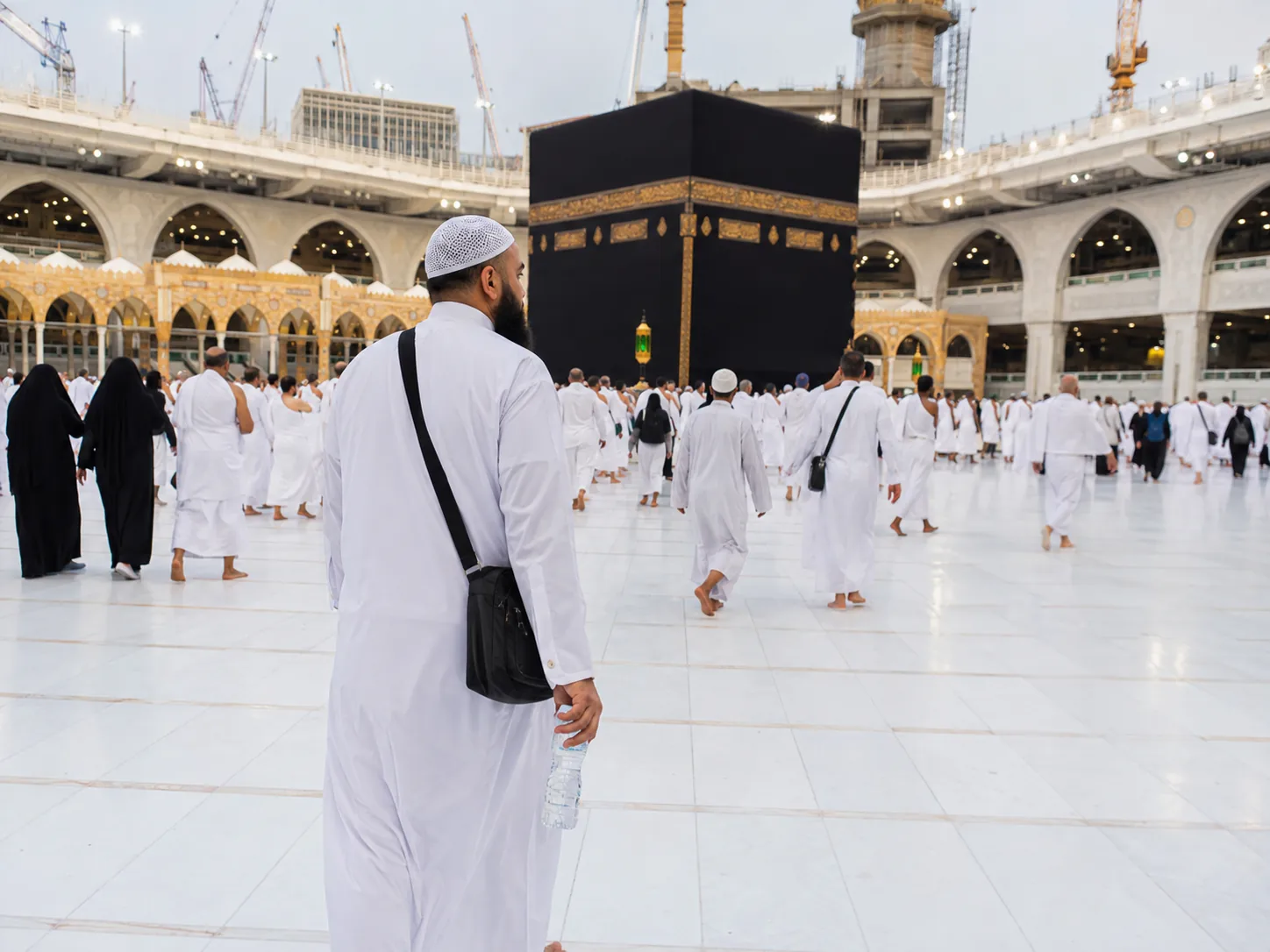
Before travelling, decide what matters most. Your primary purpose is worship. Everything else should fit around that rather than competing with it.
A short trip usually becomes more meaningful when you deliberately leave some optional activities out.

Learn the Umrah Rituals Before Leaving the UK
Do not use your first hours in Makkah to learn what Ihram, Tawaf, Sa'i and Halq or Taqsir mean.
The official Nusuk Umrah guidance sets out the journey in four principal stages: Ihram, Tawaf, Sa'i and shaving or trimming the hair.
Understanding these steps before you travel reduces uncertainty after arrival and helps you focus on worship instead of repeatedly checking instructions.
Before departure:
- Understand when to enter Ihram.
- Learn how Miqat applies to your route.
- Know the sequence of Tawaf and Sa'i.
- Prepare the duas and dhikr you genuinely want to make.
- Understand how your Umrah is completed.
Itimaar's How to Prepare for Umrah guide can help you organise this preparation before your journey.

Choose Flights for Time, Not Only Price
A £50 or £100 saving can lose its value if the flight adds eight hours of travel or requires a difficult overnight connection.
On a short Umrah trip, your most limited resource is often usable time, not simply money.
Compare:
- Total journey duration.
- Direct versus connecting service.
- Departure time from the UK.
- Arrival time in Saudi Arabia.
- Connection length.
- Terminal changes.
- Baggage arrangements.
- Ground-transfer timing after arrival.
For example, arriving early enough to check in, rest and begin worship comfortably may be more valuable than choosing the cheapest possible flight.
Pilgrims deciding between flight types should compare the full journey rather than only the fare when choosing direct or connecting flights for Umrah.

Arrange Your Arrival City Around the Itinerary
A poorly ordered route can waste a significant part of a short trip.
If Makkah is your first priority, arriving through Jeddah may make sense because King Abdulaziz International Airport provides onward transport options and direct access to the Haramain train network. The airport currently lists Haramain Express access among its transport services.
If you prefer to begin in Madinah, flying there first may allow you to settle in before travelling to Makkah and entering Ihram for Umrah later.
A useful route might be:
UK → Madinah → Makkah → Jeddah → UK
or:
UK → Jeddah → Makkah → Madinah → UK
An open-jaw itinerary can sometimes reduce the need to travel back to your original arrival city simply to fly home.
Before booking, compare the practical differences between Jeddah and Madinah Airport based on the order of your stay.
Use Your Limited Umrah Time More Efficiently

Do Not Perform Umrah Immediately Just Because You Can
After a long international journey, pilgrims can be tired, dehydrated and mentally exhausted.
If your arrival arrangements allow appropriate rest without conflicting with your Ihram obligations, avoid creating artificial pressure to complete everything at maximum speed.
A short rest, shower where applicable, meal and time to regain concentration can make the ritual feel much more meaningful.
The exact approach depends on your route, Ihram status and arrival time. Pilgrims should understand their religious obligations before travelling rather than improvising after landing.
Choose Hotel Location Over Unnecessary Luxury
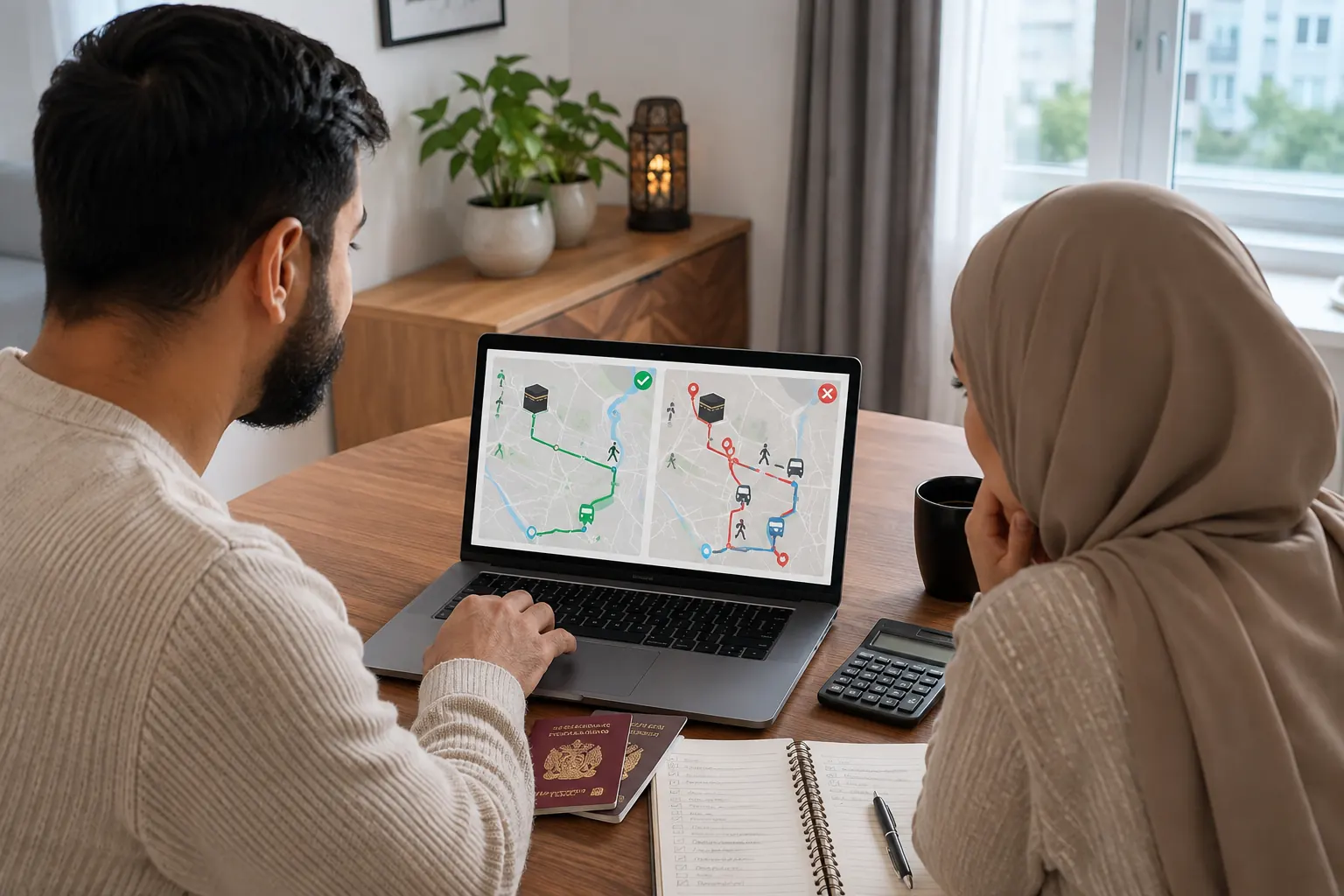
On a short trip, hotel location can save more time than many travellers expect.
A property farther from Masjid al-Haram may involve:
- Waiting for shuttles.
- Taxi journeys.
- Traffic.
- Longer walks.
- More planning around every prayer.
- Additional effort returning to the room for rest.
A conveniently located hotel can make it easier to move between worship and rest without turning each journey into a separate activity.
Do not rely only on phrases such as “near the Haram.” Check:
- Actual walking route.
- Entrance location.
- Lift availability.
- Road crossings.
- Slopes.
- Shuttle requirements.
- Accessibility for elderly travellers.
For a short itinerary, convenience may be more valuable than paying for facilities you will barely use.

Keep Your Makkah and Madinah Split Realistic
If you only have seven days including international travel, dividing the stay equally may not always be the best solution.
Ask yourself:
- Is this my first Umrah?
- Is spending time in Madinah essential to this particular trip?
- How many usable nights do I actually have?
- How long will the city transfer take?
- Am I travelling with children or elderly parents?
Do not count “seven days” as seven full days of worship. Arrival, departure and intercity travel may significantly reduce usable time.
Itimaar's guide on how long an Umrah trip should be can help you compare shorter and longer itinerary options before booking.

Pre-Arrange Makkah–Madinah Transport
Do not spend half a day deciding how to reach the next city after you are already there.
Where possible, organise your intercity journey before travelling.
Depending on your arrangements, options may include:
- Haramain High-Speed Railway.
- Private car.
- Package transfer.
- Coach.
The best option is not always the fastest one on paper. A train journey may still require hotel-to-station transfers and luggage handling, while a private vehicle can offer door-to-door convenience.
Choose based on total effort and time rather than one headline journey duration.
Limit Ziyarah Instead of Eliminating Rest
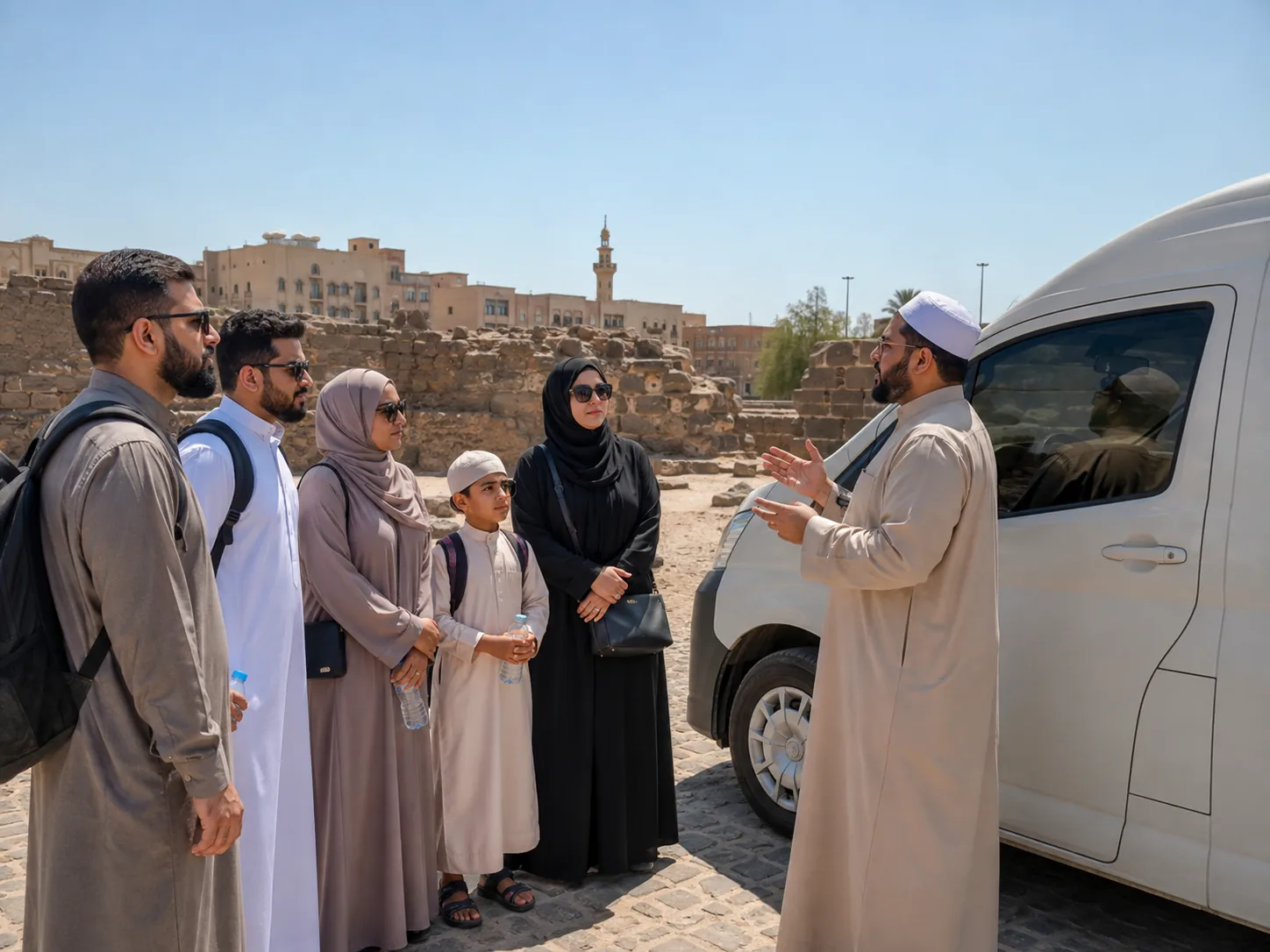
A common planning mistake is treating Ziyarah as compulsory sightseeing that must be squeezed into every itinerary.
Visiting historically important places can be valuable, but an overloaded Ziyarah programme can leave little energy for Masjid al-Haram or Masjid an-Nabawi.
On a short trip, consider:
- One well-planned Ziyarah session instead of several.
- Combining nearby locations.
- Avoiding long excursions immediately after Umrah.
- Leaving optional visits for a future journey.
A shorter list of meaningful experiences is often better than an itinerary that leaves everyone exhausted.
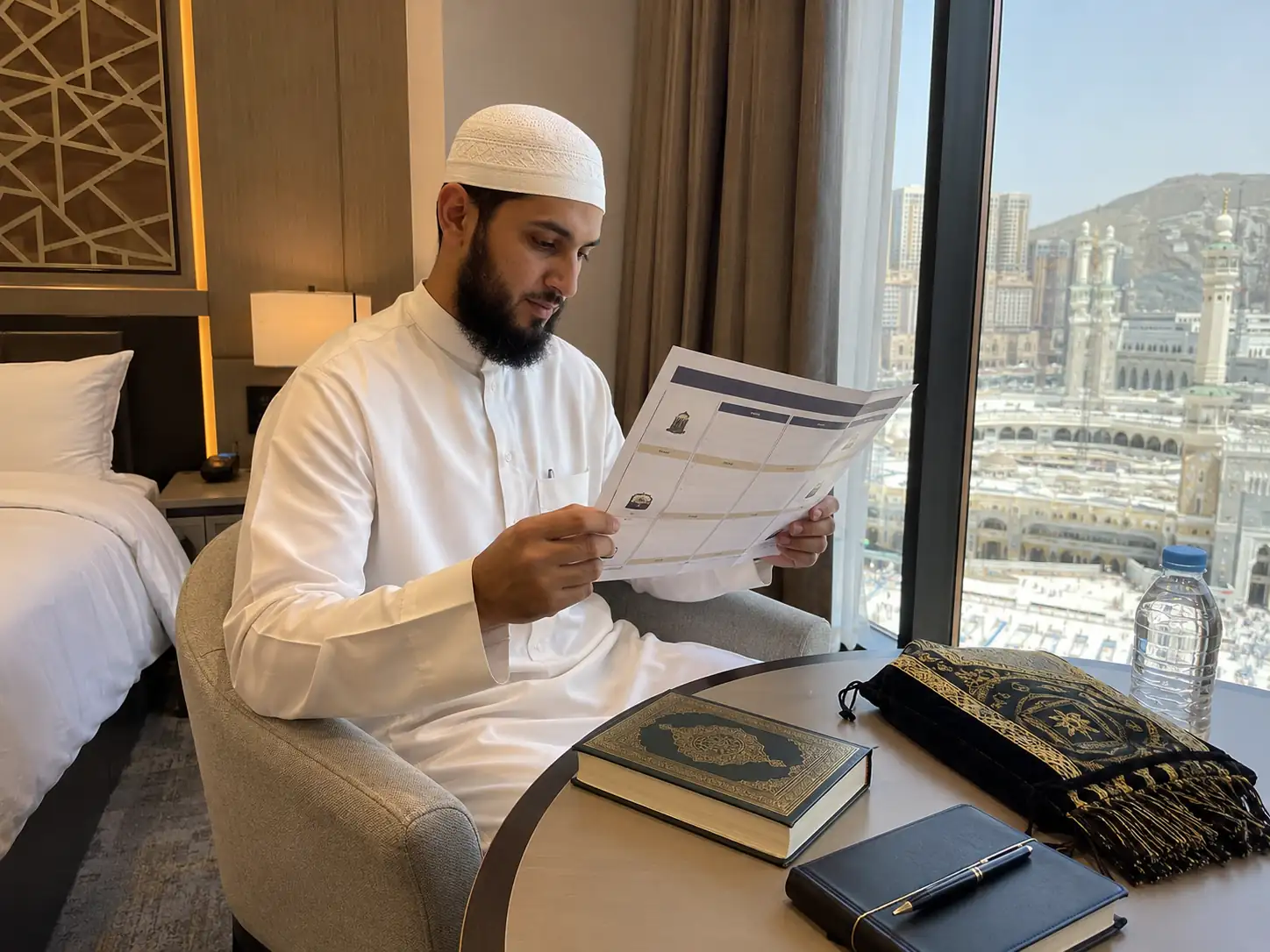
Build Empty Space Into the Schedule
Do not schedule every morning, afternoon and evening.
Leave some periods intentionally free.
This allows room for:
- Extra prayer.
- Qur'an reading.
- Rest.
- Unexpected delays.
- Longer meals.
- Transport disruption.
- Spending more time in the mosque when you wish.
A pilgrimage should not feel like a corporate itinerary where being 30 minutes late ruins the day.
A little flexibility can make a short trip feel considerably longer.

Plan Around the Needs of the Slowest Traveller
If travelling as a family, the pace should not be determined by the youngest and healthiest adult.
Children, elderly parents and people with mobility conditions may require:
- More rest.
- Wheelchair assistance.
- Shorter walking distances.
- Regular medication.
- Earlier meals.
- More time entering and leaving crowded areas.
Jeddah Airport currently provides mobility and special-assistance services, although arrangements can also depend on airline policy.
Itimaar's guidance on Umrah with children or elderly pilgrims can help families plan a more realistic pace.

Keep Shopping Until the End
Shopping can consume surprisingly large amounts of time.
A “quick” visit to buy gifts may become several hours once you include walking, transport, browsing and carrying purchases back to the hotel.
For a short Umrah:
- Make a shopping list before travelling.
- Decide on a spending budget.
- Choose one shopping period.
- Buy gifts near the end of the stay.
- Avoid repeated visits for individual items.
- Check baggage allowance before buying heavy products.
This protects the earlier part of your journey for worship.

Keep Documents and Apps Ready Before Arrival
A short itinerary leaves little room for administrative problems.
Before leaving the UK, make sure you have:
- Correct Saudi entry permission.
- Passport with sufficient validity.
- Accommodation confirmation.
- Flight details.
- Travel insurance.
- Required health documentation.
- Transfer information.
- Important apps and login details.
Current FCDO guidance states that British citizens need appropriate Saudi entry permission for Umrah outside the Hajj season, and passports must expire at least six months after arrival.
FCDO pilgrimage guidance also advises travellers to keep travel documentation safe and currently requires a valid ACWY meningitis vaccination certificate at least 10 days before arrival for Hajj or Umrah.
Do not leave these checks until the airport.
Avoid These Short-Trip Mistakes
The mistakes that make short Umrah trips feel most rushed are usually preventable:
- Choosing the cheapest flight regardless of duration.
- Arriving through an inconvenient airport.
- Booking a distant hotel.
- Learning Umrah rituals after arrival.
- Moving between Makkah and Madinah without pre-booked transport.
- Filling every day with Ziyarah.
- Shopping throughout the trip.
- Planning no recovery time after flying.
- Expecting children or elderly parents to keep an adult's pace.
- Trying to repeat Umrah simply to “get more done.”
Efficiency should reduce distractions, not turn worship into a race.
A Simple Short-Umrah Planning Framework
For a short trip, think in this order:
Protect the rituals.
Know Ihram, Tawaf, Sa'i and completion of Umrah before travelling.
Reduce unnecessary journeys.
Choose sensible flights, airport order and intercity transfers.
Protect rest.
Do not treat sleep and recovery as wasted time.
Prioritise the Holy Mosques.
Keep optional sightseeing secondary.
Leave flexibility.
Not every hour needs an activity.
This approach is often more useful than trying to create a detailed minute-by-minute itinerary.
Can a 7-Day Umrah Still Feel Meaningful?
Yes.
A seven-day Umrah can provide a meaningful journey when the logistics support worship rather than compete with it.
The length of your trip alone does not determine its quality. A well-organised seven-day journey may feel calmer than a poorly planned fourteen-day trip involving inconvenient flights, distant hotels and too many activities.
Focus on quality of time rather than quantity of activities.
Final Thoughts
The best way to make a short Umrah trip feel less rushed is not to move faster. It is to remove unnecessary pressure from the itinerary.
Prepare before leaving the UK, choose convenient flights, organise transfers, stay in a practical location and decide which optional activities can be left out.
Most importantly, resist the temptation to measure the success of your Umrah by how many things you managed to complete. Allow enough time to perform the rituals attentively, worship peacefully and rest when needed.
If you are comparing short itineraries, explore Itimaar's Umrah packages from the UK and consider the complete journey—flights, hotels, transfers and length of stay—rather than only the advertised number of nights.
Frequently Asked Questions
Is seven days enough for Umrah?
Yes, a seven-day trip can be enough to perform Umrah and spend time in Makkah and Madinah. However, international flights and intercity travel reduce the number of full usable days, so the itinerary needs to be organised carefully.
How can I avoid feeling rushed during Umrah?
Prepare the rituals before travelling, choose convenient flights and accommodation, pre-arrange transfers and limit optional activities. Leaving unscheduled time for worship and rest also makes the journey feel less pressured.
Should I visit Makkah or Madinah first on a short Umrah?
Either can work. Makkah-first may suit pilgrims who want to perform Umrah soon after arrival, while Madinah-first can provide a gentler start before travelling to Makkah. The best option depends on flights, airport choice and the overall route.
Should I include Ziyarah on a short Umrah trip?
Yes, if time and energy allow, but do not overload the itinerary. One focused Ziyarah session may be more practical than several excursions that reduce time for worship and rest.
