


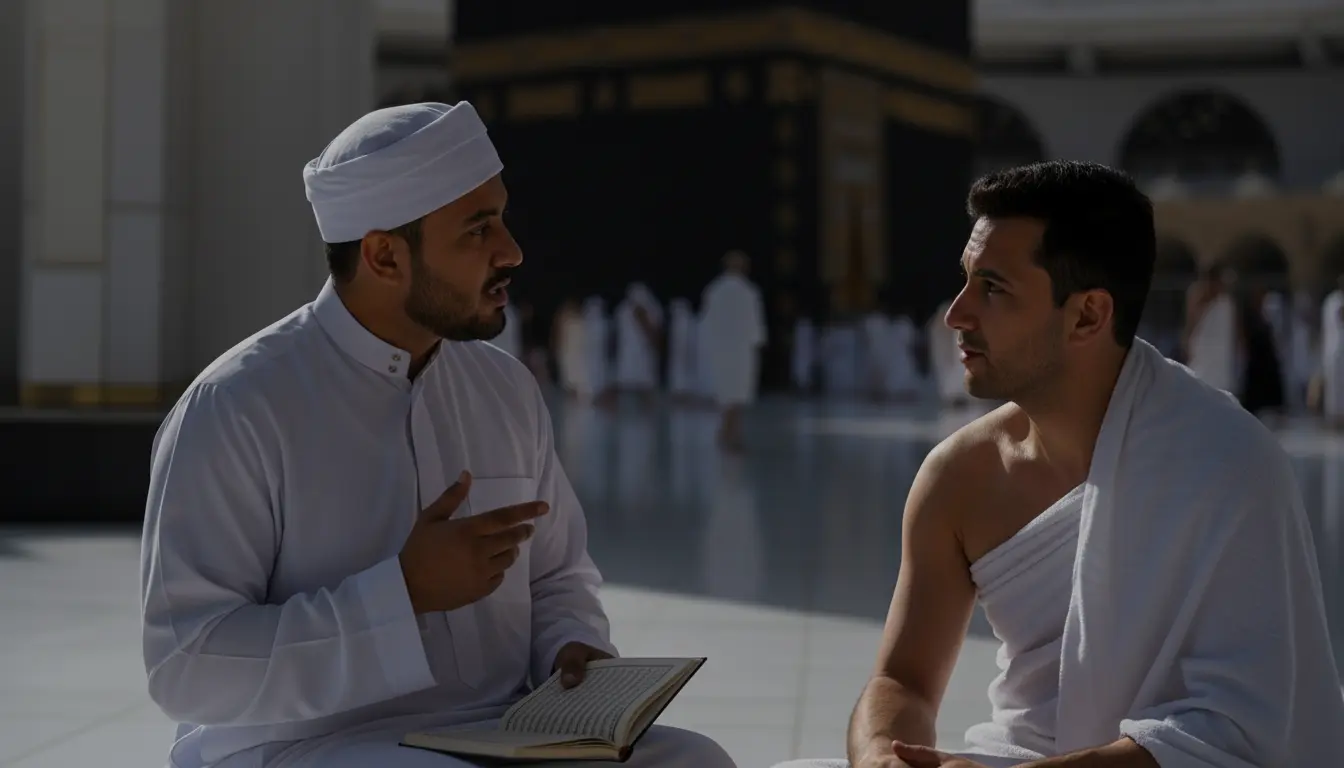
Umrah for Reverts (New Muslims): A Special Guide
Practical Guide on Umrah for Reverts
Umrah is a minor Hajj, a spiritually profound journey that every Muslim aspires to undertake. Taking the first step on the sacred pilgrimage is a powerful milestone for believers of Islam, and even more for new Muslims.
For reverts (new Muslims), the thought and feeling of performing Umrah can be both exciting and daunting. The rituals, Arabic terms, supplications, culture and the spiritual importance of the sacred journey can seem overwhelming at first.
At Itimaar, we understand and are aware of all the questions and challenges revertees face while performing Umrah for the first time. We help them prepare with confidence, clarity and complete peace of mind.
This practical guide to Umrah for Reverts is specifically prepared for new Muslims to help them understand the significance of Umrah and how to perform Umrah step-by-step.
Understanding What Is Umrah And Its Significance
Umrah is a voluntary pilgrimage, a minor hajj that can be performed any time of the year. In contrast, Hajj is an obligatory pilgrimage for those who are financially, mentally, and physically able and must be performed in the month of Dhul Hijjah. Umrah, on the other hand, offers flexibility and can be performed whenever one is able, for the sacred journey.
Though Umrah is called a minor pilgrimage, its spiritual significance is profound and immense. The sacred journey wipes away sins, helps in spiritual upliftment, purifies the soul, heart and brings the pilgrims closer to Allah (SWT).
Our beloved Prophet Muhammad (PBUH) performed Umrah four times in his lifetime and encouraged his followers to undertake this sacred journey.
The Prophet Muhammad (PBUH) said:
(The performance of) `Umra is an expiation for the sins committed (between it and the previous one).
Sahih al-Bukhari 1773
(Perform `Umra when Ramadan comes, for `Umra in Ramadan is equal to Hajj (in reward)
Sahih al-Bukhari 1782
For reverts, Umrah is a profound opportunity to cement your identity as a Muslim, strengthen your faith, experience the unity of Ummah, wash away past sins and make memories that will inspire you to practise Islam for years to come.
Umrah for Reverts is no different or unique; the intentions, rituals, and everything are the same. Umrah is one of the highest acts of worship that brings the pilgrim closer to Allah (SWT).
Umrah For Reverts: Essential Things To Know
As a new Muslim, you may have many questions in your mind, like:
- What should I know about the rituals before I go?
- How do I wear Ihram properly?
- Do I have to learn Arabic?
- How to spiritually prepare for the sacred journey?
We have addressed all these concerns below, so you can prepare for the sacred journey with confidence and clarity.
Preparing for Umrah as Reverts
Strengthen Your Intention (Niyyah)
Intentions matter the most, and all your acts are rewarded based on what you intended. Sincere intention can even make your holiday trip an act of worship.
The Prophet Muhammad (PBUH) said:
"The (reward of) deeds, depend upon the intentions and every person will get the reward according to what he has intended. So whoever emigrated for the sake of Allah and His Apostle, then his emigration will be considered to be for Allah and His Apostle, and whoever emigrated for the sake of worldly gain or for a woman to marry, then his emigration will be considered to be for what he emigrated for."
(Sahih al-Bukhari 6689)
Before you begin your sacred journey, it's important to make a clear and sincere intention that you are performing Umrah for the sake of Allah (SWT), seeking His blessings and forgiveness. Your journey should not be for social media or worldly praise.
Understand the Documentation
If you’re travelling from the UK, you’ll need:
- A valid passport (at least 6 months’ validity)
- If using a standard tourist e‑visa or visa waiver, you are not required to book via Nusuk, but Umrah-specific visas must use the official Nusuk platform.
- Confirmed hotel booking in Makkah/Madinah
- Confirmed return flight tickets
- Vaccination certificates
- Travel and Medical Insurance
- Proof of Conversion
At Itimaar, we offer pilgrims well-curated Umrah packages and guide them throughout the sacred journey.
Guide On How To Perform Umrah For Reverts
Here is the simplified step-by-step guide to the Umrah rites, so you can follow them with confidence:
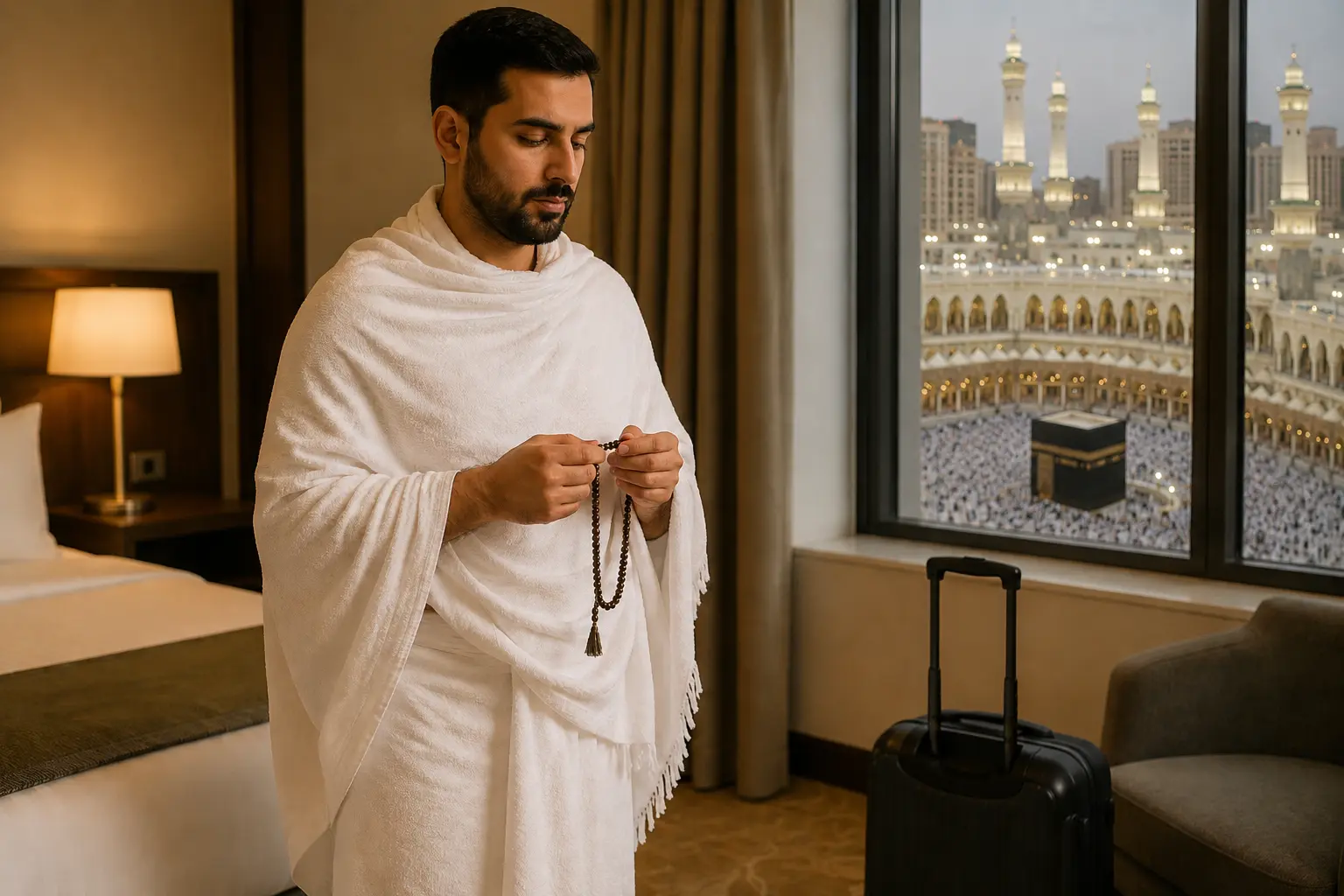
Ihram: Entering the State of Purity
New Muslims must understand that the Ihram is not just about wearing the white clothing; it's about entering the state of purity. Before crossing the Miqat point, which is the designated boundary, you must enter Ihram.
Men wear two pieces of white unstitched clothing. Women do not have any specific clothing but must wear modest and loose-fitting attire.
Make the intention: “Labbaik Allahumma Umrah” (O Allah, here I am to perform Umrah). Either you can say it loud or in your heart. Our lord Allah (SWT) knows what is even hidden in the heart.
Recite the Talbiyah frequently:
“Labbaik Allahumma labbaik, labbaik la sharika laka labbaik. Innal hamda wanni’mata laka wal mulk, la sharika lak.”
This Talbiyah trains the soul to acknowledge Tawheed (the Oneness of Allah SWT) and to be sincere towards Him.
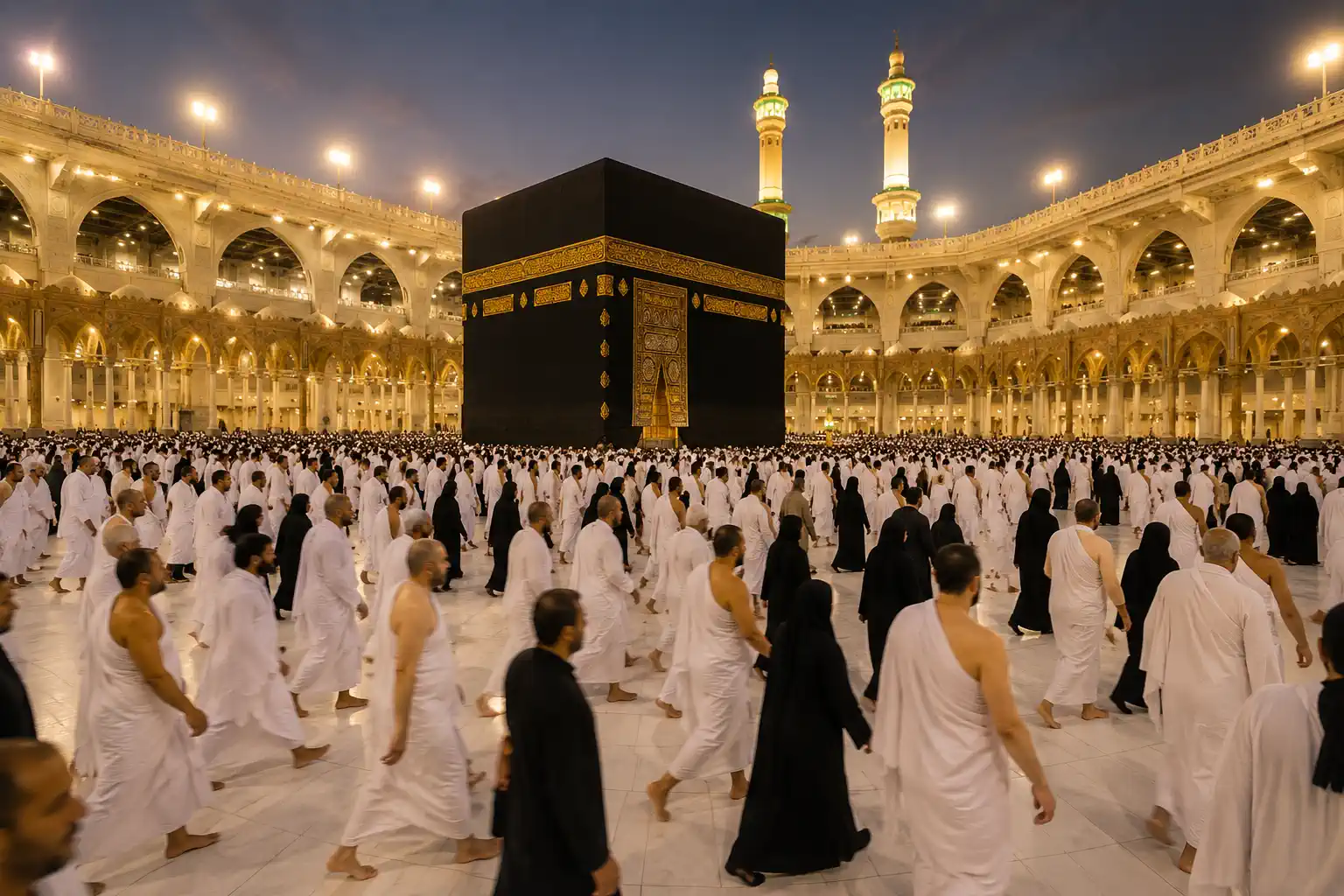
Tawaf: Circling the Ka’bah
When you enter the sacred Masjid al-Haram, you should perform two rak’ahs of salah, which is not obligatory but an act of Sunnah. Proceed to the Ka’bah and perform seven counterclockwise circuits (tawaf) around it.
If you don’t pray the two rak’ahs when entering the Masjid al-Haram, there is no sin in that, as Tawaf itself is considered a form of greeting the mosque.
Try to touch or kiss the Black Stone (Hajr al-Aswad), without harming others. If you cannot do so, then point towards it with your right hand and say:
“Bismillah, wa Allahu akbar (in the name of Allah, and Allah is most great).”
(Sahih al-Bukhari 1632)
During Tawaf, keep your tongue moist with remembrance of Allah (SWT)
by saying these phrases:
- SubhanAllah
- Alhamdulillah
- Allahu Akbar
- La ilaha illallah
Any heartfelt supplication in your own language is allowed. After completing tawaf, it is Sunnah to pray two rak’ahs behind Maqam Ibrahim if possible. If Maqam Ibrahim is crowded, you can pray anywhere in the sacred Masjid al-Haram.
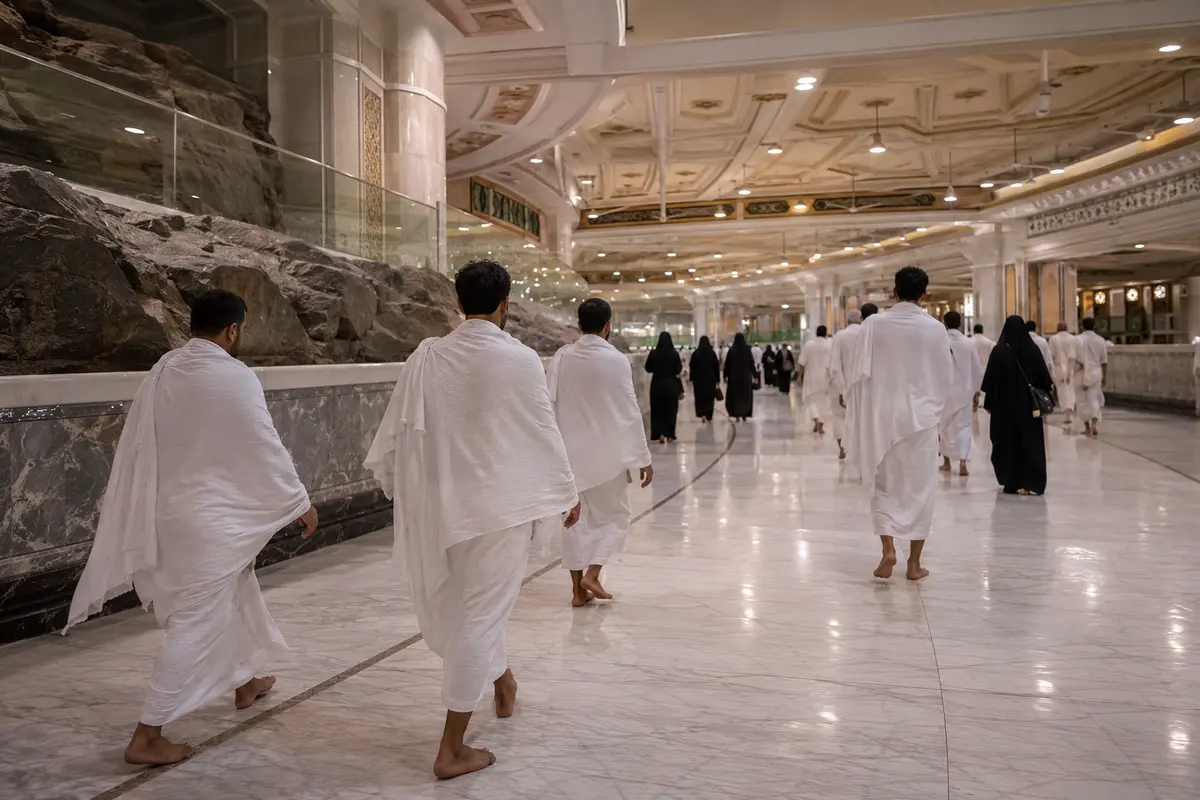
Sa’i: Walking Between Safa and Marwah
After completing Tawaf, proceed to perform Sa'i, which is walking between the hills of Safa and Marwah. The ritual of Sa'i is a reminder of the struggle and devotion of Hajar (AS), the wife of Prophet Ibrahim (AS).
The Qur'an says:
Indeed, ˹the hills of˺ Ṣafa and Marwah are among the symbols of Allah. So whoever makes the major or minor pilgrimage to the ˹Sacred˺ House, let them walk between ˹the two hills˺.
(Surah Al-Baqarah 2:158)
Walk back and forth between Safa and Marwah seven times, remembering Allah, praising Him, and making heartfelt Du'as. During or after Sa’i, it is Sunnah to drink from the blessed Zamzam water, which is available throughout Masjid al-Haram.
Halq/Taqsir: Shaving or Trimming the Hair
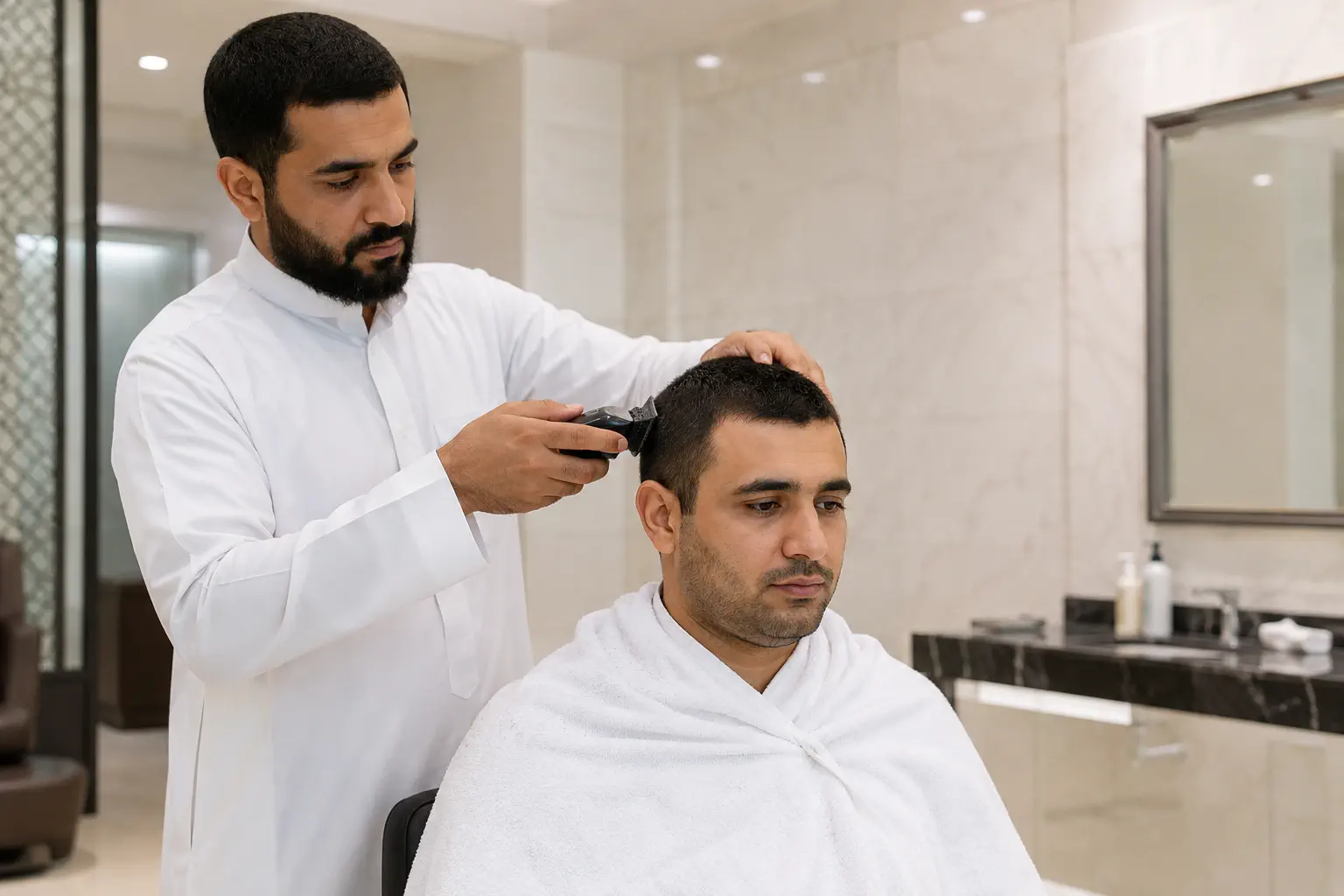
After completing Sa'i, the final step of Umrah is cutting or shaving your hair, which is called Halq (shaving) or Taqsir (trimming). For men, Halq (shaving the entire head) is more rewarding than Taqsir.
Our Prophet Muhammad (PBUH) made du‘a three times for those who shaved and once for those who trimmed.
Sahih Muslim (1303)
If you choose to trim your hair, ensure to trim from all over your head and not just a few strands. Women can trim a small portion (about a fingertip length) from the end of their hair.
Once this is done, your Umrah is complete, Insha’Allah, and your sins are forgiven. You can then exit the state of ihram.
Special Tips & Reassurances for Reverts Performing Umrah
Don't Worry Or Regret Your Mistakes
Umrah is a spiritually profound journey which is mainly about your sincere intentions, efforts and humility. If you make a mistake, simply correct it if you can, and trust that Allah (SWT) is Most Merciful.
Learn Basic Du’as, But Ask from Your Heart
You don't need to learn all the long supplications in Arabic; Allah (SWT) understands every language, He even knows what is hidden inside your heart. Learn simple phrases in Arabic, and make deep heartfelt duas in your own language.
Ask For Help
If you are unsure about the rites and forgot the steps, without any hesitation, ask fellow pilgrims, mosque staff or your travel guide. The community and the global Ummah will surely help you.
Focus On Spiritual Experience
Instead of worrying about technical perfection, you should focus on seeking Allah’s (SWT) forgiveness for your sins, thanking Him for all the comfort and blessings, and strengthening your connection with Him.
Do you know that many reverts find this sacred pilgrimage to be the most transformative part of their journey? So let your emotions flow and your soul find peace during Umrah.
Umrah Packing Essentials For Reverts
- Patience and an Open heart
- Ihram clothing with a spare set
- Comfortable walking shoes and sandals
- Pocket-sized Qur'an or download Apps
- Travel prayer mat and a reusable water bottle
- A small notebook with essential Duas written
Umrah Is A Sacred Journey To Cherish Forever
Umrah is not just about performing the rituals; it's a journey of emotions, an opportunity to connect with Allah (SWT), and a spiritual homecoming. As a revert, embarking on this sacred journey may feel both exciting and daunting, but remember that Allah (SWT) has honoured you with this invitation to His house.
You are among the fortunate believers blessed to visit the Kabah, a dream that millions still long to fulfil. Every step you take, every dua' you make, and every tear you shed is loved and cherished by Allah (SWT).
Let the fear, worry and doubt go away, embrace the experience and remember that you are now a part of the global family of believers.
At Itimaar, we understand the unique needs of new Muslims and are honoured to guide you on this sacred journey. From thoughtfully curated packages to expert guidance, we’re here to make your Umrah seamless, meaningful and spiritually fulfilling.
Frequently Asked Questions
Can reverts (new Muslims) perform Umrah?
Yes, reverts can perform Umrah just like any Muslim, with the same rituals, intentions, and rewards.
Do reverts need to know Arabic for Umrah?
No, reverts can make dua in any language, as Allah understands all languages and intentions.
Is Umrah difficult for new Muslims?
Umrah may feel overwhelming at first, but with basic preparation and guidance, it becomes manageable and rewarding.
What should reverts prepare before Umrah?
Reverts should focus on niyyah, learning basic rituals, carrying documents, and spiritual preparation before the sacred journey.
