


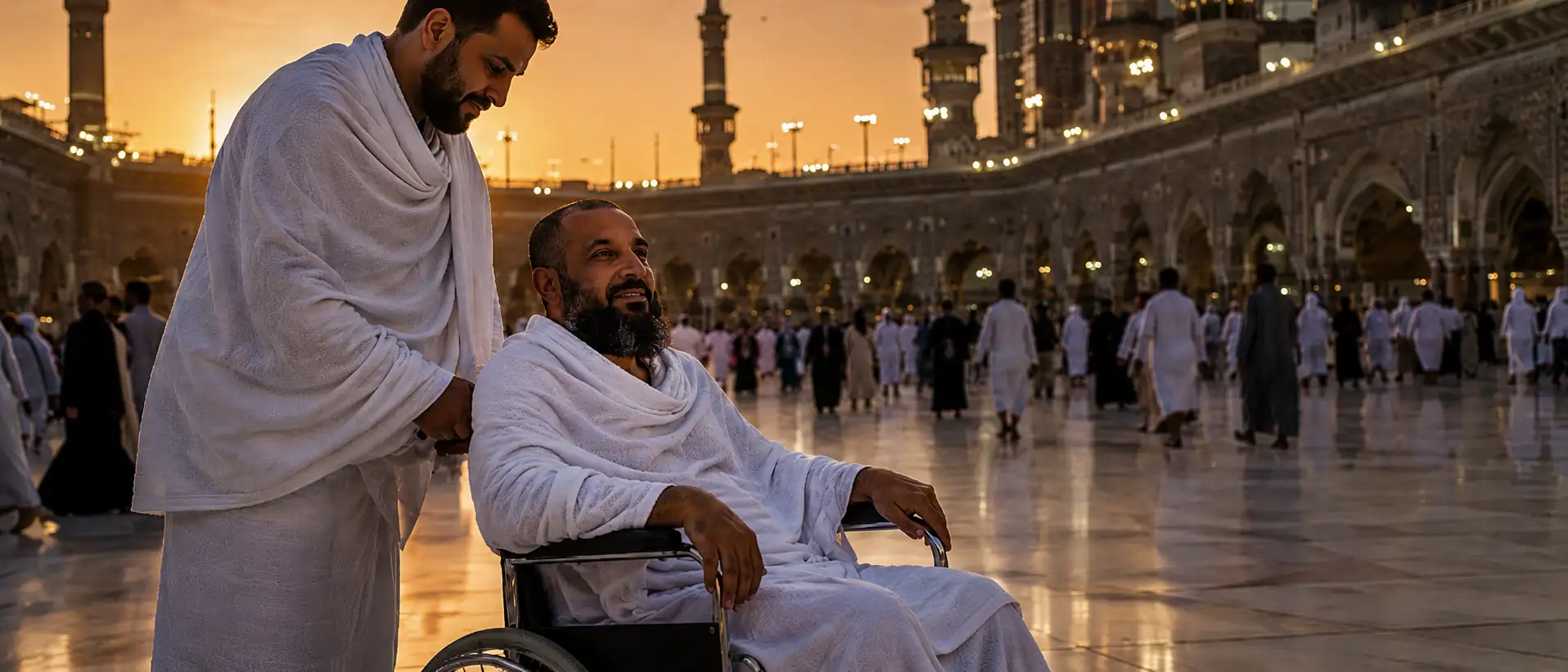
Accessibility in the Two Holy Mosques: What’s Available for Disabled Pilgrims
Facilities Available for Disabled Pilgrims in Makkah and Madinah
Hajj and Umrah are profoundly sacred journeys that unite Muslims from around the world in devotion, bringing them to the holy cities of Makkah and Madinah. Every year, millions of believers travel to the two holy mosques — Masjid Al-Haram and Masjid An-Nabawi — to fulfil their spiritual duty of Hajj and Umrah with hearts full of faith.
Every Muslim desires to visit these sacred mosques and perform Hajj and Umrah. Among these devoted believers, there are those whom Allah tests with severe health challenges. Some are physically disabled, while others rely on wheelchairs due to chronic conditions. Yet, their devotion to Allah (SWT) only deepens through the trials they endure.
For disabled pilgrims, this spiritual journey comes with unique challenges, but today, visiting the Two Holy Mosques is more accessible than ever before. All thanks to the ongoing initiatives by the Saudi government, both Masjid Al-Haram and Masjid Al-Nabawi have made big improvements to their facilities and services for pilgrims who have physical, visual, or hearing impairments.
If you or your loved one has a disability and is preparing for this sacred journey, this comprehensive guide will help you understand what’s available, how to prepare, and other essential details.
A Welcoming Vision: Accessibility in Islam
We are all aware of the beauty of Islam, it is a religion of ease, compassion and inclusivity. Allah (SWT) in His mercy has permitted flexibility in religious duties for those with physical disabilities. (ٱلْحَمْدُ لِلَّٰهِ, Al-Ḥamdu lillāh)
Saudi officials have put this Islamic principle into action. They've set up helpful services and facilities in the Two Holy Mosques to support disabled pilgrims.
Accessibility at Masjid al-Haram, Makkah
Masjid al-Haram, the most sacred site in Islam, welcomes millions of pilgrims each year. To ensure that disabled pilgrims can perform their worship with comfort and dignity, a wide range of dedicated support services has been thoughtfully put in place:
Wheelchair Services
- Manual and electric wheelchairs are available for free or for rental.
- During rituals like Tawaf and Sa'i you will see dedicated wheelchair lanes clearly marked and maintained.
- Use the "Nusuk App" to book your electric scooter in advance for ease and comfort.
Dedicated Entrances and Elevators
- When in Masjid al-Haram you will find multiple wheelchair-accessible gates and special elevators
- Eight designated wheelchair-accessible gates (including Gates 11, 68, 74, 79, 89, 90, 93, and 94) with special ramps to ensure smooth entry and uninterrupted movement for all pilgrims.
Prayer Areas and Wudu Facilities
- On all the major floors, you will find separate prayer zones for disabled pilgrims.
- Accessible ablution areas and toilets are well-maintained, signposted, and routinely cleaned.
Visual and Hearing Assistance
- The mosque now provides Braille Qur’ans and touchscreen devices for the visually impaired.
- Electronic Quran Devices: New electronic devices are also available for visually impaired worshippers.
Accessibility at Masjid an-Nabawi, Madinah
The Prophet Muhammad (pbuh) Mosque (Masjid an-Nabawi) is not only a sanctuary of peace but also a model of accessibility. This mosque warmly welcomes pilgrims of all abilities, ensuring that no one feels left out of this sacred experience. Here's what this mosque offers for disabled pilgrims:
Wide Pathways and Ramps
- The mosque is surrounded by spacious and wide wheelchair-friendly courtyards and ramps that allow smooth movement.
- You will find many staff and volunteers who are always ready to guide and assist you.
Ziyarat Made Easier
Disabled pilgrims can enter the Rawdah Sharif (the sacred chamber) through a well-organised system. The Nusuk or Eatmarna app allows people to book specific time slots and manage their entry.
Wheelchair Assistance and Priority Access
- You will find free manual wheelchairs that are provided at all the major gates.
- Volunteers and dedicated staff help elderly and disabled pilgrims during prayer times and Ziyarat.
Preparing For A Hassle-Free Journey As A Disabled Pilgrim
It is important to plan your journey and start early preparation in order to make your Umrah or Hajj journey truly stress-free. Below are essential areas to focus on:
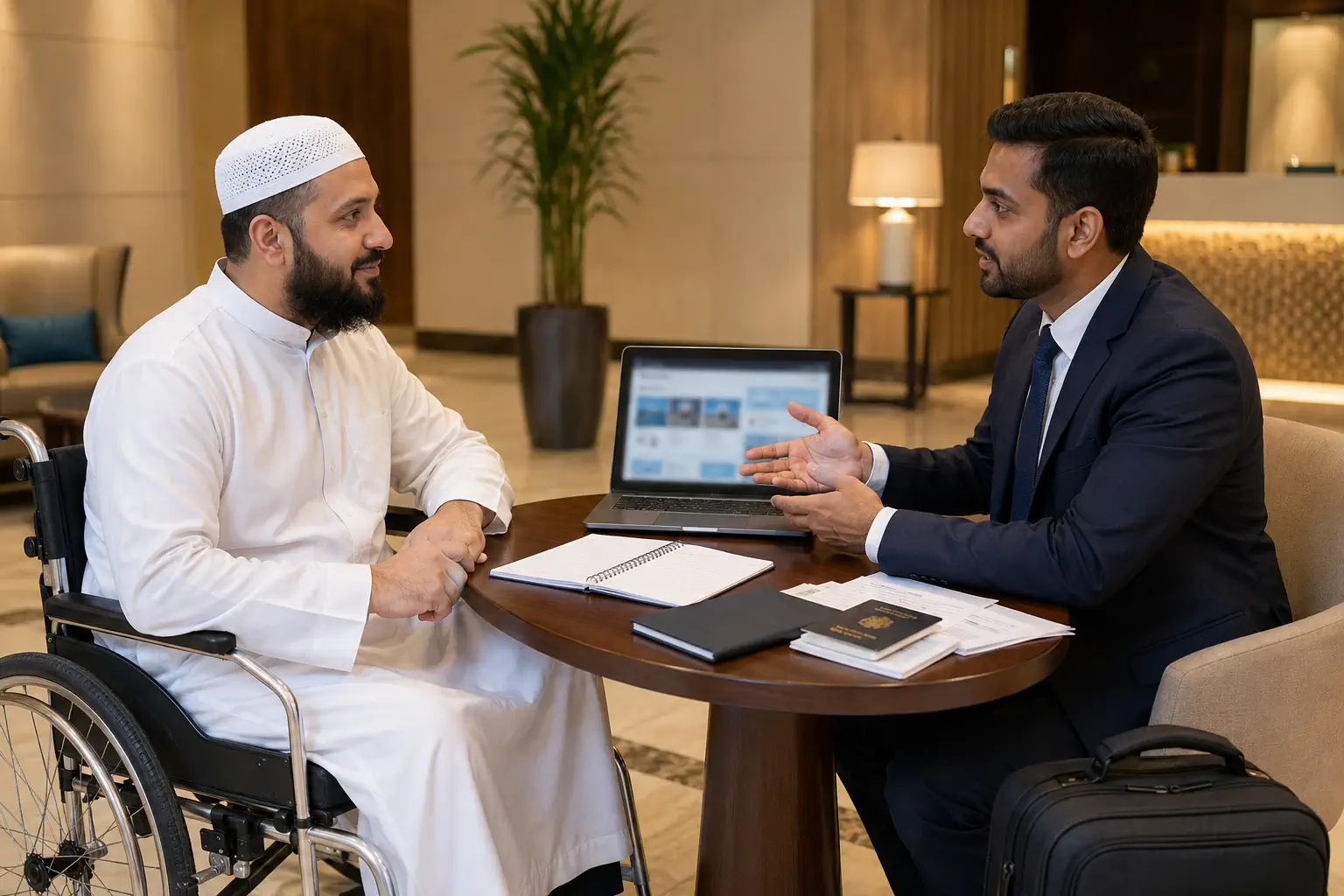
Plan Ahead & Select the Right Umrah Plan
For disabled pilgrims, planning ahead is important. Choose a reliable Umrah package provider like “Itimaar” which understands your unique needs, from medical to mobility and more. We advise you to always choose packages with wheelchair support and hassle-free transportation services.
Remember: The right package can turn your challenging journey into a spiritual and fulfilling experience.
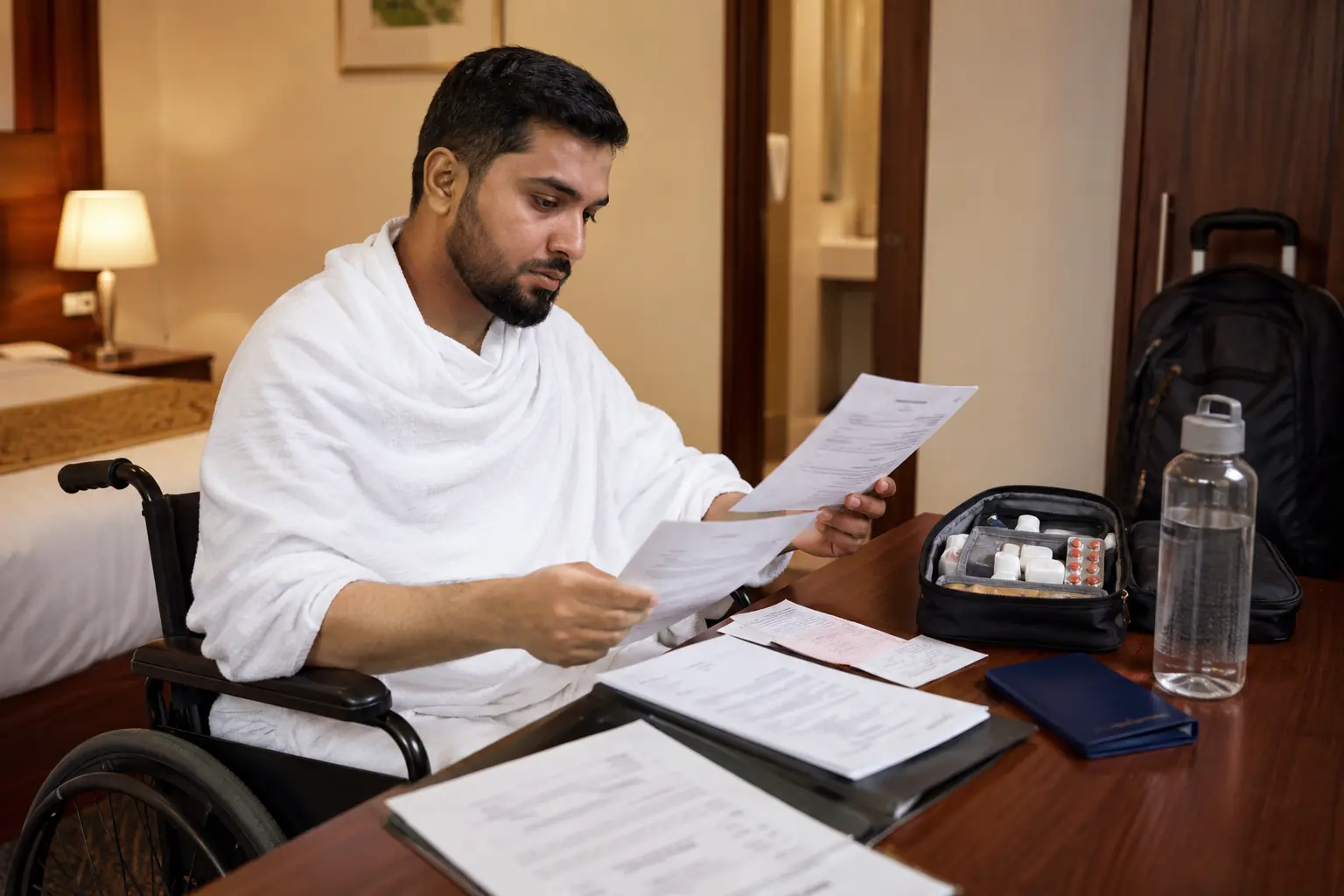
Documentation and Medical Preparation
If you are suffering from a medical condition, remember to carry your medical certificate, a note from your doctor, and enough prescription meds to last your whole trip. This matters a lot if you depend on medical devices like CPAP machines or oxygen support.
If you use mobility aids, bring spare batteries or chargers (if allowed) and label everything so there's no mix-up while travelling. Having proper documentation and being well-prepared can help avoid delays and make sure your Umrah journey is stress-free.
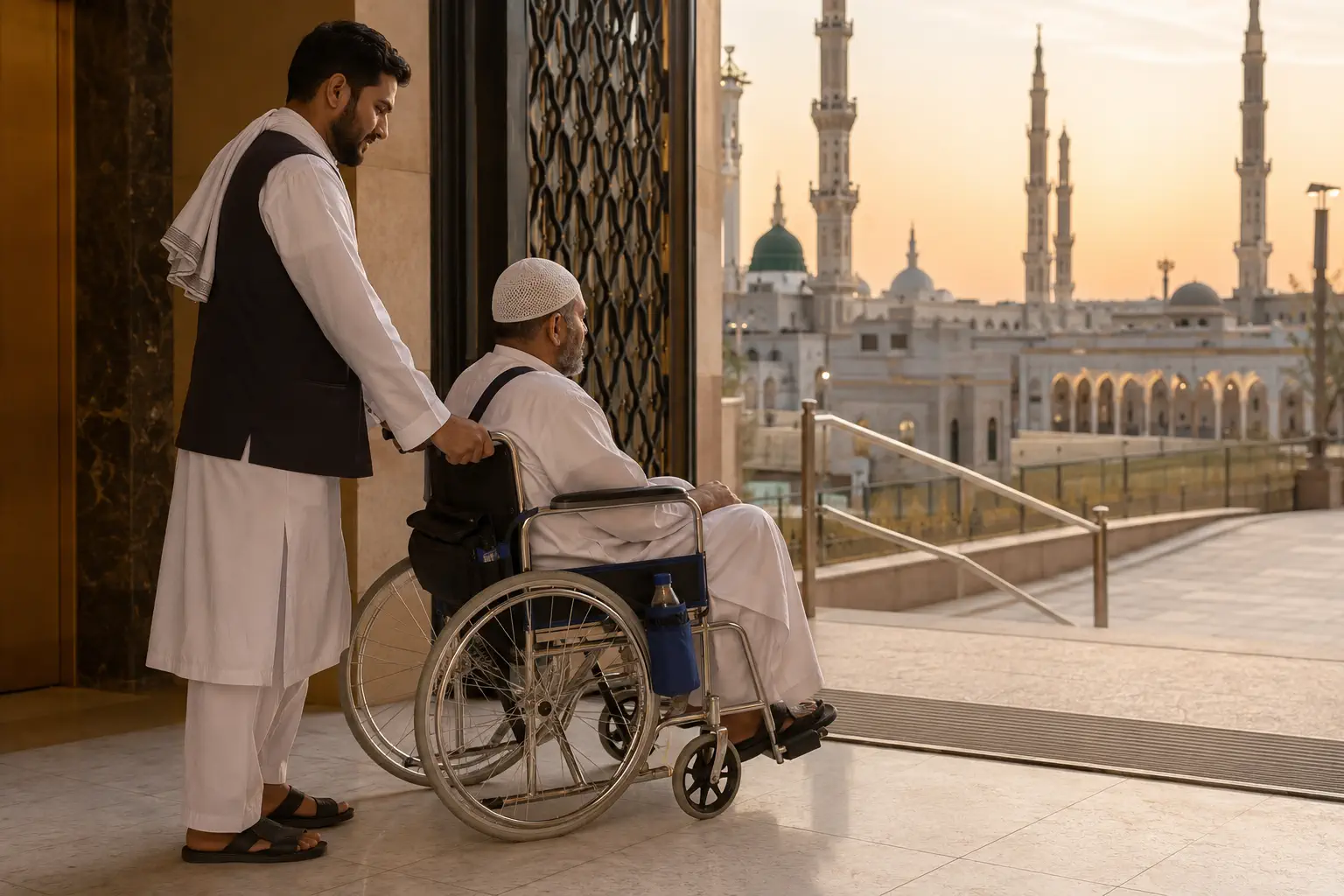
Hotels Near the Mosque
Choosing accommodation near Masjid al-Haram or Masjid an-Nabawi can make a big difference, especially for disabled pilgrims. Try booking hotels within walking or wheelchair distance from the mosque's gate.
Find hotels with accessibility features like ramps and wheelchair-friendly bathrooms. Being close means less effort getting to the mosque and more energy for worship.
A Journey of Faith, Made Accessible for All
Accessibility in Masjid Al-Haram and Masjid an-Nabawi is no longer a distant hope — it is a present reality shaped by thoughtful infrastructure, inclusive services, and a sincere commitment to serving all pilgrims equally.
Pilgrims with mobility issues or other disabilities shouldn't feel restricted when it comes to standing in front of the Kaaba or praying at the Prophet's Mosque. By staying informed, with proper planning, and relying on Allah’s (SWT) mercy, pilgrims can take each step of their journey with respect, comfort, and spiritual satisfaction.
Frequently Asked Questions
What facilities are available for disabled pilgrims at Masjid al-Haram?
Masjid al-Haram offers several facilities for disabled pilgrims, including manual and electric wheelchairs, dedicated wheelchair lanes for Tawaf and Sa’i, accessible gates, ramps, elevators, special prayer areas, and wheelchair-friendly wudu and toilet facilities. Visually impaired pilgrims can also find Braille Qur’ans and electronic Quran devices inside the mosque.
Are wheelchairs available for Hajj and Umrah pilgrims in Makkah and Madinah?
Yes, wheelchairs are available for pilgrims in both Makkah and Madinah. Manual wheelchairs are often available at major mosque gates, while electric wheelchairs or scooters may be booked in advance through official services such as the Nusuk app. These services help elderly and disabled pilgrims perform worship with more comfort and ease.
Is Masjid an-Nabawi accessible for disabled pilgrims?
Yes, Masjid an-Nabawi in Madinah is accessible for disabled pilgrims. The mosque has wide courtyards, wheelchair-friendly pathways, ramps, priority access points, and staff or volunteers who assist elderly and disabled worshippers. Disabled pilgrims can also manage Rawdah Sharif visits through official booking systems such as the Nusuk app.
How should disabled pilgrims prepare for Hajj or Umrah?
Disabled pilgrims should plan early by choosing an Umrah or Hajj package that includes accessible transport, wheelchair support, nearby hotels, and assistance during rituals. They should also carry medical certificates, doctor’s notes, prescription medicines, mobility aids, chargers, and any required medical equipment. Staying close to the mosque can reduce physical stress and make the journey easier.
