


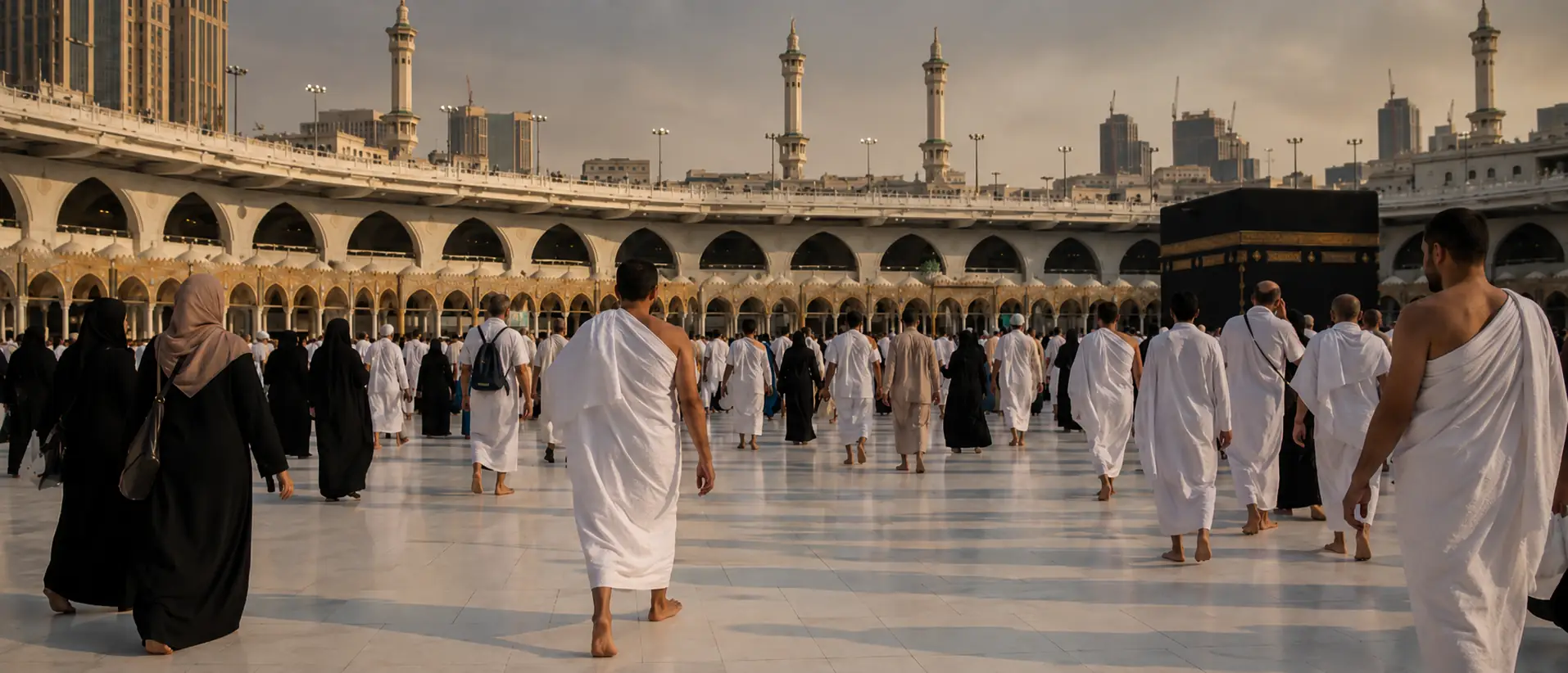
Safety Guidelines for Pilgrims Travelling During Busy Seasons
Why Safety Planning Matters During Hajj and Umrah
Every Muslim dreams of performing Hajj and Umrah, sacred journeys that bring them closer to Allah (SWT), allow them to seek forgiveness for their sins, and offer the promise of Jannah, Insha’Allah.
Millions of Muslims from around the world gather in Makkah and Madinah every year to perform these sacred obligations. Hajj and Umrah are spiritual journeys that strengthen your connection with Allah (SWT) and purify your soul from sins. However, the experience, especially during peak seasons like Ramadan, Dhul-Hijjah, and school holidays, can be overwhelming without proper safety planning.
Remember when the crowd surges, so do the risks; From logistical confusion to physical tiredness, heat exhaustion and getting lost in the chaos. Knowing how to handle these problems helps keep your spiritual journey safe, meaningful, and stress-free.
Safety tips for Hajj and Umrah during peak seasons
In this guide, we have discussed expert-backed safety tips for Hajj and Umrah during peak seasons, so you can stay focused on your Ibadah with complete peace of mind.
Understand the Nature of Peak Seasons
To stay safe and avoid unnecessary stress, it's important to know when the crowds are at their peak. The busiest times for pilgrimage are:
- Ramadan (especially the last Ashra)
- Hajj Season (Dhul-Hijjah)
- School Holidays
- Public Holidays in Gulf and South Asian countries
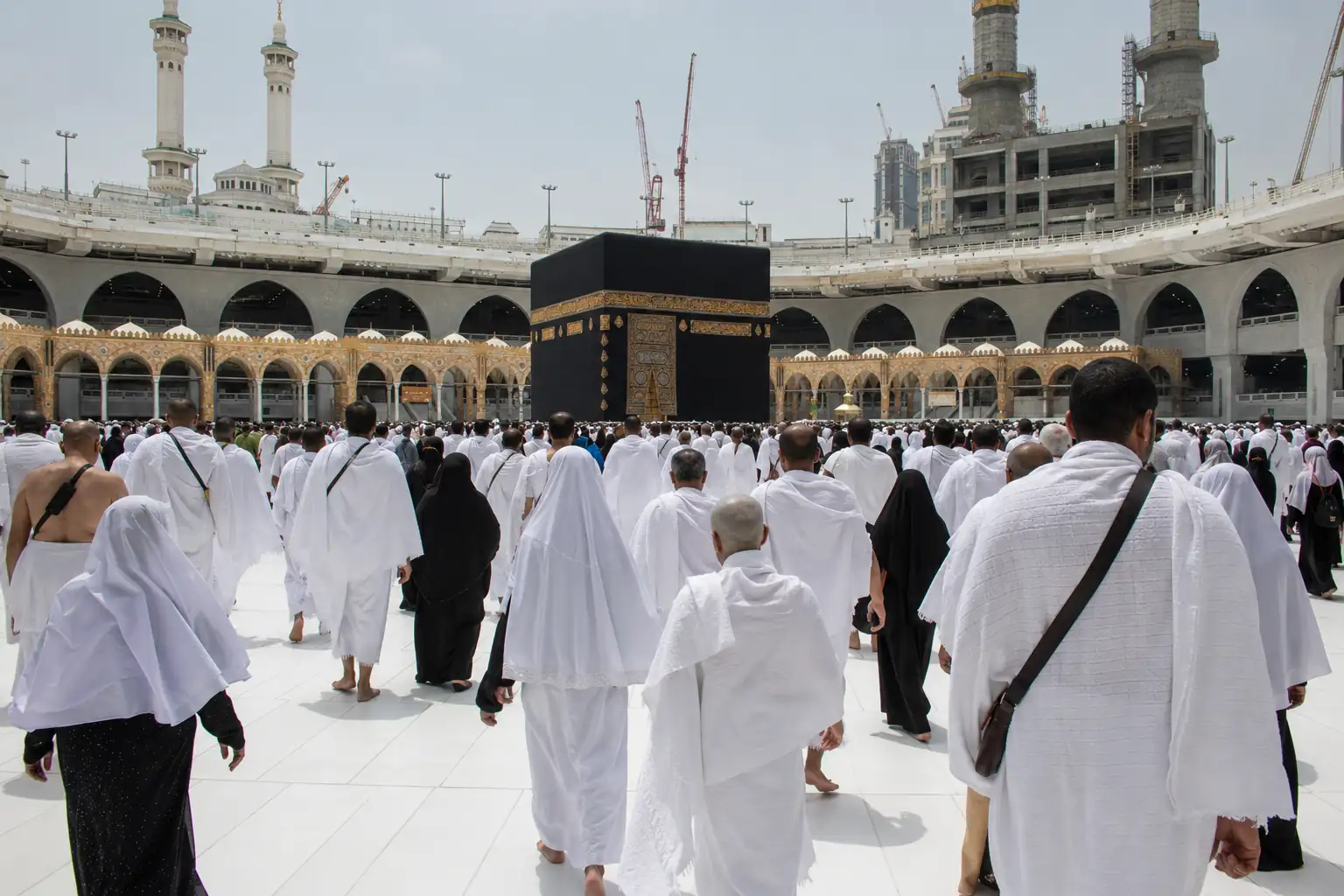
During peak seasons, you can expect larger crowds, longer queues, and more delays. Masjid Al-Haram and Masjid an-Nabawi become extremely busy, with heavy foot traffic and congestion during rituals like Tawaf and Sa’i. Immigration, transport hubs, and hotels may have extended waiting times.
Being aware of the crowd helps set realistic expectations and better planning and preparations.
Prioritise Physical Health and Fitness
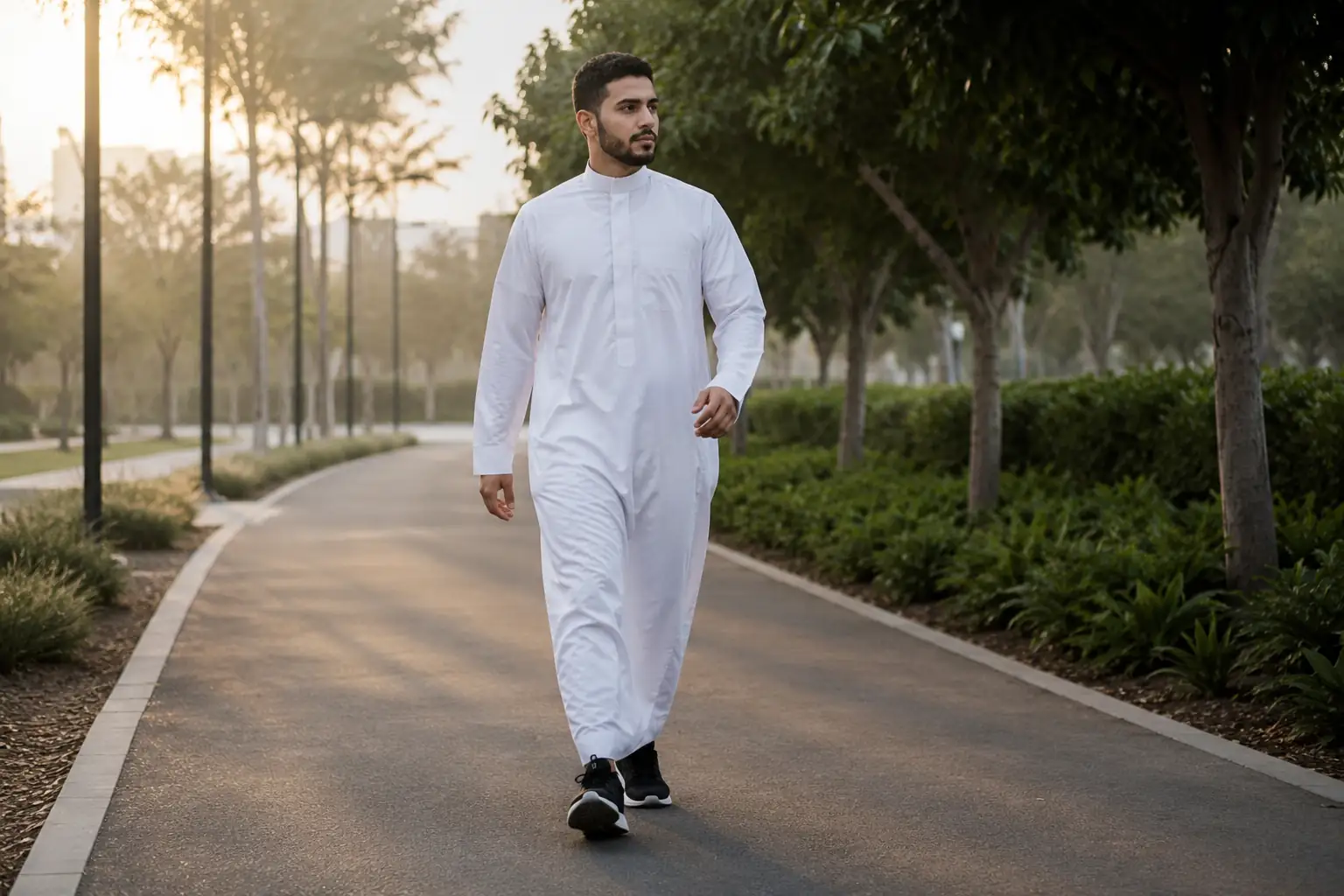
Both Hajj and Umrah pilgrimages are physically demanding, especially during peak seasons. We advise you to prioritise your physical health and fitness and start preparing for your journey a few weeks in advance.
- Build stamina through walking or light cardio daily
- Stay hydrated during travel and rituals
- Eat light, nutritious meals to maintain energy levels
- Always take rest when required, especially between the rituals
Note: If you are suffering from any health problem, you should consult your doctor and carry essential medication with prescriptions.
Get Your Personal Safety Kit
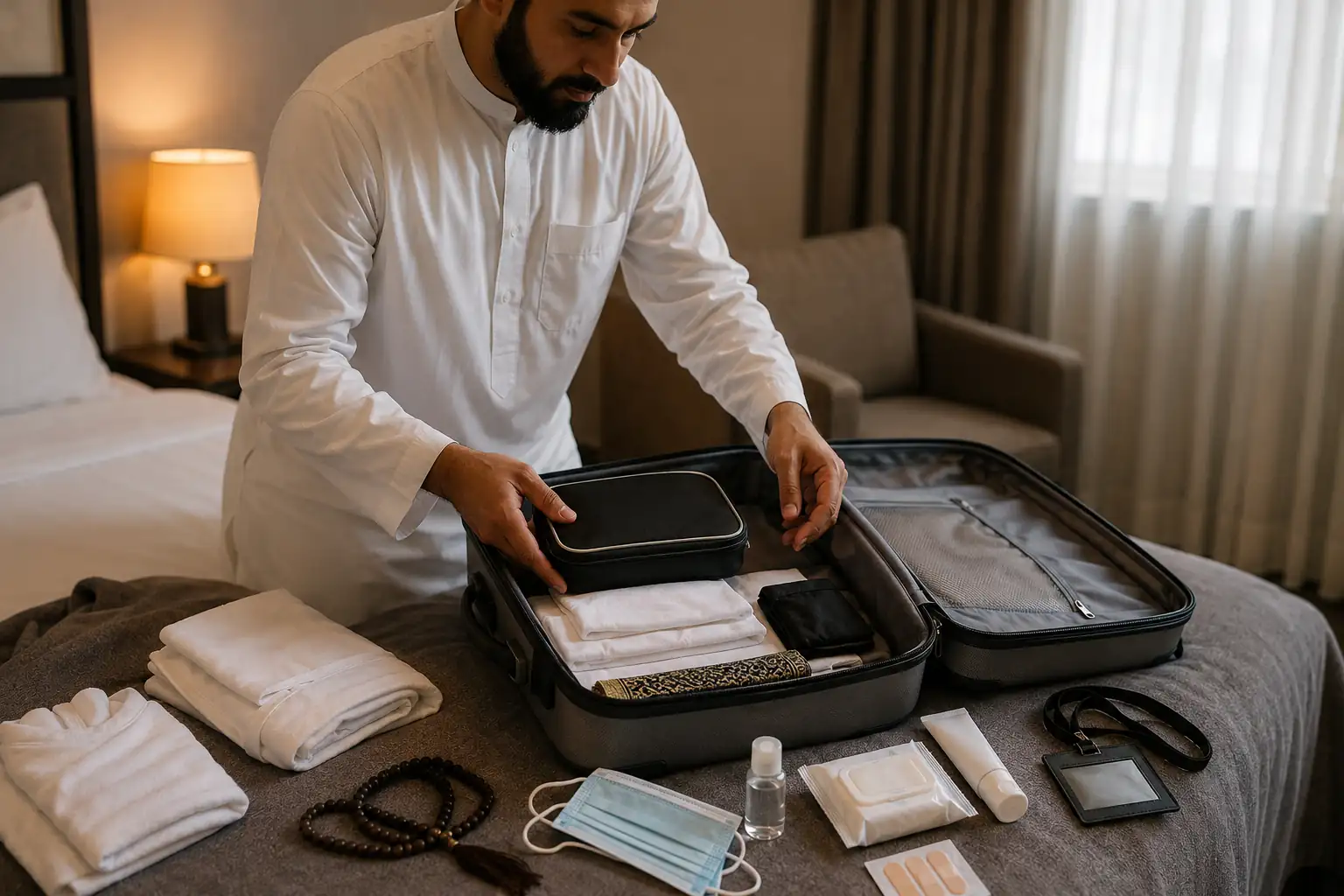
Always prepare and carry your personal safety kit when performing Hajj and Umrah, as it can make a huge difference in your comfort and readiness:
- Face masks to reduce exposure to airborne germs
- Carry unscented hand sanitiser, wipes, sunscreen, and sunglasses to protect yourself from heat and sun exposure.
- Band-aids, pain relievers, and blister pads for foot protection
- Wear an ID card or badge with your hotel name, group name, and contact details — it’s essential in case you get separated or need assistance.
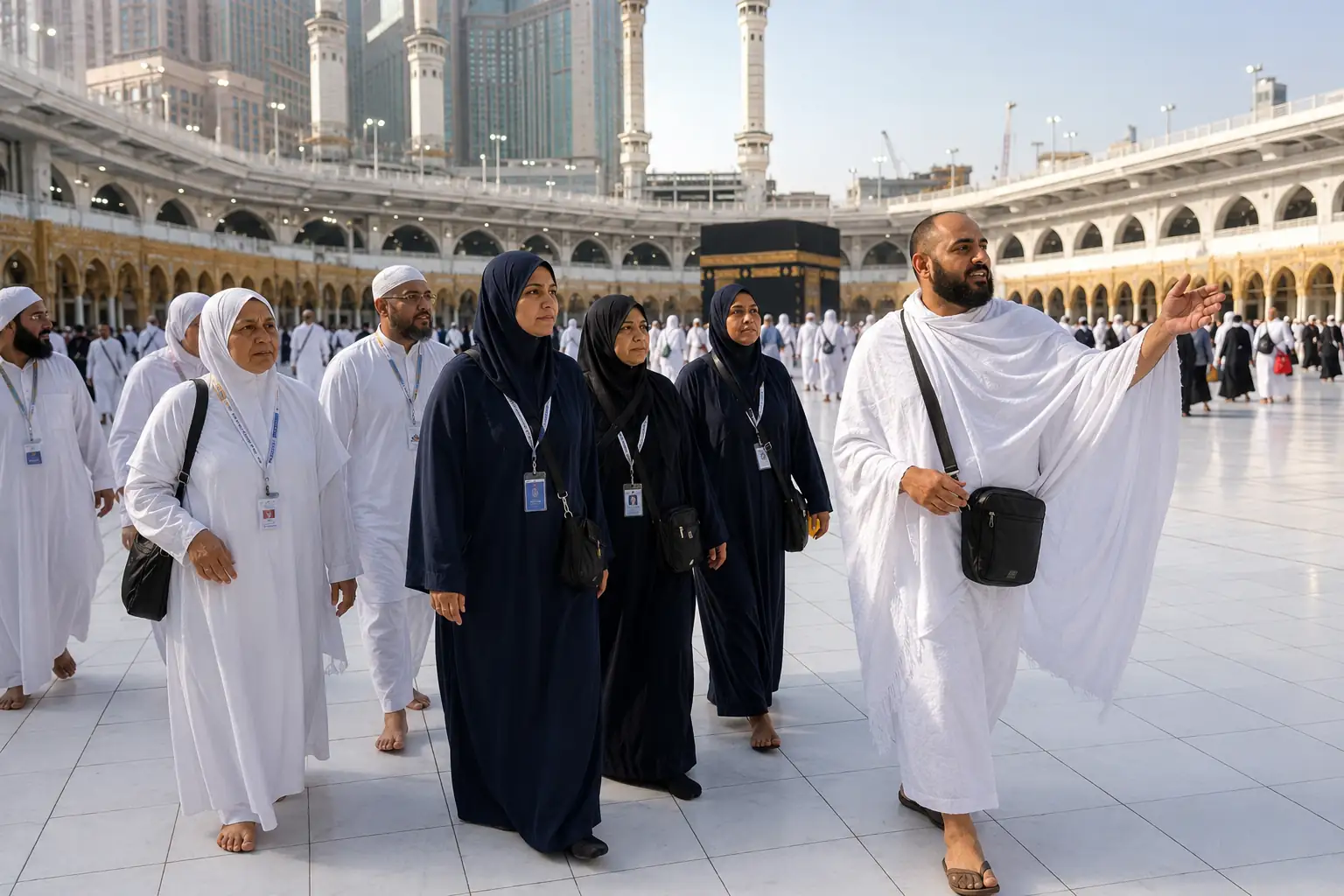
Stick to a Group Plan or Have a Clear Communication Strategy
If you are on a private Umrah tour or travelling with a group, you should always follow the set plan and stick together, especially in areas like the Mataf.
- Set a meeting point at every major site
- Use tags or wristbands to identify your groups easily in the crowd.
- Ensure everyone has an international calling or roaming service.
- Share hotel address cards in Arabic and English with all group members.
- If travelling solo, you must carry a local SIM card and inform a trusted contact about your movements.
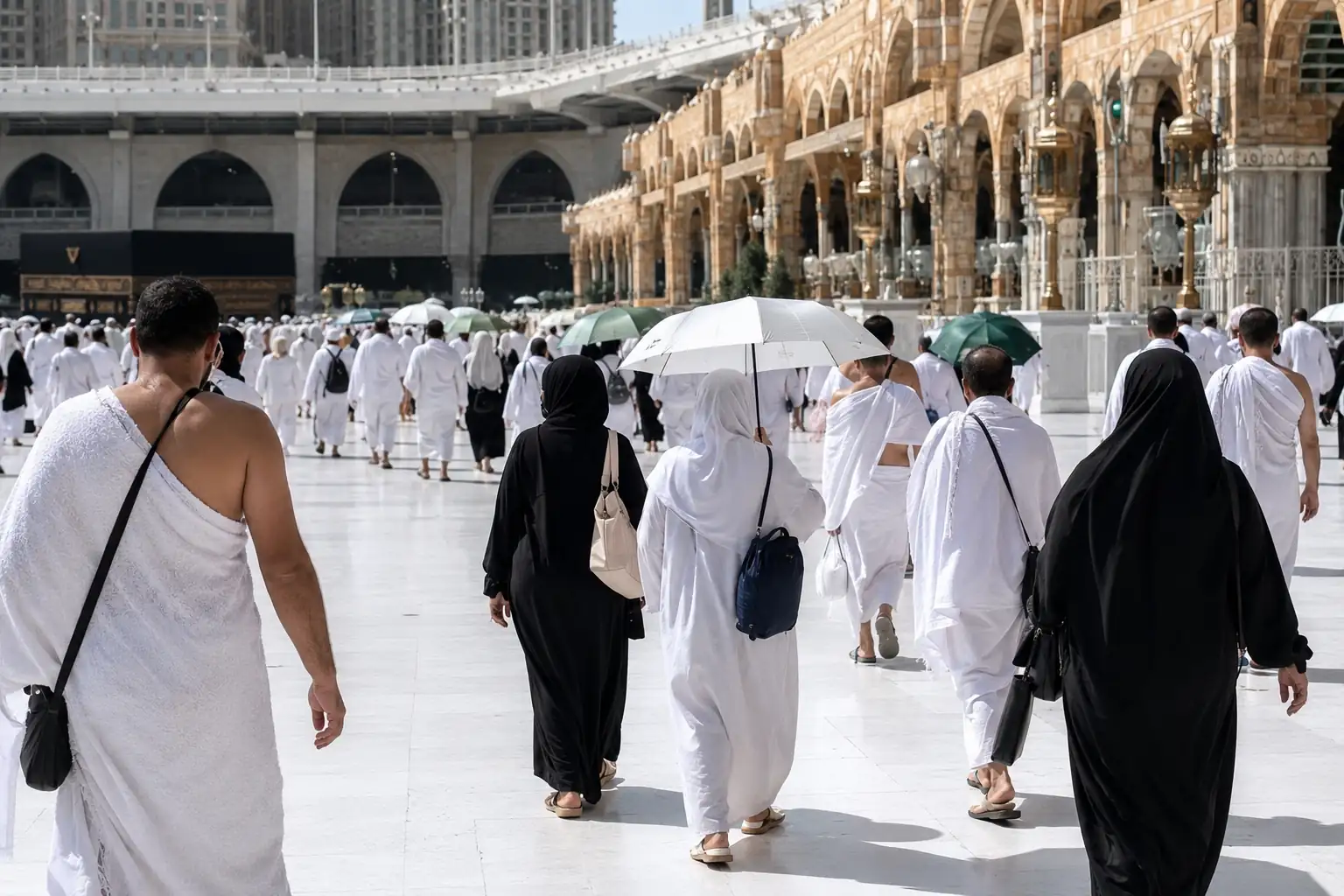
Dress Smartly for the Weather and the Walks
Peak pilgrimage seasons are often accompanied by intense heat, especially in Saudi Arabia’s summer months. Dressing smartly can help you withstand the weather and the walks.
- Use a hat or an umbrella for sun protection.
- Choose comfortable, durable sandals or slippers for long walks (especially for Sa’i and Jamarat)
- Avoid carrying heavy bags while walking through Haram areas.
- Women must wear a loose abaya with breathable fabric, while men must be in Ihram clothing (i.e two white sheets of unstitched cloth)
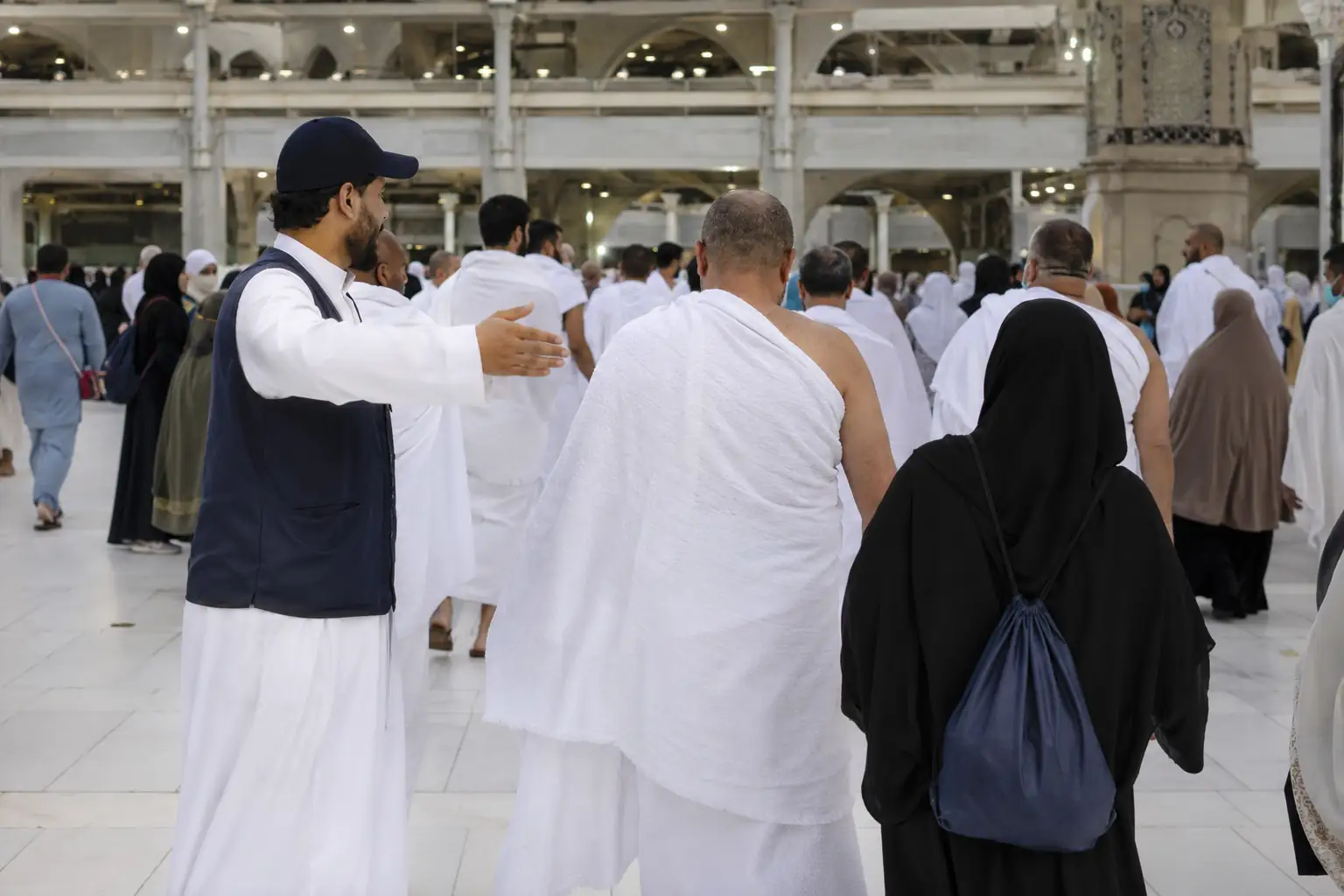
Always Follow Crowd Safety Etiquette
Massive gatherings in sacred sites like Masjid Al-Haram and Masjid an-Nabawi demand patience, discipline, and awareness. Adhering to crowd safety rules is both a religious and communal obligation.
- Always wait for space to move and do not push or rush.
- Follow the floor markings and signs inside Masjid Al-Haram.
- Listen to instructions from security and volunteers.
- For disabled pilgrims, there are lifts and escalators for easy accessibility.
- Don’t stop for selfies or photos in busy walking areas.
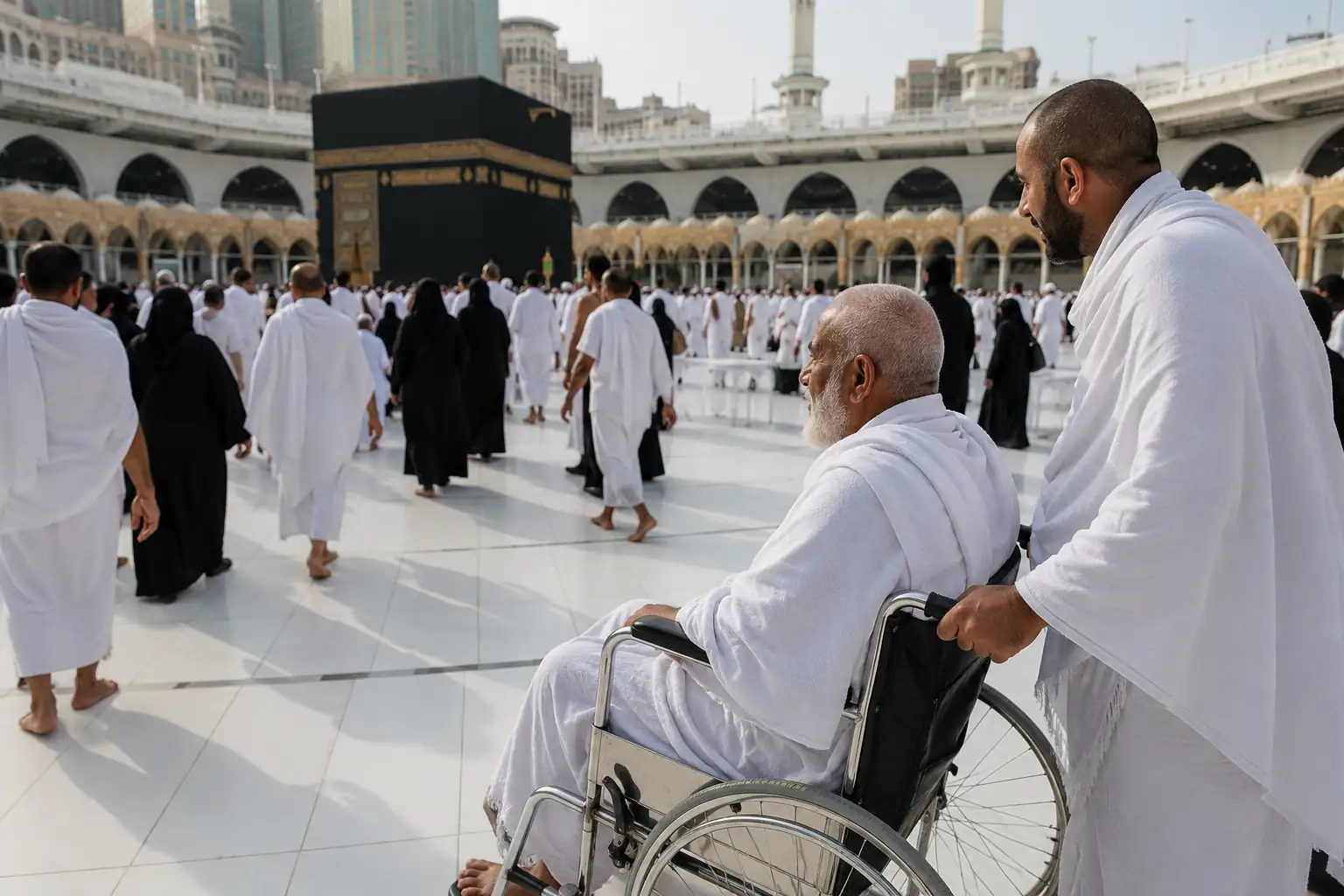
Use Official Services for Wheelchair and Mobility Assistance
Both Masjid Al-Haram and Masjid Al-Nabawi have made big improvements to their facilities and services for pilgrims who have physical, visual, or hearing impairments. Always opt for authorised service providers and avoid street hawkers offering paid services. The services you will get in the sacred sites are:
- Wheelchair rentals are available at designated counters
- Electric scooters for Tawaf and Sa’i (book early during busy times)
- Big Ramps and elevators throughout the mosques
- Special prayer areas for those with limited mobility.
Book Hotels Close To Haram
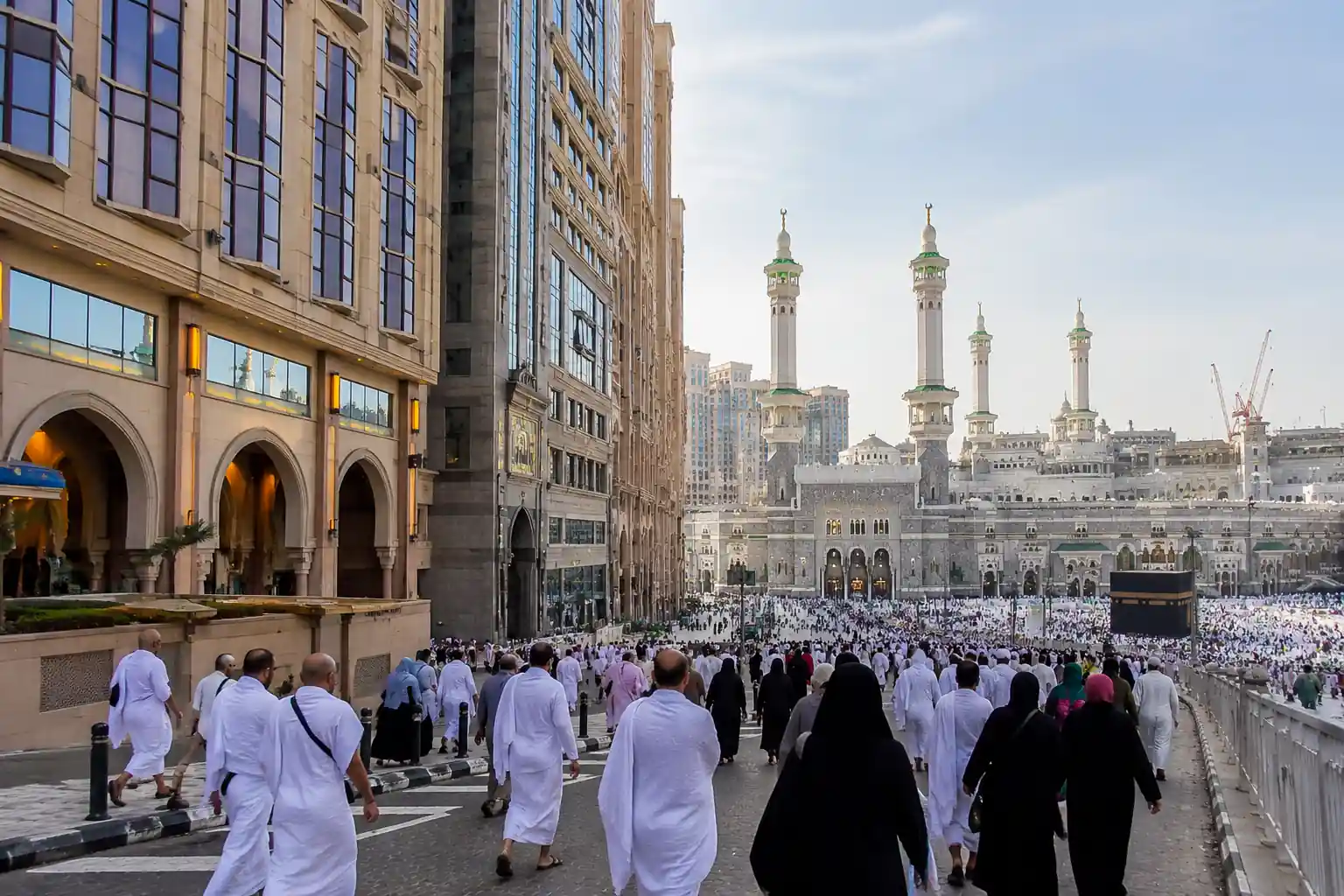
Booking accommodations close to the mosque during peak seasons isn't just about luxury- it's a smart and practical safety decision.
- Reduces the physical strain of long walks and also saves time
- You can easily return to your stay in case of heat, illness, or crowd pressure
- Minimises exposure to busy transport areas
Pro Tip: Book well in advance to secure a hotel near mosques, as prime spots get filled quickly during peak periods.
Transportation Safety Tips
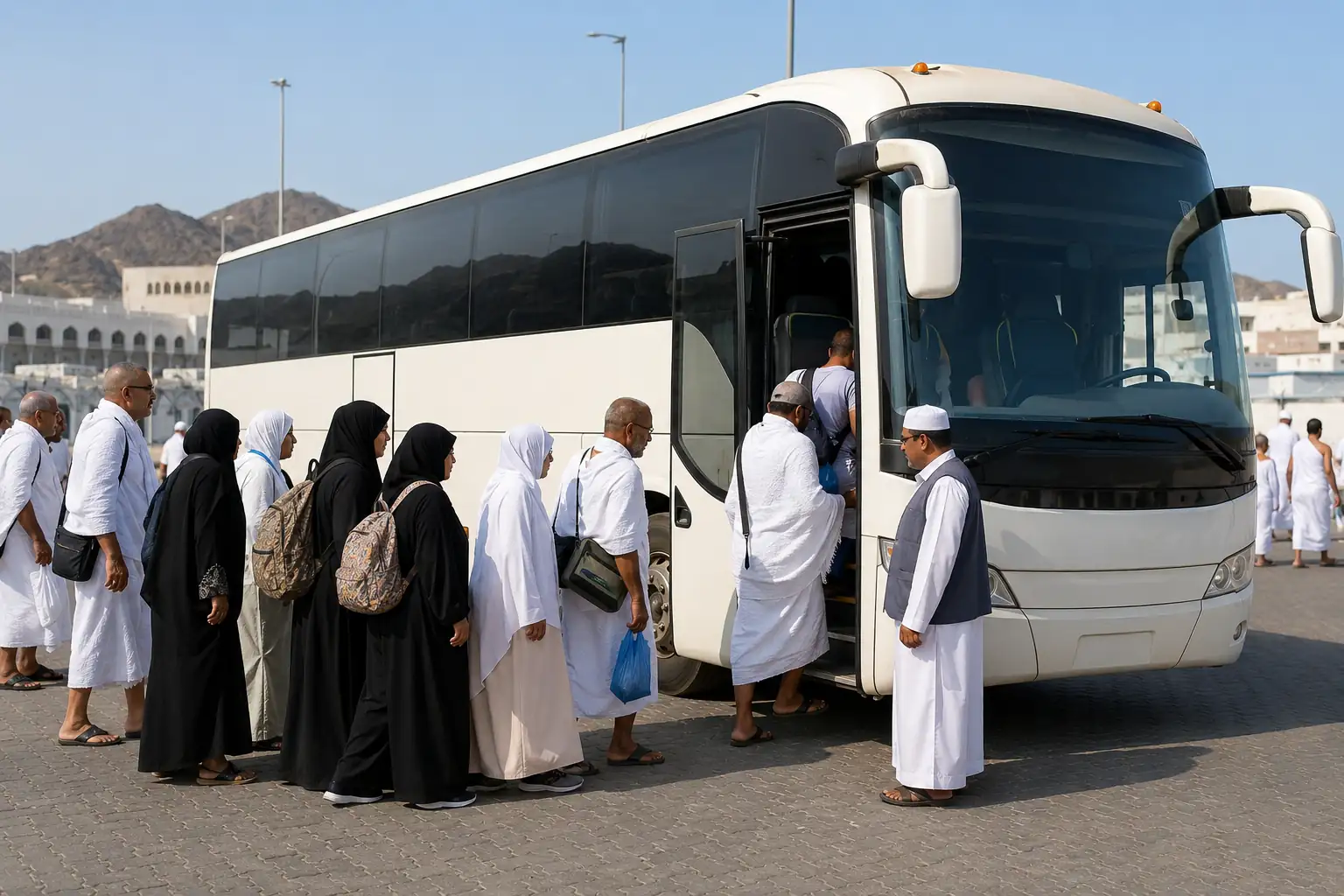
Getting around during peak pilgrimage seasons—whether by bus, taxi or on foot—requires extra care and awareness. When dealing with big crowds and lots of traffic, it’s vital to stay alert, plan your travel ahead, and stick to the safety rules to steer clear of holdups or accidents.
- Use official shuttle buses to visit the sacred sites
- Avoid overpacked vehicles and unlicensed taxi service
- Don’t rush to board buses—wait for the next one if overcrowded
- Ensure you have your ID and contact info at all times while going between sites.
Emotional and Mental Wellbeing During Crowded Seasons
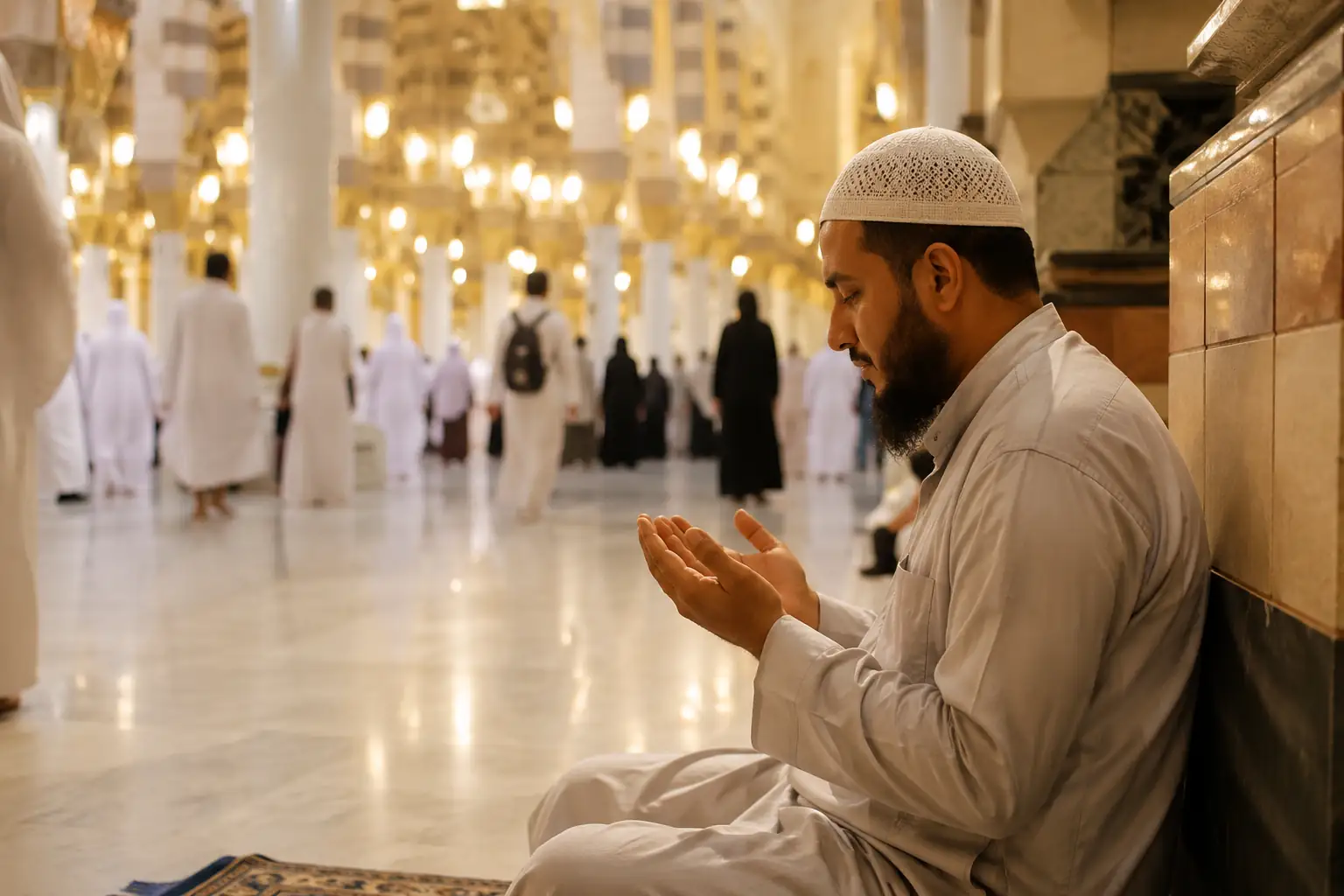
Hajj and Umrah are not just a physical journey- they are profoundly emotional and spiritual ones. During peak seasons, you may expect long queues, crowded places and delays that can trigger frustration, so you need to be mentally and emotionally prepared.
- Avoid confrontations or arguments — maintain a peaceful mindset and focus on your ibadah.
- Have patience, and also help others if possible
- Stay spiritually focused with Duas, Zikr and recitation of the Qur’an
Remember, Sabr (patience) is one of the most rewarded acts during the Hajj and Umrah journey.
Final Thoughts: A Safe Pilgrimage is a Successful Pilgrimage
Embarking on Hajj and Umrah journeys during busy seasons can be incredibly rewarding, and challenging as well. But with preparation, the right approach and mindfulness, these sacred journeys will be spiritually and emotionally satisfying.
By taking a few extra safety measures, staying aware of your surroundings, and planning every step of your journey, you can complete your pilgrimage with peace, confidence, and gratitude.
Let your pilgrimage be not only a journey of the soul but also a journey of smart choices and thoughtful actions.
Travel Safely with Itimaar
A safe pilgrimage starts with the right preparation. Let Itimaar help you plan your Hajj or Umrah journey with reliable guidance, suitable packages and support throughout your travel.
Explore our Hajj and Umrah packages today and prepare for your journey with confidence.
FAQs: Safety Guidelines for Hajj and Umrah During Busy Seasons
How can pilgrims stay safe during Hajj and Umrah peak seasons?
Pilgrims can stay safe during Hajj and Umrah peak seasons by planning early, following official instructions, avoiding overcrowded areas where possible, staying with their group, carrying ID details, drinking water regularly, and resting between rituals. During busy periods like Ramadan, Dhul-Hijjah, and school holidays, patience and crowd awareness are essential for safety.
What are the most important health tips for Hajj and Umrah pilgrims?
The most important health tips for Hajj and Umrah pilgrims are to stay hydrated, avoid long walks under direct sunlight, use an umbrella, wear breathable clothing, eat light meals, and carry prescribed medicines. Pilgrims with diabetes, heart problems, asthma, or mobility issues should consult a doctor before travelling and carry medical documents.
How can pilgrims avoid heat exhaustion during Hajj or Umrah?
Pilgrims can reduce the risk of heat exhaustion by drinking water frequently, using umbrellas, resting in shaded or air-conditioned areas, avoiding unnecessary walking during peak heat, and wearing light, breathable clothing. Warning signs include dizziness, fatigue, heavy sweating, headache, and weakness. If symptoms appear, pilgrims should seek medical help immediately.
What should pilgrims carry for safety during Hajj and Umrah?
Pilgrims should carry a small safety kit with ID card, hotel address, emergency contact details, prescribed medicines, face masks, unscented hand sanitiser, wipes, blister pads, sunscreen, sunglasses, and a charged phone. A local SIM or roaming plan is also useful for navigation, emergency calls, and staying connected with family or group leaders.
