

Hajj Guide
Plan Your Tour
Muqamat- Sacred Places For Pilgrims In Haram
Masjid al-Haram, the holiest mosque in Islam in Makkah, is more than just a place of worship; It is a sacred sanctuary filled with historically and spiritually significant locations known as Muqamat. These sacred places are deeply associated with the worship of Allah (SWT), the legacy of Prophet Ibrahim (AS) and the Sunnah of Prophet Muhammad ﷺ.
Understanding the importance of these places helps pilgrims perform Hajj and Umrah with greater awareness, correctness and reverence. Not just one or two, but there are several sacred places within Masjid al-Haram that every pilgrim should be familiar with.
The Holy Kaaba
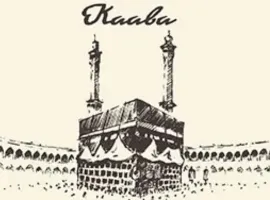
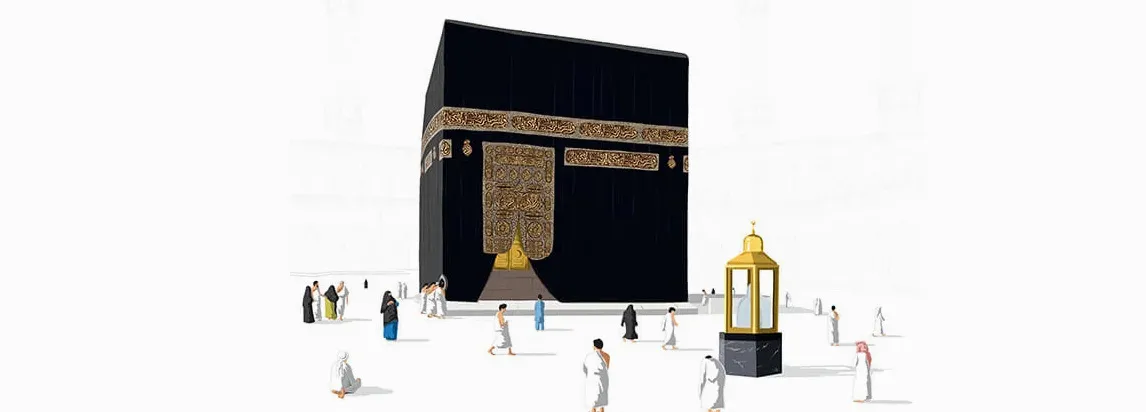
The Kaaba at the heart of Masjid al-Haram is known as the House of Allah. It is the first place of worship established for mankind for the worship of Allah. The Kaaba was built by Prophet Ibrahim (AS) and his son Ismail (AS) after receiving the commands from Allah (SWT).
Allah says in the Qur’an:
“Indeed, the first House [of worship] established for mankind was that at Bakkah (Makkah) — blessed and a guidance for the worlds.” (Surah Aal-Imran 3:96)
Muslims around the world face the Ka‘abah in prayer, and performing Tawaf around it is an essential rite of both Hajj and Umrah.
Qiblah
The Qiblah refers to the direction Muslims face during Salah, which is towards the Ka‘abah. Inside Masjid al-Haram, the Ka‘abah itself is the Qiblah, reminding pilgrims of unity, obedience, and submission to Allah regardless of nationality or background.
Hajr al-Aswad (The Black Stone)
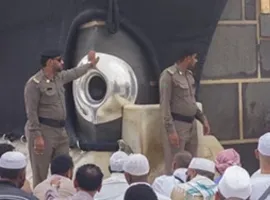
Located in the eastern corner of the holy Kaaba, Hajr al-Aswad marks the starting and ending point of the Tawaf ritual.
It was narrated by Ibn Abbas (RA) that the Messenger of Allah ﷺ said:
“The Black Stone descended from Paradise and it was whiter than milk, but the sins of the children of Adam turned it black.” (Tirmidhi)
Kissing or touching the Black Stone is a Sunnah when possible without harming or pushing others. If it is crowded, pilgrims may simply raise their hand towards it and say Allahu Akbar.
Multazam
The Multazam is the area of the Kaaba wall between the door of the Kaaba and Hajr al-Aswad. This sacred place is known for heartfelt duas and supplications.
Pilgrims often cling to this area, pressing their chest, face, and arms against the wall while making sincere du‘a. Many scholars mention that du‘a made at Multazam is accepted, although pilgrims should remain mindful of crowd conditions and avoid causing hardship to others.
Rukn-e-Yemen
The north-western corner of the Kaaba that faces towards Yemen, which is why it is called Rukun-e-Yemeni (Yemen's Pillar). It is Sunnah to touch this corner if possible, but not to kiss it. If touching is not possible, pilgrims should proceed without gesturing towards it.
Between Rukn-e-Yemeni and Hajr-e-Aswad, the Prophet ﷺ frequently recited:
“Rabbana aatina fid-dunya hasanah wa fil aakhirati hasanah wa qina ‘adhab an-naar.”
Maqam-e-Ibrahim
Maqam-e-Ibrahim is the miraculous stone upon which Prophet Ibrahim (AS) stood while he was constructing the Kaaba. His footprints are divinely preserved in the stone and is covered with a glass structure, also known as the Station of Ibrahim.
Allah commands in the Qur’an:
“And take the station of Ibrahim as a place of prayer.” (Surah Al-Baqarah 2:125)
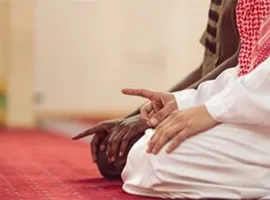
After completing Tawaf, it is Sunnah to pray two rak‘ahs behind Maqam-e-Ibrahim, if space allows. If crowded, the prayer may be offered anywhere within the Haram.
Hateem (Hijr Ismail)
The Hateem, also known as Hijr Ismail, is the semi-circular area adjacent to the Ka‘abah. It is part of the original structure of the Ka‘abah.
Praying inside the Hateem is equivalent to praying inside the Ka‘abah, making it a highly virtuous spot for Salah and du‘a. One should enter the area calmly and avoid congestion.
Safe And Marwa Hill
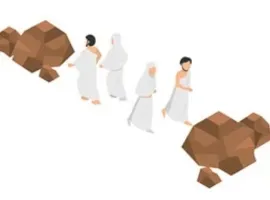
Safa and Marwa are two hills inside the boundary of Masjid al-Haram. Performing Sa’i between Safa and Marwa is considered an act performed inside Masjid al-Haram.
Allah says in the Qur’an: “Indeed, Safa and Marwa are among the symbols of Allah.” (Surah Al-Baqarah 2:158)
Zamzam Well Area
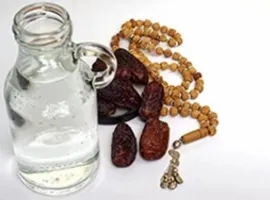
The Zamzam water originates from a blessed source near the Ka‘abah, gifted by Allah to Hajar (RA) and her son Ismail (AS).
The Prophet ﷺ said: “The water of Zamzam is for whatever it is drunk for.” (Ibn Majah)
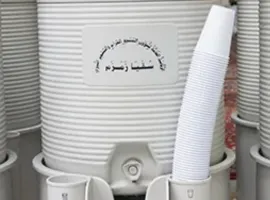
Pilgrims are encouraged to drink Zamzam with intention, gratitude, and du‘a. Dedicated Zamzam stations are available throughout Masjid al-Haram.
While these Muqamat are sacred and significant, no place within the Haram should be worshipped independently. Worship is directed to Allah alone, and these locations are honoured due to their connection with His command and prophetic history.
Note: It is recommended to consult and seek an opinion from scholars on doubtful Islamic matters.